
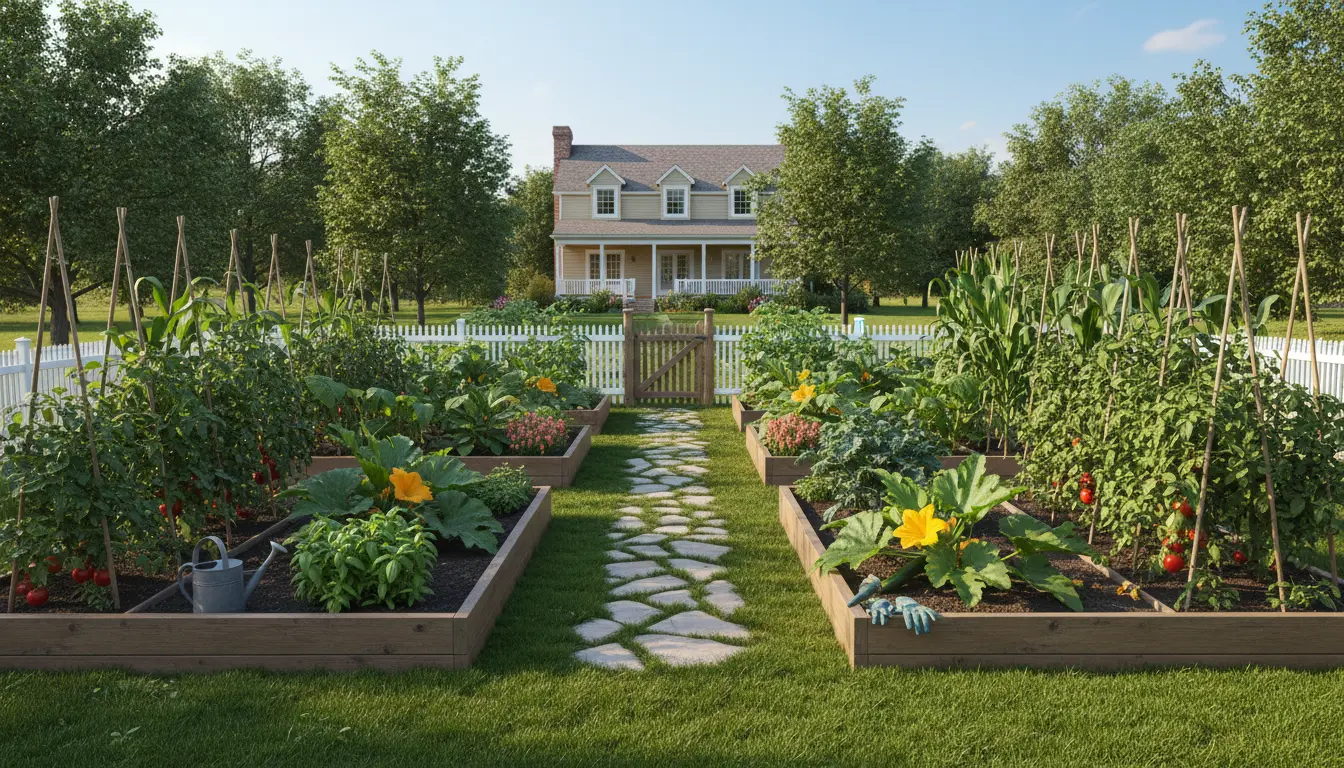
Why Start a Vegetable Garden
Growing your own vegetables saves money and gives you fresher, tastier produce. A small backyard or container setup can supply herbs and salad greens all season long.
This guide breaks the process into clear steps so beginners can set up a productive vegetable garden with minimal fuss.
Choose a Location for Your Vegetable Garden
Pick a spot that gets at least six hours of direct sunlight each day. Sunlight affects which vegetables will thrive and how much you can plant.
Also consider access to water, soil slope, and proximity to tools and compost. A flat area near a water source is ideal.
Sunlight and Size
Most vegetables prefer full sun. If your space is limited, focus on high-yield crops like tomatoes, peppers, and leafy greens.
For small spaces, use raised beds or containers to maximize productivity.
Vegetable Garden Soil Basics
Good soil is the foundation of a productive garden. Aim for loose, well-draining soil rich in organic matter.
Test your soil pH if possible. Most vegetables prefer a slightly acidic to neutral pH (6.0–7.0).
How to Improve Soil Quickly
- Add compost to increase nutrients and improve structure.
- Mix in aged manure or leaf mold for organic matter.
- Use coarse sand or perlite to improve drainage in heavy clay soils.
Select Vegetables for Your First Garden
Choose easy-to-grow vegetables that match your climate and season. For beginners, select a mix of fast-growing and reliable crops.
Good starter vegetables include lettuce, radishes, spinach, bush beans, and cherry tomatoes.
Planning a Simple Crop List
- Lettuce and salad greens: quick harvests and multiple plantings.
- Radishes: mature in as little as 3–4 weeks and help fill space.
- Beans: nitrogen-fixing and high-yielding in small spaces.
- Tomatoes (compact varieties): high value per plant but need staking.
Planting and Spacing
Follow seed packet or plant tag spacing recommendations. Crowding reduces airflow and increases disease risk.
Use companion planting to maximize space and reduce pests. For example, plant basil near tomatoes to help flavor and potentially deter pests.
Watering and Fertilizing Your Vegetable Garden
Consistent watering is crucial. Deep, infrequent watering encourages strong roots. Aim for about 1 inch of water per week, more in hot weather.
Fertilize with a balanced organic fertilizer according to the needs of your crops. Heavy feeders like tomatoes benefit from extra phosphorus and potassium as fruiting begins.
Watering Tips
- Water at the base of plants to keep foliage dry and reduce disease.
- Use mulches like straw or wood chips to retain moisture and suppress weeds.
- Consider a drip irrigation system for consistent delivery and water savings.
Managing Pests and Diseases
Monitor your garden weekly to catch problems early. Many pests can be controlled with hand removal or a spray of water.
Use row covers to protect seedlings from insects and practice crop rotation to reduce disease build-up in soil.
Organic Pest Control Options
- Introduce beneficial insects like ladybugs for aphid control.
- Use neem oil or insecticidal soap on soft-bodied insects.
- Encourage birds and toads to reduce slugs and larger pests.
Harvesting and Succession Planting
Harvest vegetables at peak ripeness for the best flavor. Leafy greens can be harvested continuously by cutting outer leaves.
Practice succession planting: after harvesting a quick crop like radishes, replant that space with another crop to maximize yield.
Storage and Use
- Use cold storage for root vegetables and cool-weather crops.
- Preserve excess with freezing, pickling, or canning for long-term use.
Small Real-World Example
Case study: A homeowner in Columbus started a 4×8 foot raised bed in spring. They amended soil with 3 bags of compost and planted lettuce, radishes, bush beans, and two cherry tomato plants.
By midsummer they harvested continuous salad greens, three successive radish crops, and a steady supply of tomatoes. Their investment paid off in produce worth more than the initial setup cost within one growing season.
Common Beginner Mistakes and How to Avoid Them
- Overwatering: check soil moisture before watering and avoid daily shallow watering.
- Planting too densely: respect spacing to reduce disease and competition.
- Ignoring soil health: add compost annually and rotate crops each year.
Quick Checklist to Start Your Vegetable Garden
- Choose a sunny location and measure available space.
- Test and amend soil with compost and adjust pH if needed.
- Select 4–6 easy crops suited to your season and space.
- Plan watering, mulching, and a pest monitoring routine.
- Start small, observe, and expand next season based on results.
Starting a vegetable garden is a practical, rewarding project. With the right location, soil, and simple care, even beginners can grow a steady supply of fresh vegetables.