
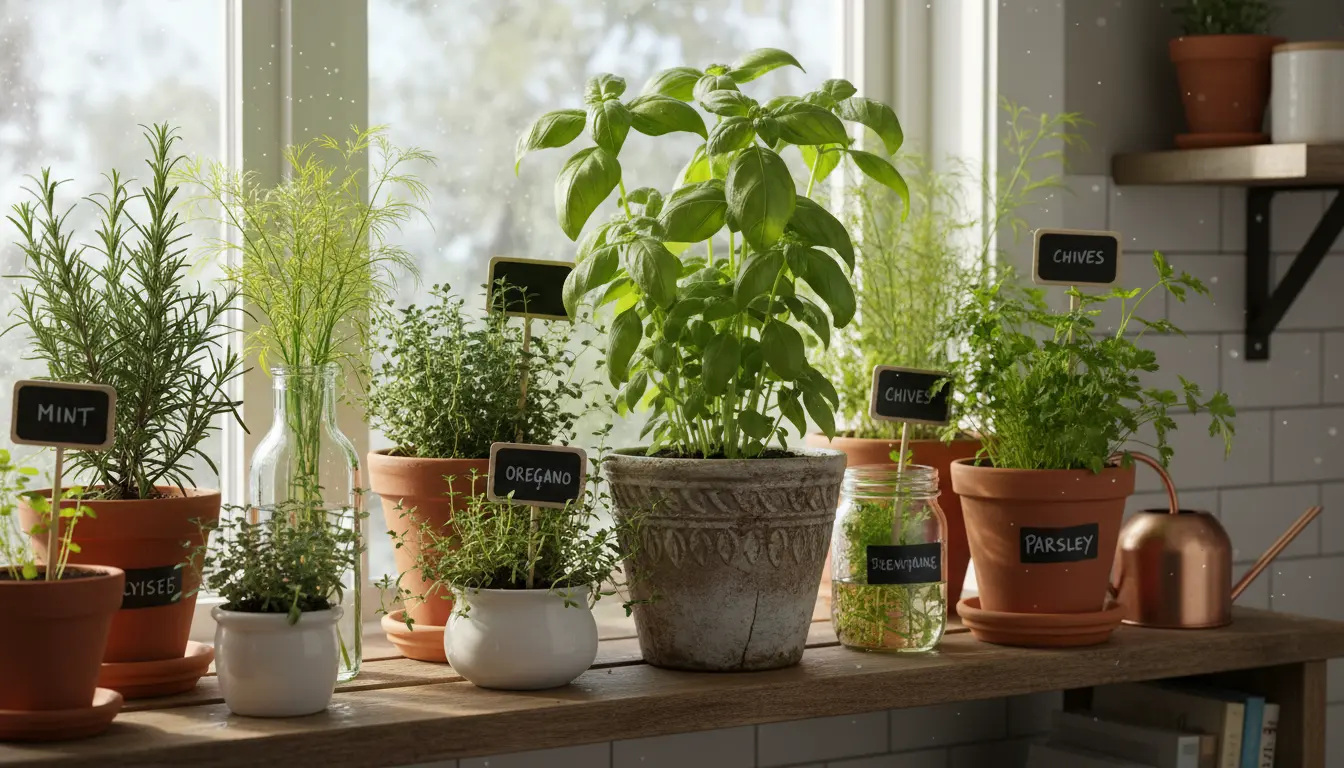
Growing herbs indoors is a simple way to add fresh flavors to meals and bring a bit of green into small spaces. This guide gives step-by-step, practical instructions to set up and maintain an indoor herb garden that thrives year-round.
Why Start an Indoor Herb Garden
An indoor herb garden provides fresh ingredients close to the kitchen and reduces trips to the store. Herbs also improve air quality and offer a rewarding, low-cost hobby.
People with limited outdoor space or short growing seasons can still harvest basil, parsley, mint, and other herbs using containers and proper light.
Essential Supplies for an Indoor Herb Garden
Gathering the right supplies makes your first indoor herb garden easier and more successful. Most items are inexpensive and reusable.
- Pots with drainage holes (4–8 inch for most herbs)
- Quality potting mix formulated for containers
- Small saucers to catch runoff
- Hands-on tools: small trowel, pruning shears, spray bottle
- Optional: LED grow light if natural light is limited
Choosing Herbs for an Indoor Herb Garden
Select herbs that adapt well to container life and indoor light. Start with easier varieties to build confidence and success.
- Basil – loves warmth and bright light
- Parsley – tolerates moderate light and regular moisture
- Mint – very forgiving, but grows vigorously (use its own pot)
- Chives – compact and great for windowsills
- Thyme and rosemary – prefer drier soil and bright light
Planting and Care for an Indoor Herb Garden
Use fresh potting mix and plant at the same depth as nursery pots. Avoid heavy garden soil that compacts in containers.
Group herbs with similar water and light needs. For example, place basil and parsley together, and keep rosemary and thyme on a brighter, drier shelf.
Potting Steps
- Fill pot with potting mix leaving 1–2 inches at the top.
- Remove plant gently from its container and tease roots if rootbound.
- Place plant in pot and fill around the root ball, firming gently.
- Water thoroughly until excess drains from the bottom.
Routine Care
- Water when the top 1 inch of soil is dry. Overwatering is the most common mistake.
- Fertilize lightly every 4–6 weeks with a balanced liquid fertilizer diluted to half strength.
- Pinch or prune herbs regularly to encourage bushy growth and prevent legginess.
Lighting and Watering Tips for an Indoor Herb Garden
Light is the key limiting factor for indoor herb gardens. Aim for 6–8 hours of bright light daily for most herbs.
South- or west-facing windows work best. If natural light is insufficient, use a full-spectrum LED grow light positioned 6–12 inches above plants.
Watering Best Practices
- Check soil moisture with your finger rather than a strict schedule.
- Water thoroughly and let excess drain; do not let pots sit in standing water.
- Use room-temperature water to avoid shocking roots.
Many herbs release stronger aromas and flavors when their leaves are slightly stressed by light or cooler night temperatures. This can improve taste for cooking.
Troubleshooting Common Problems in an Indoor Herb Garden
Knowing common issues helps you act quickly to keep herbs healthy. Most problems relate to light, water, or airflow.
- Yellow leaves: often from overwatering or poor drainage. Check roots and reduce watering.
- Leggy growth: insufficient light. Move herbs to a brighter spot or add a grow light.
- Pests (aphids, spider mites): isolate affected plant and use insecticidal soap or a strong water spray to remove pests.
Small Case Study: Apartment Kitchen Herb Setup
Laura, a city renter, wanted fresh herbs year-round but had only a small windowsill. She started with three 6-inch pots: basil, chives, and mint.
She placed basil near the brightest window and moved mint to a slightly shadier corner to avoid aggressive spread. An inexpensive LED light provided extra hours each winter.
After two months of regular pruning and weekly feeding at half-strength, Laura harvested enough basil for pesto and chives for weekly omelets. The setup cost under $50 and fit on a single shelf.
Harvesting and Using Herbs from Your Indoor Herb Garden
Harvest in the morning after dew evaporates for best flavor. Use scissors to snip small stems rather than pulling to avoid damage.
Regular harvesting encourages new growth. Preserve excess herbs by drying or freezing in small portions for later use.
Final Tips for a Successful Indoor Herb Garden
- Start small: three to five pots is manageable for beginners.
- Label pots with planting dates and variety names.
- Rotate plants weekly to promote even light exposure.
- Be patient: herbs adapt over a few weeks to indoor conditions.
With simple supplies, the right location, and consistent care, an indoor herb garden can provide fresh flavors and brighten indoor space. Start with easy herbs, learn their needs, and adjust light and water until your setup fits your home and schedule.