
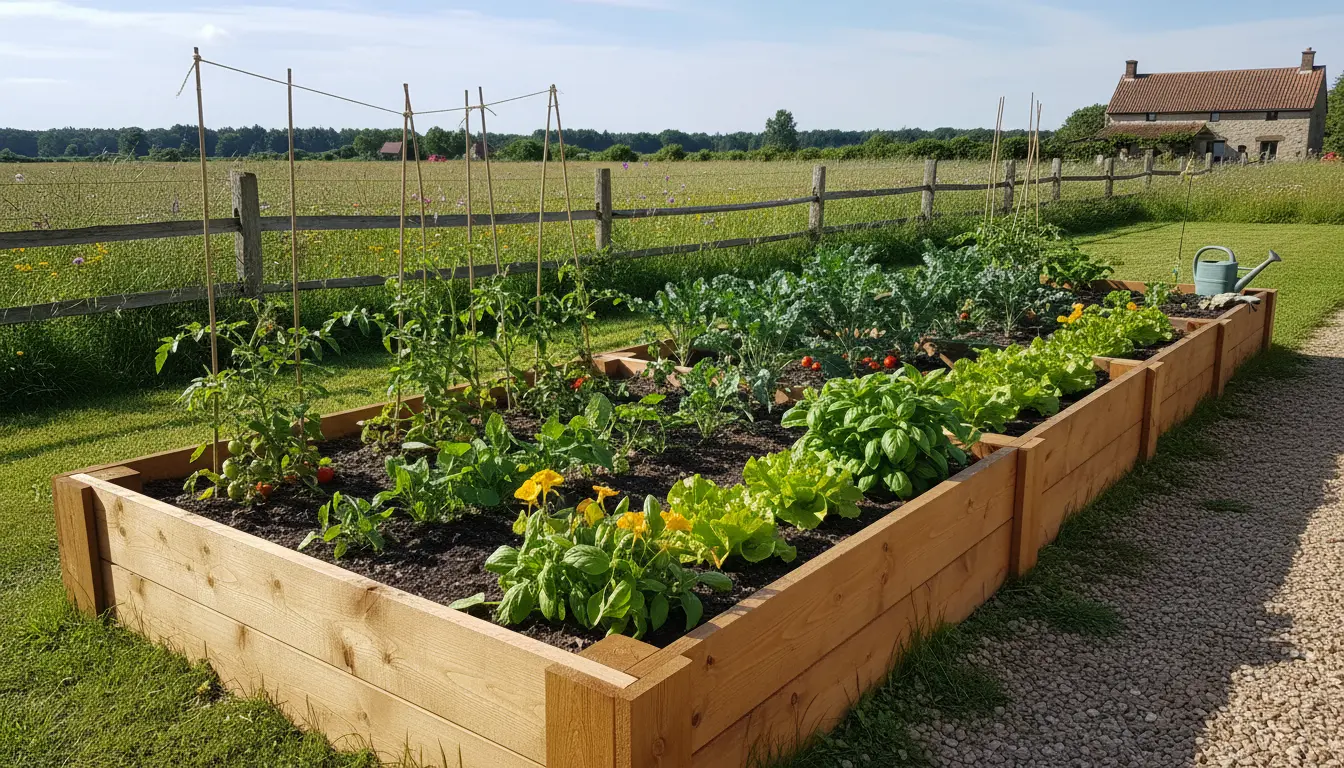
Starting a home vegetable garden is a practical way to grow fresh food, save money, and enjoy outdoor activity. This guide covers planning, soil preparation, plant selection, and maintenance so beginners can get reliable results.
Plan Your Home Vegetable Garden
Planning helps you avoid common mistakes and match the garden to your time and space. Begin with a realistic assessment of sunlight, water access, and how much time you can spend on maintenance.
Choose the Right Location for a Home Vegetable Garden
Most vegetables need at least six hours of direct sunlight. Observe sun patterns for several days and pick a spot with good drainage and easy watering access.
Decide on Garden Type
Choose between in-ground beds, raised beds, and containers. Each option has pros and cons related to soil control, back strain, and yield per square foot.
- In-ground beds: Lower cost, larger area, may need soil amendment.
- Raised beds: Better drainage, warmer soil, easier weeding.
- Containers: Ideal for balconies and patios, more frequent watering.
Prepare Soil for a Home Vegetable Garden
Soil quality determines how well your vegetables grow. Test the soil early to learn pH and nutrient levels, then improve the soil based on results.
Test and Improve Soil
Use a simple soil test kit to check pH and key nutrients. Most vegetables prefer a slightly acidic to neutral pH between 6.0 and 7.0.
If the soil is compacted, loosen it to at least 8 to 12 inches. Remove rocks, roots, and debris before planting.
Add Compost and Amendments
Incorporate 2 to 3 inches of compost into the topsoil to improve structure and fertility. For heavy clay, add coarse sand and organic matter to improve drainage.
- Compost: Improves nutrient retention and soil life.
- Organic amendments: Bone meal for phosphorus, greensand for potassium.
- Lime or sulfur: Adjust pH only after testing.
Select Vegetables and Create a Planting Plan
Choose vegetables that match your climate, season length, and cooking habits. Beginners should start with a few easy-to-grow varieties for quick success.
Pick Easy Vegetables for a Home Vegetable Garden
Start with reliable choices that tolerate variable care. Examples include lettuce, radishes, bush beans, tomatoes, and zucchini.
- Lettuce: Fast-growing, good for succession planting.
- Radishes: Ready in a month, great for quick results.
- Tomatoes: High yield, require staking and sun.
Companion Planting and Succession Planting
Companion planting can reduce pests and maximize space. Succession planting ensures continuous harvest through the season by replanting every few weeks.
- Plant basil near tomatoes to improve flavor and repel pests.
- Sow quick crops like radishes between slower plants to use space efficiently.
Maintain Your Home Vegetable Garden
Regular maintenance keeps plants healthy and yields high. Focus on watering, mulching, pruning, and pest monitoring.
Watering, Mulching, and Pest Control
Water deeply and less often to encourage strong roots. Early morning watering reduces disease risk. Mulch conserves moisture and suppresses weeds.
Monitor plants weekly for signs of pests or disease. Use mechanical controls first, such as hand picking or sticky traps, then consider organic sprays if needed.
- Watering tip: Deliver 1 to 1.5 inches of water per week depending on weather.
- Mulch tip: Apply 2 to 3 inches of straw or shredded leaves around plants.
- Pest tip: Rotate crops annually to reduce soil-borne problems.
Harvest, Store, and Rotate Crops
Harvest vegetables when ripe for the best flavor and nutrition. Store produce properly to extend shelf life and save seeds from open-pollinated varieties for next season.
Practice crop rotation to reduce pests and replenish soil nutrients. Avoid planting the same family in the same location year after year.
Case Study: Small Urban Raised Bed Success
Maria, a beginner gardener in a city apartment, used two 4 by 4 foot raised beds on her balcony. She chose tomatoes, leaf lettuce, and bush beans and amended the soil with store-bought compost.
By watering in the morning, mulching, and rotating lettuce with radishes every four weeks, she harvested fresh salad greens for six months. Her practical approach saved money and increased her confidence to expand the garden the next year.
Quick Checklist to Start a Home Vegetable Garden
- Assess sunlight and choose a garden type that fits your space.
- Test and amend soil before planting.
- Start with 3 to 6 easy vegetables and plan succession crops.
- Mulch, water deeply, and monitor pests weekly.
- Harvest promptly and rotate crops each season.
Starting a home vegetable garden is a step-by-step process that rewards patience and regular care. Follow these practical steps, keep records of what works, and adjust the plan as you gain experience.