
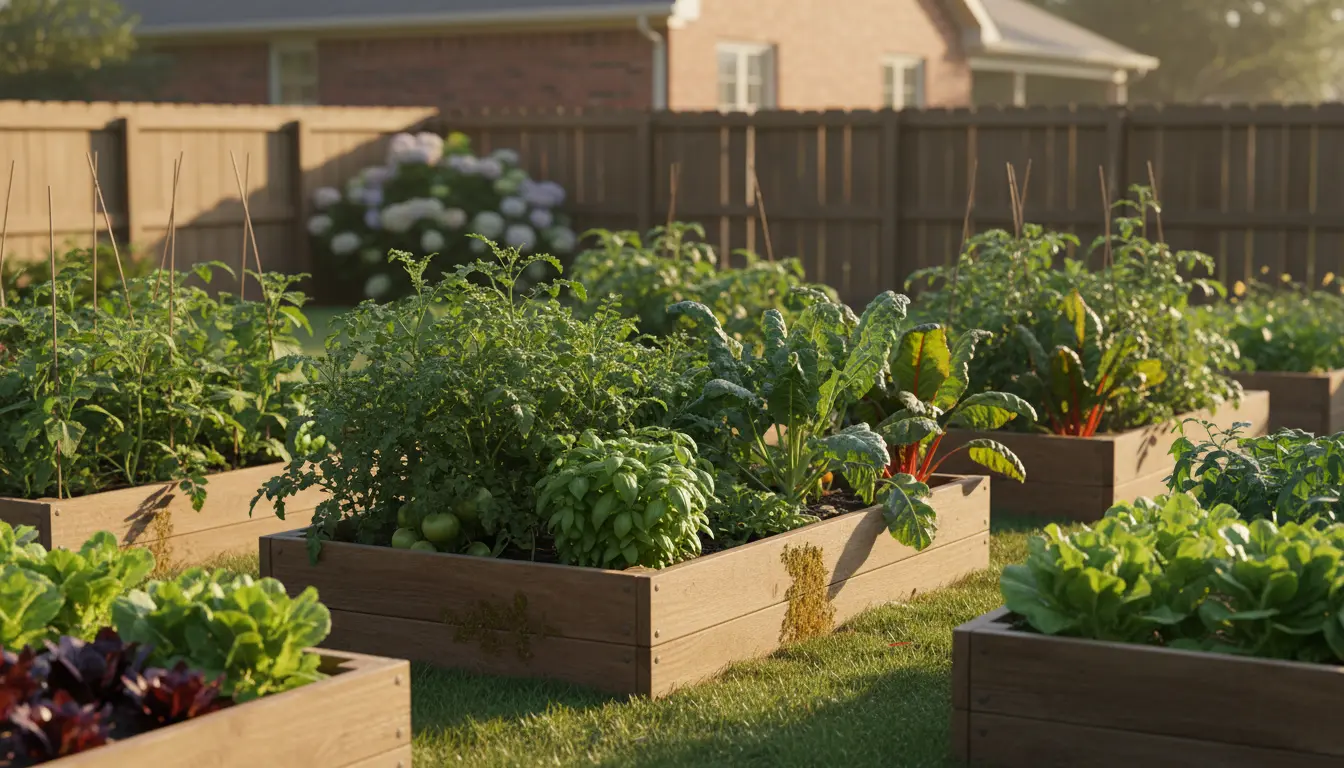
Why Choose a Raised Bed Vegetable Garden
Raised bed vegetable gardens give more control over soil, drainage, and planting layout. They are easier on the back and can fit into small yards or patios.
For new gardeners, raised beds simplify weed control and soil improvement. They also warm up faster in spring, letting you plant earlier.
Planning Your Raised Bed Vegetable Garden
Start with a clear plan before you build. Decide bed size, location, and what you want to grow. A common size is 4 feet wide so you can reach the center from either side.
Consider access, sunlight, and water. Most vegetables need at least six hours of direct sun each day.
Choose a Location for a Raised Bed Vegetable Garden
Pick a flat, sunny spot near a water source. Avoid low areas where water pools after rain.
Place beds with the long side running north to south to maximize sun exposure. Leave enough space between beds for easy access and wheelbarrows.
Decide Bed Dimensions and Materials
Standard raised beds are 12 to 18 inches deep and 4 feet wide. Longer beds are fine if you build strong sides.
Common materials include untreated cedar, recycled composite, or galvanized metal. Avoid treated lumber that may leach chemicals into the soil.
Soil Mix and Preparation for Raised Bed Vegetable Garden
Good soil is the most important factor. A typical mix is one third compost, one third topsoil, and one third coarse material like aged manure or coconut coir.
Use the following mix as a starting point:
- 40% quality topsoil
- 40% compost or well-rotted manure
- 20% aeration material such as coarse sand or perlite
Fill beds to within an inch of the top. Water thoroughly to settle the soil before planting.
What to Plant and When in a Raised Bed Vegetable Garden
Plan a mix of quick crops and longer season vegetables. Lettuce, radishes, and spinach grow fast and free up space for tomatoes or peppers later.
Use succession planting to maximize yield. Example schedule:
- Early spring: peas, spinach, radishes
- Late spring to summer: tomatoes, peppers, beans
- Fall: kale, broccoli, carrots
Companion Planting Tips
Plant herbs like basil near tomatoes to improve flavor and deter pests. Marigolds can help reduce nematodes and attract pollinators.
Avoid planting heavy feeders like corn next to delicate root crops. Rotate families each year to reduce disease risk.
Watering and Maintenance for Raised Bed Vegetable Garden
Water deeply and less often to encourage strong root systems. Aim for consistent moisture without waterlogging the soil.
Install drip irrigation or soaker hoses for efficient watering. Mulch with straw or shredded leaves to retain moisture and suppress weeds.
Pest and Disease Management
Check plants weekly for signs of pests or disease. Handpick pests, use row covers, or apply organic controls like neem oil when needed.
Promote beneficial insects by planting flowering herbs and providing habitat, such as a small insect hotel or dense plantings.
Harvesting and Crop Rotation
Harvest regularly to encourage more production. Pick vegetables when they are young and tender for best flavor.
Rotate plant families between beds each season. A simple rotation helps reduce soil-borne diseases and balances nutrient use.
Raised beds can produce up to 50% more yield per square foot than traditional in-ground rows thanks to better soil structure and reduced compaction.
Simple Budget Checklist for a Raised Bed Vegetable Garden
- Wood or metal for bed sides
- Quality soil and compost
- Seeds or starter plants
- Mulch and basic tools (trowel, rake, gloves)
- Optional: drip irrigation or soaker hose
Small Real World Example
Case study: Anna, a homeowner with a 10 by 10 foot backyard, built two 4 by 8 foot beds using cedar. She filled them with a soil mix heavy on compost and planted tomatoes, lettuce, and bush beans.
In the first season Anna harvested enough tomatoes for weekly salads and froze extra sauce. She reported fewer weeds, easier watering, and a 30 percent higher yield than her previous in-ground attempts.
Common Mistakes to Avoid in a Raised Bed Vegetable Garden
Don’t skimp on soil quality. Shallow or poor soil limits root growth and reduces yields. Also avoid planting without checking sunlight and water access first.
Finally, avoid overwatering. Raised beds drain well, but too much water flushes nutrients and causes root problems.
Final Steps and Next Season Planning
At season end, add a layer of compost and mulch to beds. Consider cover crops like clover to improve soil over winter.
Keep a simple garden journal to track what worked and what did not. Notes on varieties, spacing, and harvest dates help improve results each year.
With basic planning, a good soil mix, and consistent care, a raised bed vegetable garden delivers reliable harvests and makes home gardening more manageable. Start small, learn each season, and expand as your confidence grows.