
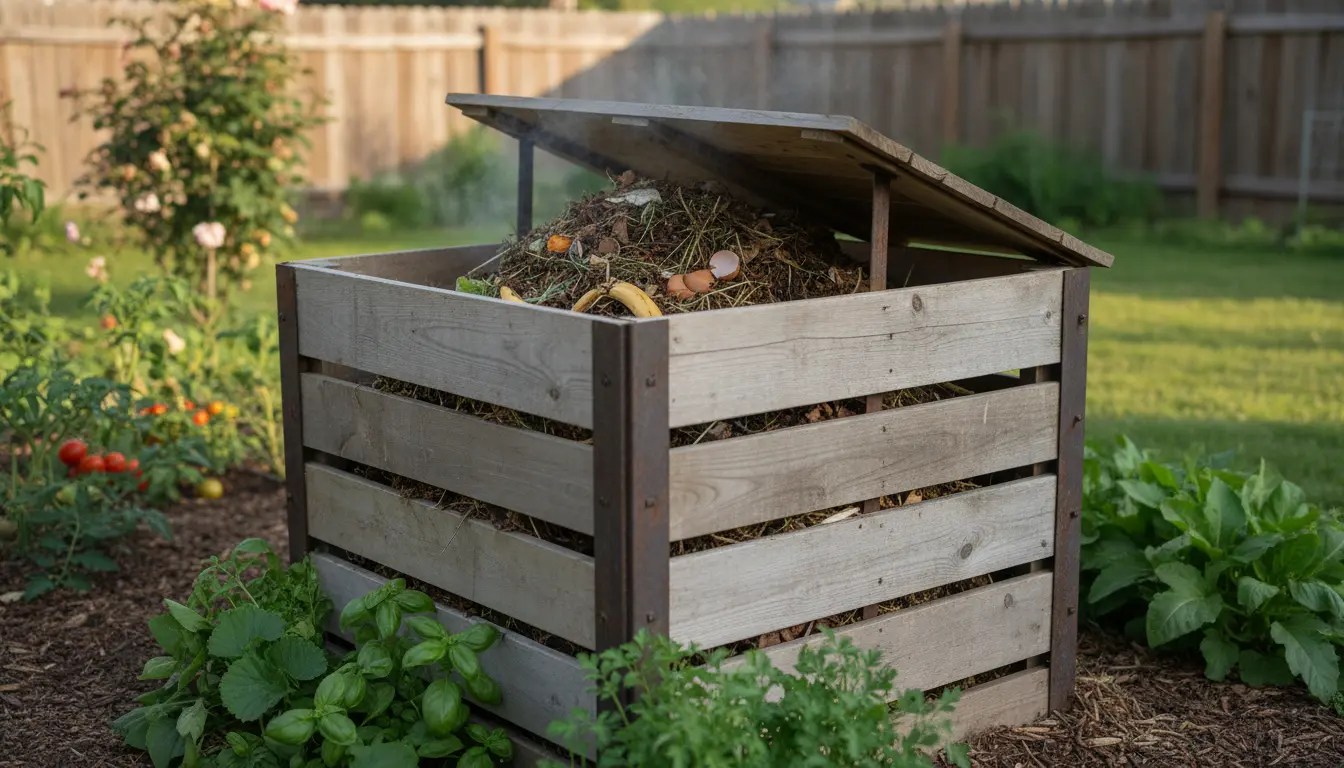
Why Choose a Home Compost Bin
A home compost bin turns kitchen scraps and yard waste into nutrient-rich soil. It reduces household waste and improves garden health without needing specialized equipment.
Composting is suitable for most homes, from apartments with small worm bins to houses with outdoor tumblers. The method you pick depends on space, time, and the amount of waste you produce.
How to Start a Home Compost Bin
Starting a home compost bin is simple and can be done in a weekend. Follow basic steps to get a balanced, active compost pile that won’t smell or attract pests.
Choose the Right Container
Select a bin that matches your space and needs. Options include a simple open pile, a plastic or wooden bin, a tumbling composter, or a worm composting box for indoor use.
- Outdoor bin: Good for yards, holds more material, needs some turning.
- Tumbler: Easier to turn, faster results, limited capacity.
- Worm bin (vermicompost): Best for small indoor kitchens and fast breakdown of food scraps.
Gather Materials: Browns and Greens
A healthy home compost bin requires a balance of carbon-rich “browns” and nitrogen-rich “greens.” Aim for roughly a 3:1 ratio of browns to greens by volume.
- Greens (nitrogen): vegetable peels, coffee grounds, fresh grass clippings.
- Browns (carbon): dry leaves, shredded paper, straw, cardboard.
Chop or shred larger items to speed decomposition. Avoid meat, dairy, diseased plants, and oily foods that attract pests.
Setting Up Your Bin Step by Step
Place your bin on bare soil or a breathable surface to allow worms and microbes to access the pile. Good airflow and drainage are essential for aerobic decomposition.
- Start with a 4–6 inch layer of coarse browns like twigs to aid drainage.
- Add a 2–4 inch layer of greens, then another layer of browns.
- Keep the layers moist like a wrung-out sponge; neither soaking wet nor bone dry.
- Turn the pile every 1–2 weeks to introduce oxygen and speed breakdown.
Maintaining Your Home Compost Bin
Routine checks keep a home compost bin healthy and odor-free. Monitor moisture, aeration, and the ratio of materials to avoid problems.
Moisture and Aeration
If the pile smells sour or ammonia-like, it is too wet or has too many greens. Add dry browns and turn the pile. If decomposition is slow and the pile is dry, add water and more greens.
Turning the pile incorporates oxygen. For tumblers, rotate several times weekly. For static bins, use a pitchfork to mix every 1–2 weeks.
Pest Prevention
Avoid putting meat, bones, dairy, or fatty foods in a home compost bin. Use a closed bin or finished-bedding layer to deter rodents. Cover food scraps with a layer of browns each time you add them.
How to Tell When Compost Is Ready
Finished compost is dark, crumbly, and smells earthy. The process usually takes 2–6 months depending on method, materials, and how often you turn the pile.
Use finished compost as mulch, soil amendment, or potting mix ingredient. Screen out large pieces and return them to the bin for further breakdown.
Composting one household can divert up to 30% to 50% of its waste from the trash, significantly cutting landfill contributions and methane emissions.
Common Problems and Quick Fixes
- Foul odor: Add browns and turn the pile. Ensure drainage and airflow.
- Slow decomposition: Chop materials smaller, increase moisture, and turn more often.
- Pests: Bury food scraps, use a secure lid, and avoid animal products.
Small Real-World Example
Case Study: A family of four in Austin set up a 60-gallon outdoor tumbler and a small kitchen caddy for scraps. They balanced greens and browns, turned the tumbler twice weekly, and added shredded leaves each autumn.
Results: In six months they produced enough compost for their raised vegetable beds, reduced weekly trash volume by half, and reported healthier tomatoes and peppers in the first growing season.
Tips for Success with a Home Compost Bin
- Keep a small kitchen container for scraps and empty it regularly to the bin.
- Shred or chop larger materials to speed decomposition.
- Record additions and turning schedule to maintain balance and consistency.
- Use finished compost sparingly at first to see plant response.
Final Thoughts on a Home Compost Bin
Starting a home compost bin is a practical step toward reducing waste and improving soil. The initial setup takes little time and pays off with free, nutrient-rich compost.
With simple routines for layering, moisture control, and turning, anyone can maintain a healthy compost pile and benefit their garden and the environment.