
Why Home Composting Matters
Home composting turns kitchen and garden waste into rich soil. It reduces the amount of trash sent to landfills and feeds your plants with nutrients.
Composting is simple and low cost. With a little routine and attention you can produce compost all year.
Home Composting Basics
Home composting depends on balancing three things: carbon, nitrogen, and air. Carbon comes from brown materials and nitrogen from green materials.
Microbes break the waste down when moisture and oxygen are present. The result is dark crumbly compost that improves soil structure.
What You Can Compost
- Fruit and vegetable scraps
- Coffee grounds and tea bags
- Eggshells, crushed
- Yard trimmings, leaves, and grass clippings
- Paper towels and plain cardboard
These items provide either nitrogen or carbon. A good mix speeds decomposition.
What to Avoid in Home Composting
- Meat, fish, and dairy products that attract pests
- Oily or greasy foods
- Diseased plants and invasive weeds with seeds
- Pet feces from carnivores
Keeping these out helps prevent odors and reduces the risk of pests.
How to Start Home Composting
Choose a suitable container and location first. A bin with drainage and airflow works well on a patio or in a backyard corner.
Start with a base layer of coarse browns like small twigs. Then add kitchen scraps and cover with browns. Keep building layers.
Step by Step Home Composting Process
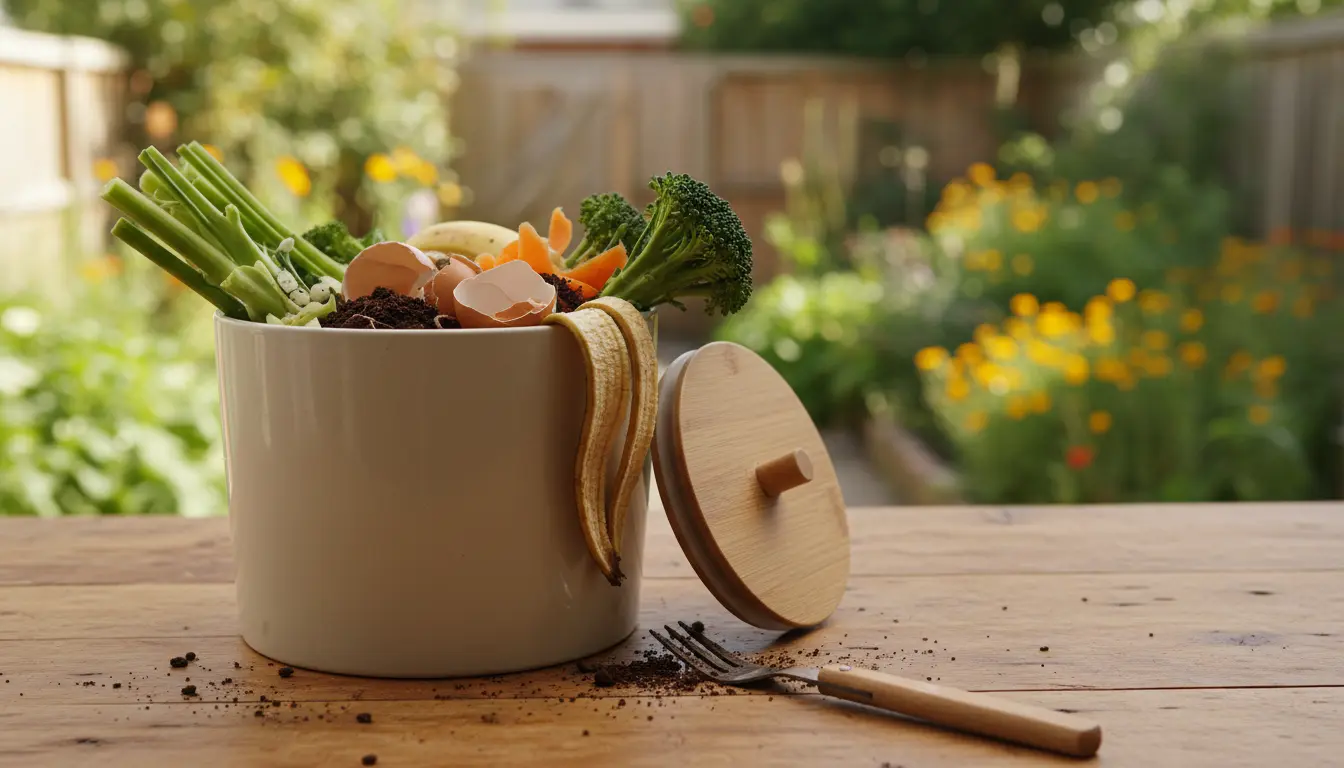
- Collect kitchen scraps in a small container with a lid. Empty into compost bin daily.
- Aim for a ratio near 3 parts browns to 1 part greens by volume.
- Maintain moisture like a wrung out sponge; add water if dry and add dry browns if too wet.
- Turn or mix the pile every 1 to 2 weeks to add oxygen.
- Harvest finished compost in 2 to 6 months depending on conditions.
Regular turning and the right moisture level accelerate the process and reduce smell.
Troubleshooting Common Home Composting Problems
Many issues are easy to fix with small adjustments. Below are common problems and solutions.
Smell Problems
Bad odors usually mean too much moisture or too many greens. Add more brown material like dry leaves or shredded paper and turn the pile.
Pests
Pests are attracted by meat or dairy. Remove those items and cover food scraps with a layer of browns. Use a closed bin if rodents are a concern.
Slow Decomposition
Slow breakdown often means lack of air, moisture, or nitrogen. Turn the pile, add some fresh greens, and check moisture.
Tools and Supplies for Home Composting
- Compost bin or tumbler
- Garden fork or compost aerator
- Browns storage like a covered bucket for leaves or shredded paper
- Kitchen compost caddy with a lid
These tools make the routine easier but you can compost with just a simple bin and a shovel.
Practical Tips for Consistent Home Composting
- Keep a small countertop caddy to collect scraps and empty daily.
- Shred or chop larger items so microbes can work faster.
- Store dry browns near the bin to make covering scraps quick.
- Use finished compost as a soil top dressing, potting mix component, or garden amendment.
These small habits help composting become a regular part of household routine.
Small Case Study: One Family Home Composting Success
A four person household in Portland started home composting using a 60 liter bin. They committed five minutes per day to emptying a kitchen caddy and layering browns.
After six months they diverted roughly 120 kg of kitchen waste from the trash and produced compost for their vegetable garden. Tomato yields improved and grocery waste decreased by 40 percent.
This example shows steady, small actions yield measurable benefits for waste reduction and garden health.
Final Checklist for Home Composting
- Choose a bin and place it on soil or grass.
- Collect greens and browns and keep the pile moist but not soggy.
- Turn the pile regularly and monitor for pests and odors.
- Harvest and use finished compost to enrich soil.
Start small and adjust based on what works best for your household. Home composting is practical, inexpensive, and rewarding.