
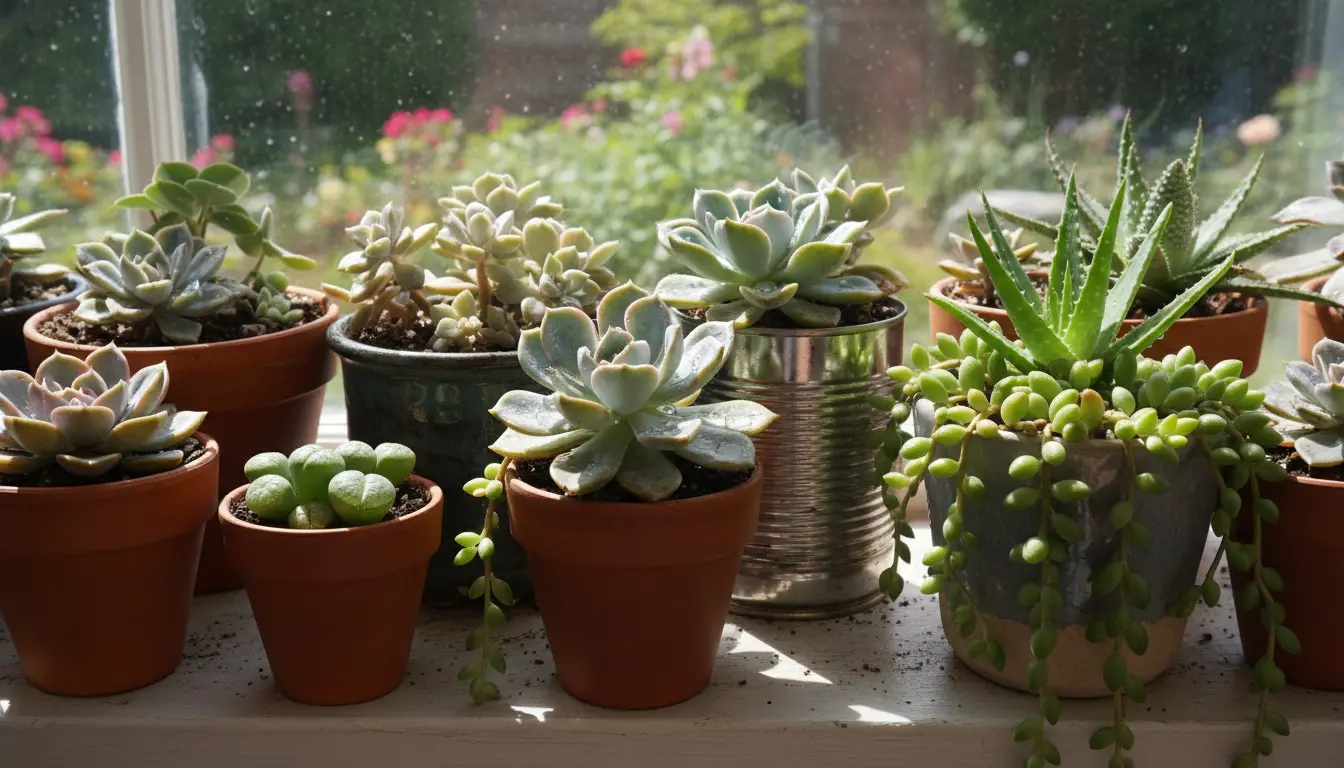
Succulents are popular for indoor spaces because they tolerate dry air and need less maintenance than many houseplants. This guide gives practical, step-by-step advice to keep indoor succulents healthy and attractive year round.
Indoor Succulent Care Basics
Indoor succulent care centers on three essentials: light, water, and well-draining soil. Get these right and most problems are easy to prevent or fix.
Light Requirements for Indoor Succulent Care
Most succulents need bright, indirect light to thrive. A south- or west-facing window is usually best, but avoid harsh midday sun through glass that can scorch leaves.
If natural light is limited, use a full-spectrum LED grow light on a timer for 10–14 hours per day. Rotate pots every 1–2 weeks so plants grow evenly.
Watering Guidelines for Indoor Succulent Care
The key rule is to water deeply and infrequently. Let the soil dry out between waterings to avoid root rot.
- Summer: Water every 1–2 weeks depending on pot size and indoor climate.
- Winter: Reduce to once every 3–6 weeks while growth slows.
- Check soil moisture by inserting a finger an inch deep; if dry, water.
Soil and Potting for Indoor Succulent Care
Use a mix that drains quickly: combine potting soil with coarse sand, perlite, or pumice. Do not use plain garden soil or non-draining mixes.
Choose pots with drainage holes and a size slightly larger than the root ball. Repotting every 1–2 years refreshes soil and supports healthy growth.
Advanced Indoor Succulent Care Tips
Fertilizing and Feeding
Succulents need light feeding during the active growing season. Use a balanced, diluted fertilizer (quarter-strength) monthly in spring and summer.
Avoid fertilizing in winter when plants are dormant, as excess nutrients can harm roots.
Pest Control in Indoor Succulent Care
Common pests include mealybugs, scale, and spider mites. Early detection makes treatment easier.
- Inspect new plants before bringing them indoors.
- Remove pests manually with a cotton swab and rubbing alcohol.
- Use insecticidal soap or neem oil for larger infestations, following label instructions.
Propagation Methods
Succulents are easy to propagate from leaves, cuttings, or offsets. Propagation is a low-cost way to replace plants and expand your collection.
- Leaf propagation: let a clean leaf callous over for a few days, then place on well-draining soil and mist occasionally.
- Stem cuttings: allow the cut end to dry, then plant in coarse mix and water sparingly until roots form.
- Offsets: remove small pups and pot them separately with the same soil mix.
Some succulents, like Haworthia and Gasteria, tolerate lower light better than Echeveria or Sedum, making them excellent choices for north-facing rooms.
Troubleshooting Common Indoor Succulent Problems
Yellowing or Mushy Leaves
Mushy, translucent leaves usually indicate overwatering or root rot. Remove the plant from its pot, trim rotten roots, let it dry for a day, then repot in fresh, fast-draining soil.
Stretched or Leggy Growth
Elongated stems and widely spaced leaves mean insufficient light. Move the plant to a brighter location or add supplemental lighting to restore compact growth.
Leaf Drop or Browning Tips
Leaf drop can result from sudden temperature changes, pests, or under-watering. Browning tips often show salt build-up from hard water; flush soil occasionally with filtered water.
Real-World Example: Small Case Study
Case: Maria kept a mixed windowsill collection that was leggy and dropping leaves. She moved the pots to a brighter south-facing window, repotted three plants into a 50/50 cactus mix with pumice, and reduced watering from weekly to biweekly.
Result: Within eight weeks the succulents produced new compact growth and stopped dropping leaves. One echeveria produced two offsets in three months after the change.
Seasonal Care Checklist for Indoor Succulent Care
- Spring: Repot if root-bound, begin monthly feeding, check lighting as days lengthen.
- Summer: Increase ventilation, water more often if warm and dry, but still allow soil to dry between waterings.
- Autumn: Reduce fertilizer, prepare for cooler nights by monitoring indoor temps.
- Winter: Cut back watering and stop fertilizing; provide steady bright light if possible.
Following these straightforward steps will help you maintain healthy indoor succulents with predictable results. Start with the basics—light, water, and soil—and adjust care based on the plant’s response and your home environment.
Quick Action Checklist
- Place succulents in bright, indirect light and rotate weekly.
- Use a fast-draining soil mix and pots with drainage holes.
- Water deeply but infrequently; let soil dry between waterings.
- Inspect for pests monthly and treat early.
- Propagate to replace or expand your collection.