
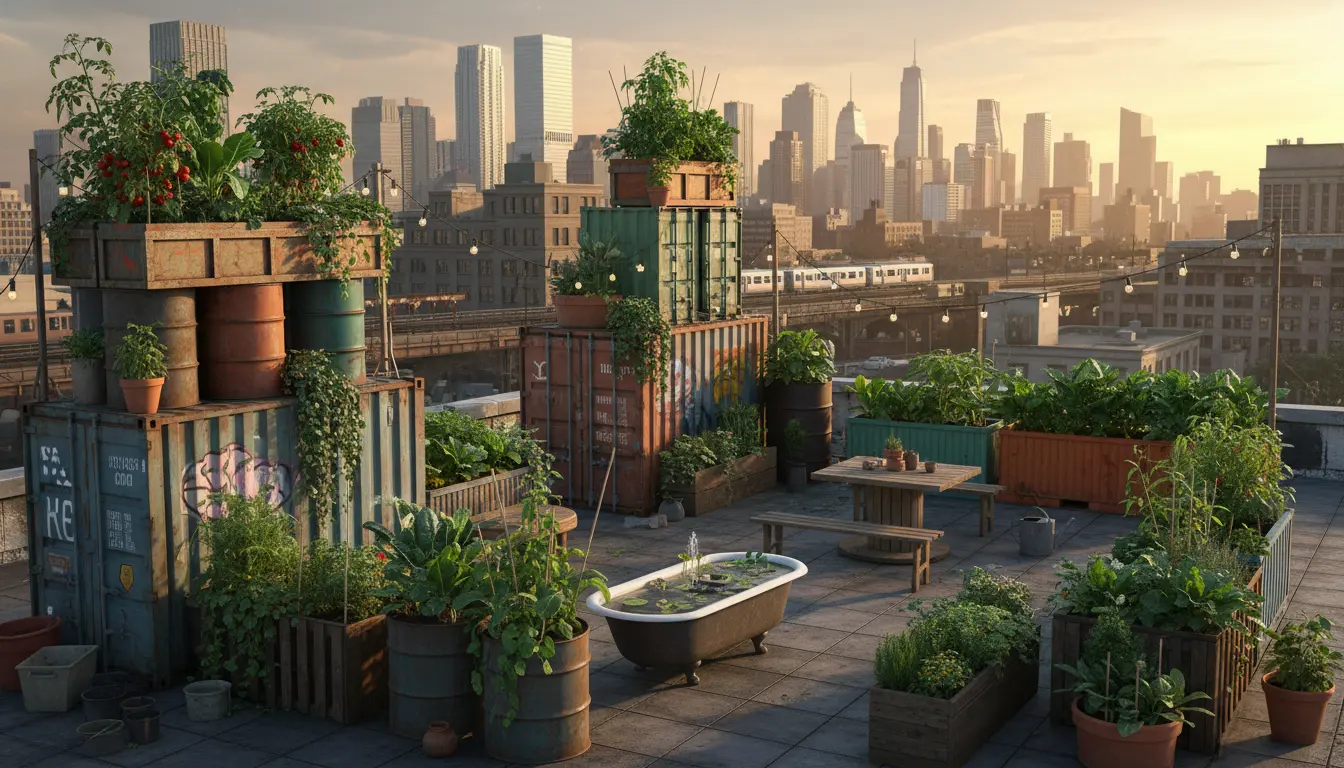
Container Vegetable Gardening: Getting Started
Container vegetable gardening lets you grow fresh produce in small spaces like balconies, patios, or windowsills. The approach is practical for beginners and flexible for experienced gardeners.
Start by deciding what you want to grow and where the containers will sit. Light, access to water, and wind exposure will shape your choices.
Choose the Right Containers for Container Vegetable Gardening
Select containers with drainage holes and enough volume for roots. Most vegetables need at least 5 gallons; tomatoes and peppers benefit from 10 gallons or more.
- Small herbs: 1–3 gallon pots
- Leafy greens: 3–5 gallon containers
- Tomatoes, peppers, bush beans: 5–10 gallon pots
- Indeterminate tomatoes or small fruit trees: 15+ gallon planters
Materials matter: plastic retains moisture, clay breathes but dries faster, and fabric grow bags give excellent aeration.
Soil and Fertilizer for Container Vegetable Gardening
Use a quality container potting mix, not garden soil. Potting mixes are lightweight and drain well while holding enough moisture for roots.
Mixes with compost or slow-release fertilizer are helpful. Supplement with liquid feeds during the season for heavy feeders like tomatoes.
- Potting mix + compost (2:1) for balanced nutrition
- Slow-release granular fertilizer at planting for steady supply
- Liquid fertilizer every 2–3 weeks for leafy growth or fruiting
Plant Selection and Spacing
Pick compact or bush varieties labeled for containers. Determinate tomatoes, compact pepper varieties, and dwarf bush beans are good choices.
Follow spacing recommendations for each plant to avoid overcrowding. Overcrowding reduces air flow and increases disease risk.
Best Vegetables for Containers
- Lettuce and salad greens — fast harvest, small roots
- Spinach and Swiss chard — tolerate partial shade
- Cherry tomatoes — productive in medium pots
- Peppers — do well in 5–10 gallon pots
- Radishes and carrots — choose short-root varieties
- Herbs like basil, parsley, and cilantro — perfect for windowsills
Watering and Drainage Tips for Container Vegetable Gardening
Containers dry out faster than the ground, so monitor moisture daily during hot weather. Water deeply to encourage root growth, letting excess drain freely.
Use the finger test: stick your finger 1–2 inches into the soil. If it feels dry, water until it runs out of the drainage holes.
- Morning watering reduces evaporation and leaf wetness at night
- Self-watering containers and drip irrigation save time and water
- Mulch the top of the pot with straw or shredded bark to slow evaporation
Pest, Disease, and Maintenance
Inspect plants regularly for pests like aphids, whiteflies, and slugs. Early detection lets you act with targeted controls like insecticidal soap or hand removal.
Maintain container hygiene by removing dead leaves and pruning crowded growth. Rotate crops in larger containers or replace potting mix annually to reduce disease buildup.
Common Problems and Quick Fixes
- Yellowing leaves: check watering and fertilizer balance
- Wilting: often underwatering, but root rot can cause wilting too; ensure good drainage
- Pests: spray with soapy water or use beneficial insects for control
Season Planning and Succession Planting
Plan for multiple harvests by sowing warm-season crops after frost and cool-season crops before and after summer heat. Succession planting keeps containers productive.
Empty pots in late season can be replanted with fast crops like radishes or leafy greens for another harvest.
Winter and Off-Season Care
In colder climates, move containers to protected areas, or bring small pots indoors. Drain excess water from containers before freezing to avoid cracking or root damage.
Small Real-World Case Study
Case: Maria converted a 6×8-foot balcony into a productive container vegetable garden. She used three 10-gallon containers for tomatoes, four 5-gallon pots for peppers and basil, and several 3-gallon pots for lettuce.
Over one season Maria harvested continuous salads, two harvests of cherry tomatoes, and steady herbs. Her keys to success were daily morning checks, a lightweight potting mix with compost, and a simple drip hose for consistent watering.
Practical Checklist Before You Start Container Vegetable Gardening
- Measure available space and light level
- Choose containers with proper volume and drainage
- Select potting mix and initial fertilizer
- Pick compact plant varieties suited for containers
- Establish a watering schedule and consider drip irrigation
- Plan for seasonal succession and pest monitoring
Final Tips for Container Vegetable Gardening Success
Keep records of what you plant and how each container performs. Small adjustments—more shade cloth, different fertilizer, or a larger pot—can improve yields significantly.
Start small, learn the microclimate of your space, and expand once you find reliable combinations of plants and containers. Container vegetable gardening is adaptable and rewarding with just a bit of planning.