
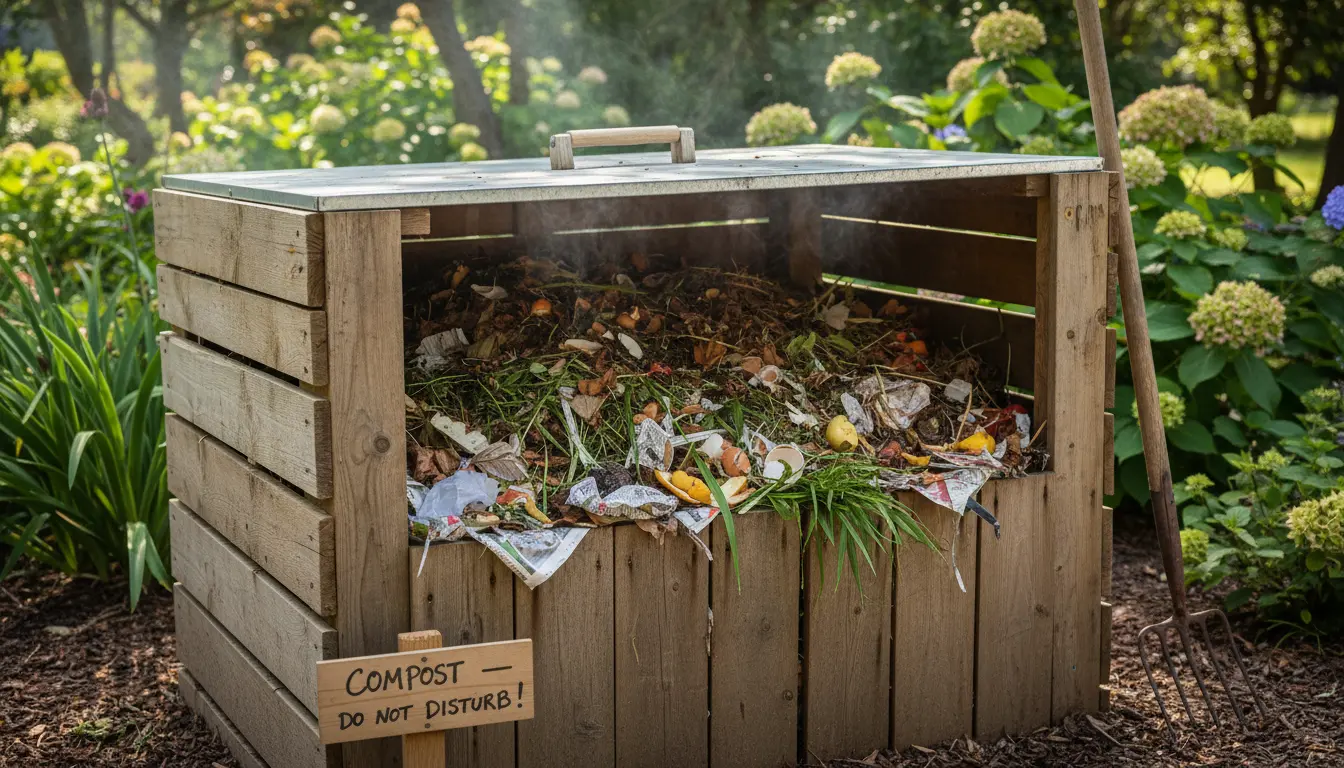
Why home composting matters
Home composting turns kitchen and yard waste into valuable soil amendment. It reduces landfill volume, lowers methane emissions, and feeds your plants naturally.
For beginners, composting can feel technical, but simple systems work well. This guide gives practical steps you can follow from day one.
Choosing a bin for home composting
Pick a bin that fits your space and lifestyle. Options include tumblers, stationary bins, or a simple heap in the backyard.
Tumblers speed mixing and are tidy for small yards. Stationary bins are low-cost and let microbes work uninterrupted.
Bin placement and basic setup
Place the bin on soil or grass to allow worms and beneficial organisms to enter. Avoid full sun if you live in a hot climate to prevent the pile from drying out.
Start with a layer of coarse material like twigs or straw to improve airflow at the bottom.
What to add: greens and browns
Successful home composting balances nitrogen-rich greens and carbon-rich browns. Aim for a pile that is roughly 3 parts browns to 1 part greens by volume.
- Greens (nitrogen): kitchen vegetable scraps, coffee grounds, fresh grass clippings
- Browns (carbon): dried leaves, shredded paper, cardboard, straw
Examples to avoid: meat, dairy, oily foods, and pet waste, which attract pests and slow decomposition.
Adding materials and moisture
Layer materials: a thin layer of greens, then a thicker layer of browns. Repeat until the bin is full or at a manageable height.
Keep the pile as damp as a wrung-out sponge. Add water during dry spells or cover with a tarp to retain moisture in rainy seasons.
Turning, aeration, and speed
Aeration supplies oxygen needed by composting microbes. Turn the pile every 1–2 weeks with a garden fork or use a tumbler for easy mixing.
More turning generally speeds composting and helps control odor. If your heap smells sour, add more browns and turn more often.
Temperature and signs of progress
Active compost can heat to 120–160°F (50–70°C). A hot center indicates rapid breakdown, but home piles often stay in cooler ranges and still produce good compost.
Over weeks to months, materials will look darker, crumbly, and smell earthy. That signals finished compost ready for use.
Troubleshooting common issues in home composting
Problems are usually easy to fix. Odor means too much green or poor aeration. Add browns and turn the pile.
Slow decomposition can happen with large pieces or dry conditions. Chop materials and add moisture to speed things up.
- Fruit flies: cover fresh scraps with browns and use a closed bin or kitchen caddy.
- Rodents: avoid meat and nuts and use a sealed bin or hardware cloth barrier.
- Excessive moisture: add dry browns and increase aeration.
Using finished compost in your garden
Finished compost improves soil structure, water retention, and nutrient content. Mix it into beds, use as a top dressing, or make compost tea for liquid feeding.
A common ratio is 1 part compost to 3 parts topsoil for planting mixes. For established beds, apply a 1–2 inch layer on the surface and work it in lightly.
Composting a ton of food waste can reduce methane emissions equivalent to taking several cars off the road for a year.
Small case study: Apartment composting success
Emma lives in a third-floor apartment and started home composting with a small worm bin on her balcony. She used a sealed kitchen caddy for scraps and fed them to the worms weekly.
Within four months she harvested dark, crumbly worm castings that she mixed into potting soil. Her balcony tomatoes produced fuller fruit, and she cut household waste by about 35%.
Quick checklist to start home composting today
- Choose a bin that fits your space: tumbler, bin, or worm box.
- Gather browns: shredded paper, dry leaves, cardboard.
- Collect greens: vegetable scraps, coffee grounds.
- Layer materials and maintain moisture like a wrung-out sponge.
- Turn every 1–2 weeks or use a tumbler for aeration.
- Harvest finished compost when dark and crumbly.
Final tips for consistent home composting
Start small and refine your process as you learn. Regular attention—adding balanced materials and occasional turning—keeps composting manageable.
Track what works in your climate and for your waste stream. Small changes deliver steady benefits to your garden and the environment.