
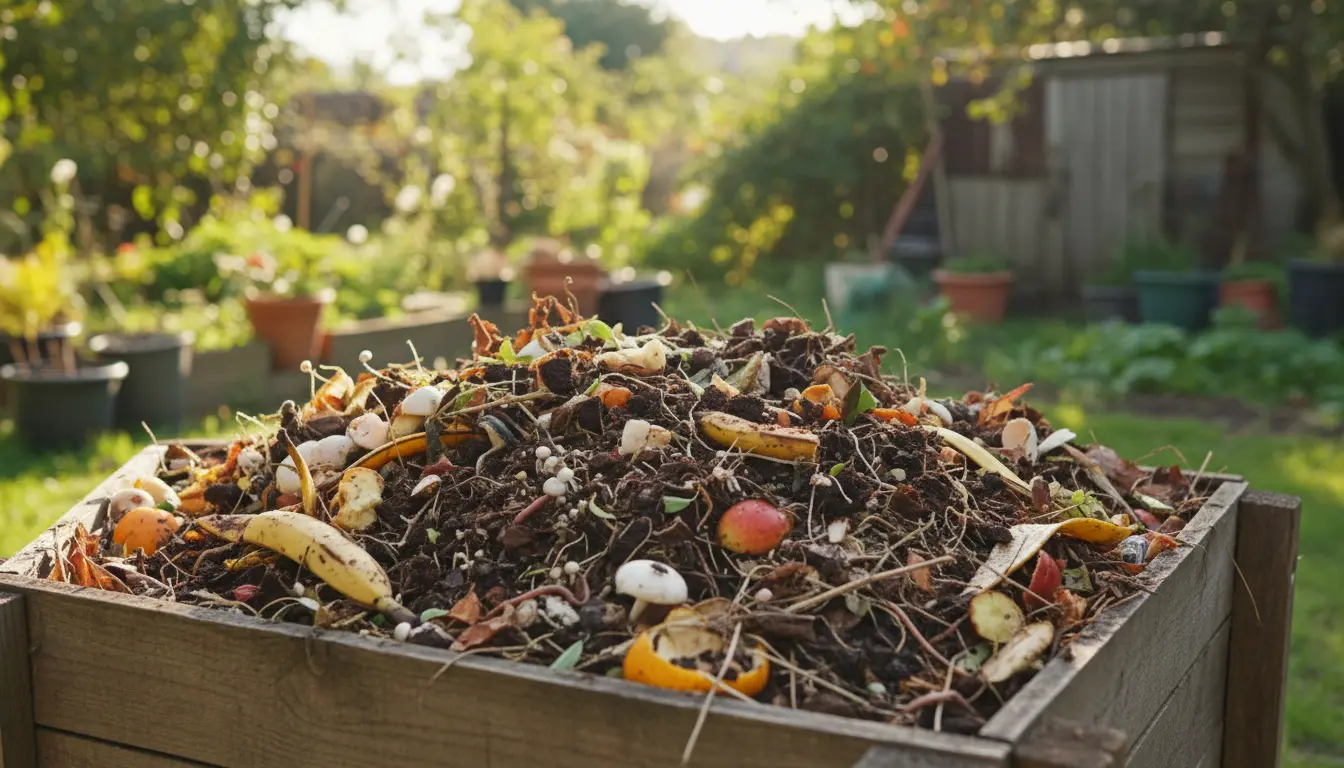
Why Home Composting for Beginners Is Worth It
Home composting reduces kitchen and yard waste while creating nutrient-rich soil for plants. It lowers trash volume and supports healthier gardens with minimal cost.
This guide gives clear, practical steps tailored for beginners so you can set up a working compost system in weeks.
Choose the Right Compost Method for Your Home Composting for Beginners
Start by picking a method that fits your space and time. Common options include backyard bins, tumblers, and worm composting (vermicomposting).
- Backyard bin: Simple, low-cost, good for yards and larger volumes.
- Tumbler: Faster decomposition and easier turning, ideal for small yards.
- Worm bin: Best indoors or on patios, excellent for kitchen scraps and fast results in small batches.
Which method suits you?
If you have a yard and occasional maintenance time, a backyard bin works well. For a small yard and low effort, choose a tumbler. For apartment dwellers, start a worm bin under the sink or on a balcony.
What to Compost: Greens and Browns
Understanding greens and browns is essential for balanced decomposition. Greens provide nitrogen; browns provide carbon.
- Greens: Vegetable scraps, fruit peels, coffee grounds, fresh grass clippings.
- Browns: Dry leaves, shredded cardboard, paper, straw, small wood chips.
Aim for roughly a 2:1 or 3:1 ratio of browns to greens by volume. If the pile smells, add more browns. If it’s dry and slow, add greens and water.
Step-by-Step Setup for Home Composting for Beginners
Follow these simple steps to build a compost pile or bin that works.
- Location: Place your bin in partial sun with good drainage and easy access.
- Base layer: Start with coarse browns like twigs to allow airflow.
- Add materials: Alternate layers of greens and browns. Chop larger pieces to speed breakdown.
- Moisture: Keep the pile damp like a wrung-out sponge. Water during dry periods.
- Air: Turn the pile every 1–2 weeks for faster composting in open bins; tumblers are usually turned more often for speed.
Tools and supplies
You only need a few basic tools: gloves, a pitchfork or compost aerator, and a bin or tumbler. A kitchen scrap container with a lid helps collect materials neatly.
Troubleshooting Common Problems in Home Composting for Beginners
New composters face predictable issues. Small fixes usually restore balance quickly.
- Bad smell: Add more browns and turn the pile to introduce air.
- Too dry: Moisten the pile evenly and add greens.
- Slow decomposition: Shred materials, increase surface area, and turn regularly.
- Pests: Avoid meat, dairy, oily foods, and bury food scraps in the center of the pile.
How Long Until Compost Is Ready?
Compost can be ready in 2–6 months for active systems with regular turning. Passive piles may take 6–12 months.
Finished compost is dark, crumbly, smells earthy, and has no recognizable food pieces. Sift or screen compost before use if you prefer a fine texture.
Composting can reduce household waste by up to 30% and cut methane emissions from landfills. Small changes in food handling and recycling make a big environmental impact.
Using Finished Compost
Apply finished compost to garden beds, potting mixes, and lawns. It improves soil structure, water retention, and nutrient content.
Use compost as a top dressing, incorporate it into seed-starting mixes, or blend it with potting soil at a 20–30% ratio for container plants.
Examples of application
- Vegetable beds: Spread 1–2 inches of compost and lightly dig in before planting.
- Flower beds: Work compost into the top 4–6 inches of soil in spring.
- Houseplants: Mix 1 part compost with 3 parts potting mix for richer containers.
Small Real-World Case Study
Case: A three-person household began backyard composting using a 60-gallon tumbler. They added kitchen scraps and yard trimmings with a 2:1 brown-to-green ratio and turned the tumbler every 3 days.
Result: After 10 weeks they produced about 35 gallons of finished compost. They used it to top-dress vegetable beds and reported healthier tomato plants with improved fruit yield the following season.
Final Tips for Home Composting for Beginners
- Start small and scale up as you learn what your household produces.
- Keep a simple log of what you add; patterns help troubleshoot issues.
- Learn local guidelines—some municipalities accept certain compostable materials that private composters should avoid.
Home composting is an easy, practical step toward lower waste and richer soils. With basic knowledge and routine, beginners can produce useful compost in a single season.