
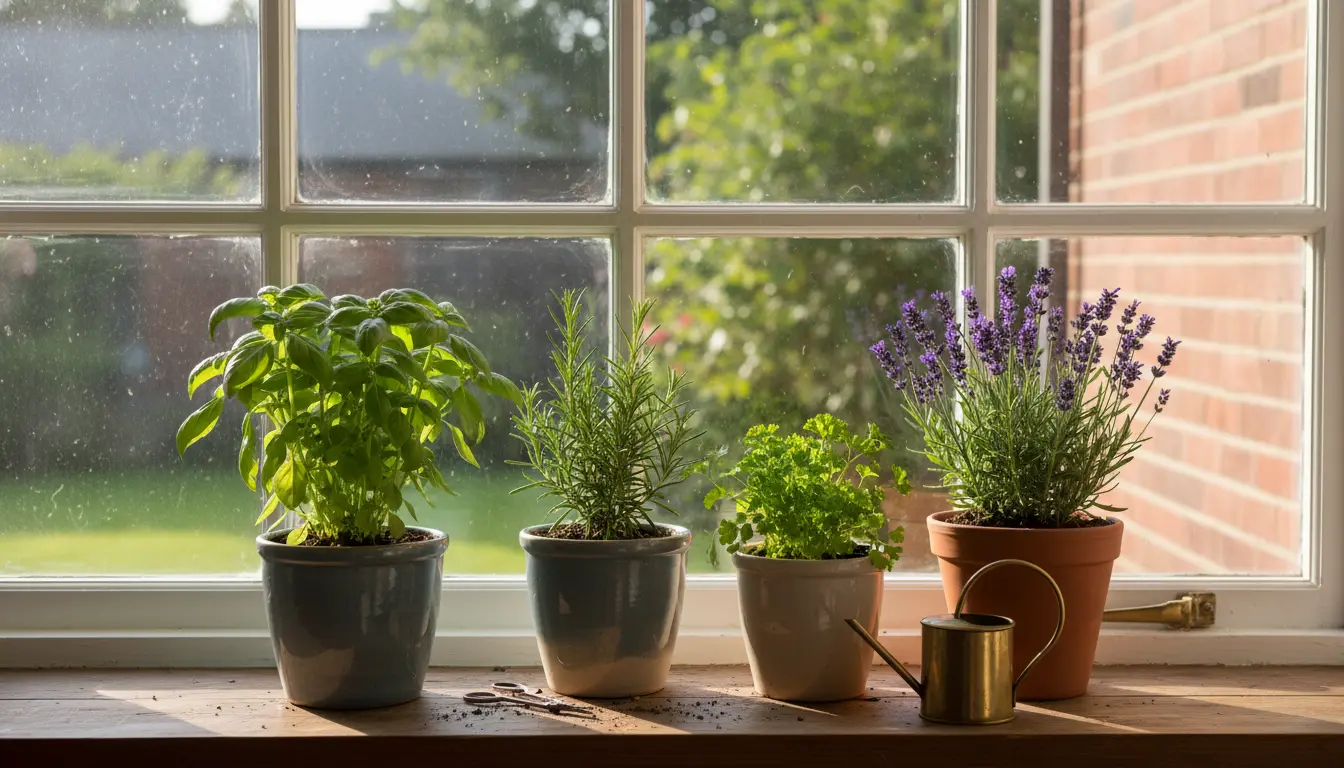
Indoor herb gardening is an easy way to add fresh flavor to meals and brighten your home. This guide gives clear, practical steps you can follow whether you have a sunny windowsill or a small balcony.
Indoor Herb Gardening Basics
Start with the right herbs and the right spot. Most culinary herbs need good light, moderate water, and well draining soil.
Choose herbs that match your kitchen and your light conditions to get dependable results.
Best Herbs for Indoor Herb Gardening
- Basil – prefers bright light and warmth
- Parej (Parsley) – tolerates moderate light
- Thyme – thrives in sunny, dry spots
- Mint – tolerant of lower light but invasive in garden beds; keep in pots
- Chives – easy, grows well on windowsills
Light Requirements for Indoor Herb Gardening
Light is the most common limiting factor for indoor herbs. Aim for at least 6 hours of bright indirect light for sun loving herbs like basil and thyme.
If you lack a sunny window, use a full spectrum LED grow light placed 6 to 12 inches above the plants. Set a timer for 12 to 14 hours per day to mimic natural light.
Quick Light Tips
- South or west facing windows give the best natural light in most climates.
- Rotate pots weekly so plants grow evenly.
- Watch for leggy stems; that means not enough light.
Soil, Containers, and Drainage
Use a light potting mix designed for containers. Heavy garden soil can hold too much water and suffocate roots indoors.
Choose pots with drainage holes and a tray to catch excess water. Good drainage reduces risk of root rot and fungal problems.
Container Size and Materials
- 4 to 6 inch pots are fine for single herbs like basil or chives.
- 8 to 10 inch pots work well for mixed herb containers or larger herbs like parsley.
- Ceramic and terracotta breathe more than plastic but dry faster; adjust watering accordingly.
Watering and Feeding in Indoor Herb Gardening
Watering is about balance. Check the top inch of soil; if dry, water until it flows out the drainage hole. Avoid keeping the soil constantly soggy.
Feed herbs lightly with a balanced liquid fertilizer every 4 to 6 weeks during active growth. Overfertilizing produces lush leaves but weaker flavor.
Common Watering Problems
- Yellowing leaves and soggy soil indicate overwatering.
- Wilting with dry soil indicates underwatering.
- Slow growth and pale leaves can signal nutrient deficiency.
Pruning, Harvesting, and Encouraging Growth
Regular pruning keeps plants productive and prevents flowering, which can reduce leaf flavor. Pinch back tips weekly to encourage bushy growth.
Harvest in the morning after dew dries for best essential oil levels. Remove no more than one third of the plant at a time to avoid stress.
Pruning Examples
- Basil: pinch top pairs of leaves above a leaf node to encourage branching.
- Thyme: trim lightly after flowering to rejuvenate growth.
- Mint: cut stems back regularly to control size and keep flavor fresh.
Pest Control and Disease Management for Indoor Herb Gardening
Indoor pests are usually manageable if detected early. Look for sticky residue, small spots, or webbing on leaves.
Use these steps: isolate affected plants, remove damaged growth, rinse leaves, and apply insecticidal soap if needed. Clean pots and surfaces regularly to reduce risk.
Safe Pest Control Methods
- Manual removal with a damp cloth for aphids and dust.
- Insecticidal soap or neem oil for light infestations.
- Replace heavily infested plants to protect others.
Many herbs develop stronger flavors when lightly stressed by slightly drier soil between waterings. This increases essential oil concentration and improves taste.
Seasonal Care and Moving Herbs
Most herbs do best in stable indoor temperatures between 60 and 75°F. Avoid cold drafts and heating vents that dry soil quickly.
If you move herbs outdoors in summer, acclimate them slowly over a week to prevent sunburn. Bring tender plants indoors before night temperatures drop below 50°F.
Small Case Study: A Kitchen Windowsill Success
Case: Maria, a busy teacher, started with three 4 inch pots of basil, chives, and parsley on a east facing windowsill. She used commercial potting mix and a 10 inch saucer under each pot.
After rotating pots weekly and trimming basil tips every two weeks, she harvested fresh leaves for meals and noticed fewer grocery trips. A small LED light kept parsley green through winter when natural light dropped.
Key takeaways from Maria’s example: choose easy herbs, maintain light and trimming routines, and add supplemental light during low light months.
Quick Start Checklist for Indoor Herb Gardening
- Choose 2 to 4 beginner herbs like basil, chives, and mint.
- Use potting mix and containers with drainage holes.
- Place in a sunny window or use a grow light for 12 hours daily.
- Water when the top inch of soil is dry, and fertilize monthly.
- Prune regularly to encourage bushy growth and prevent flowering.
Indoor herb gardening is approachable and rewarding. With the right light, soil, and simple routines, you can maintain fresh herbs year round and enhance your cooking with minimal space and effort.