
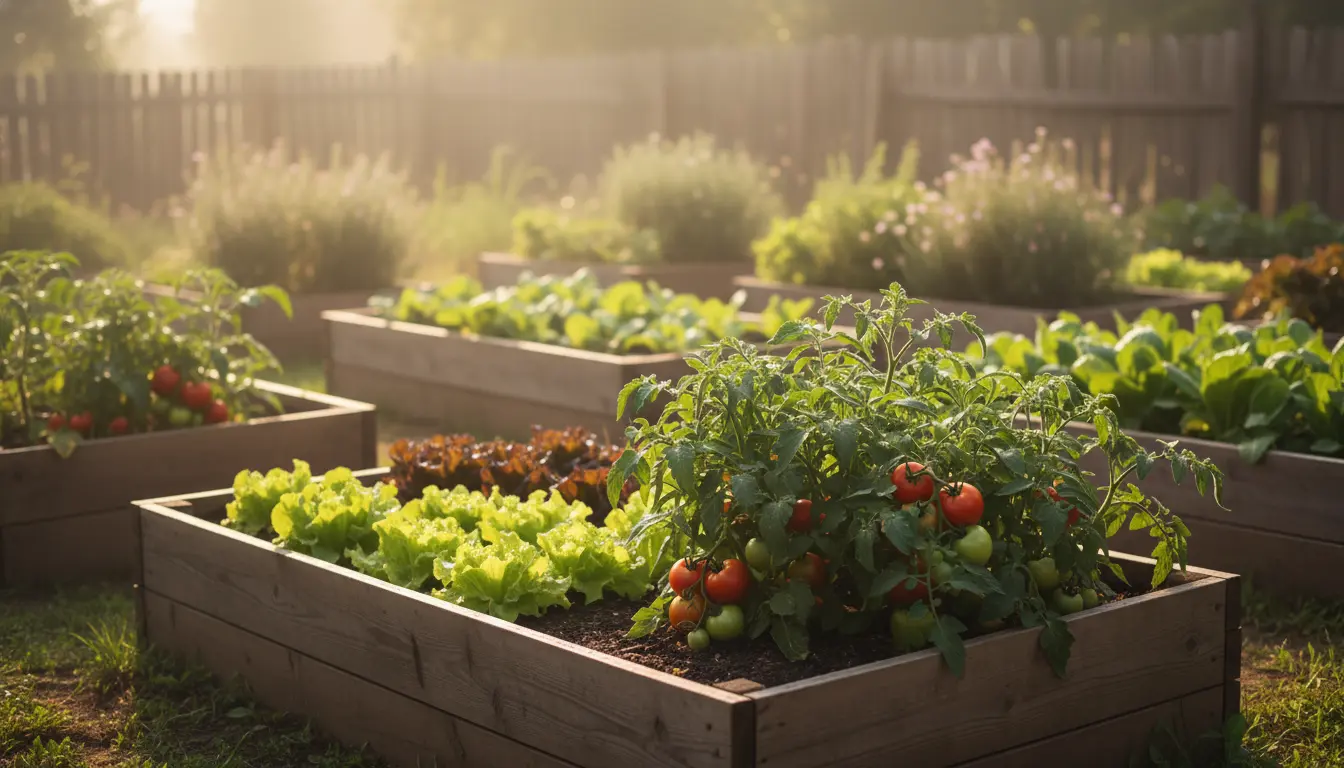
Growing your own vegetables is rewarding and affordable. This guide gives clear steps for planning, planting, and maintaining a productive garden even if you have limited space.
Starting a Vegetable Garden: Choose Your Site
Site selection is the first decision that determines success. Aim for a location that receives at least 6 hours of direct sunlight daily for most vegetables.
Sunlight, Soil, and Space
Check sunlight through the day and avoid heavy shade from trees or buildings. Good drainage is essential; avoid low spots that collect water.
Test soil texture by digging a small handful. Loamy soil that crumbles easily is ideal. If your soil is clay or sand, plan to amend it or use containers.
Starting a Vegetable Garden: Plan and Prepare Beds
Decide between in-ground beds, raised beds, or containers. Each option suits different backyards and budgets.
Raised Beds, Containers, or In-Ground
- Raised beds: Faster warming in spring, better drainage, easier weeding.
- Containers: Best for patios, balconies, or very poor soil.
- In-ground: Cost effective for large areas, but may require more soil improvement.
Prepare soil by adding 2–4 inches of compost and mixing it into the top 6–8 inches. This improves fertility and structure immediately.
Starting a Vegetable Garden: Select Easy Crops
Choose plants that are reliable and low-maintenance for your first season. Consider space, climate, and how often you want to harvest.
Best Vegetables for Beginners
- Leaf lettuce and salad greens — quick to grow and harvest.
- Radishes — mature in 3–4 weeks and signal fast success.
- Tomatoes (determinate varieties) — productive and forgiving with support.
- Green beans — bush types require minimal trellis care.
- Zucchini and summer squash — high yields in small space.
Start seeds indoors for long-season crops like tomatoes or buy healthy seedlings from a local nursery to simplify the first year.
Starting a Vegetable Garden: Planting and Care
Timing matters. Plant cool-season crops (peas, spinach) in early spring, and warm-season crops (tomatoes, peppers) after the last frost.
Watering, Mulching, Fertilizing
Water deeply and less often to encourage strong roots. A general rule is 1 inch of water per week, adjusted for heat and rainfall.
- Mulch: Apply 2–3 inches of organic mulch to conserve moisture and suppress weeds.
- Fertilize: Use a balanced, slow-release fertilizer or side-dress with compost mid-season.
- Support: Stake tomatoes and beans early to avoid damage later.
Monitor pests weekly. Hand-pick slugs, use row covers for early insect control, and encourage beneficial insects by planting flowers nearby.
Starting a Vegetable Garden: Season Extension and Succession Planting
Extend your harvest with simple tactics. Use row covers to protect tender plants from light frosts and plant quick-turn crops between slower ones.
- Succession planting: Sow a new row of lettuce every 2–3 weeks for continuous harvest.
- Interplanting: Mix short and tall crops, like radishes between carrots, to use space efficiently.
Small Case Study: One Summer Harvest
Sarah, a first-time gardener with a 4×8 raised bed, followed a simple plan. She chose three tomato plants, two zucchini, and several rows of lettuce and radish.
She amended soil with compost, mulched heavily, and watered every other day in peak summer. By mid-summer she harvested lettuce every week and three tomato pickings by late August.
Outcome: A steady supply of salads and two large baskets of tomatoes, enough to preserve some for the winter. Her time investment averaged 20 minutes per day during peak season.
Common Problems and Quick Fixes
- Yellowing leaves: Check for overwatering or nutrient deficiency; adjust watering and add compost.
- Poor germination: Check seed depth and soil temperature; keep soil evenly moist.
- Pest outbreaks: Use physical barriers, hand removal, and promote predator insects before using chemicals.
Keeping a simple notebook helps. Record planting dates, varieties, and observations to improve next season’s plan.
Quick Checklist Before You Plant
- Confirm last frost date for your area.
- Choose a sunny, well-drained site.
- Decide bed type and prepare soil with compost.
- Select easy, space-appropriate crops.
- Plan watering, staking, and pest management.
Starting a vegetable garden is a step-by-step process. With modest planning, regular care, and a few simple tools, beginners can enjoy fresh produce and steady improvement year to year.