
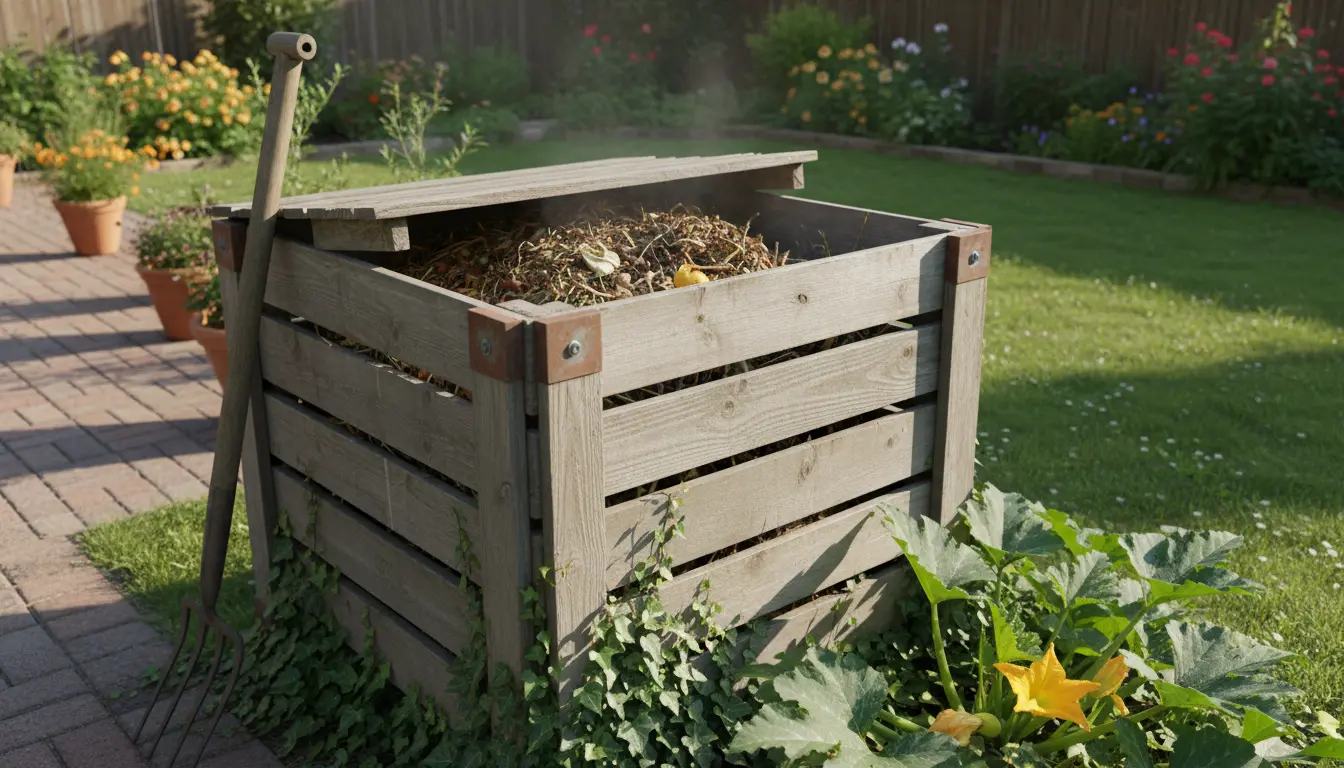
Home Composting Guide: Simple Overview
Composting turns kitchen scraps and yard waste into rich soil that improves plant growth. This home composting guide explains what to compost, how to build a pile or bin, and how to keep it working efficiently.
Why Home Composting Matters
Composting reduces household waste and lowers methane from landfills. It also produces nutrient-dense compost you can use in garden beds, potted plants, or lawn topdressing.
Home Composting Guide: Materials and Setup
Start with the right mix of materials, a suitable container, and a location with partial sun and good drainage. You can compost in a simple bin, tumbler, or a designated pile on the ground.
What to Compost (Greens and Browns)
- Greens (nitrogen): vegetable scraps, fruit peels, coffee grounds, fresh grass clippings.
- Browns (carbon): dry leaves, straw, shredded cardboard, paper, small wood chips.
A general rule is to aim for roughly 2–3 parts browns to 1 part greens by volume for balanced decomposition.
What Not to Compost
- Meat, fish, bones, and dairy (attract pests and smell).
- Oily foods, diseased plants, and pet waste from carnivores.
- Invasive weeds with seeds or persistent roots (unless compost heats thoroughly).
Home Composting Guide: Building a Compost Bin or Pile
Choose a bin size that fits your household waste. A 3x3x3 foot pile is ideal for heat buildup and efficient breakdown, but smaller bins or tumblers work well for limited space.
Step-by-Step Setup
- Pick a location with some shade and good drainage.
- Layer a few inches of coarse browns for base aeration.
- Add alternating layers of greens and browns, keeping the 2–3:1 ratio.
- Moisten each layer so it feels like a wrung-out sponge.
- Turn the pile every 1–2 weeks to introduce oxygen.
Managing Moisture, Air, and Temperature
Compost needs moisture and oxygen to support microbes. If it is too dry, decomposition slows; if too wet, it becomes anaerobic and smelly.
- Moisture: Aim for damp but not soggy material; add water or dry browns as needed.
- Air: Turn the pile regularly or use a ventilated tumbler to keep oxygen flowing.
- Temperature: Active piles heat to 120–160°F (50–70°C); this speeds breakdown and kills many seeds and pathogens.
Troubleshooting Common Problems
Smell, slow decomposition, and pests are common issues but usually easy to fix. Identify the cause and adjust materials, moisture, or aeration accordingly.
Quick Fixes
- Bad odor: Add more dry browns, turn the pile, and reduce wet food scraps on top.
- Slow breakdown: Chop scraps smaller, increase greens for nitrogen, or raise pile temperature.
- Pests: Avoid meat and dairy, bury food scraps in the center, or use a closed bin.
Composting a typical household’s organic waste can reduce weekly trash volume by up to 30 percent, depending on diet and yard size.
Home Composting Guide: Using Finished Compost
Finished compost looks dark, crumbly, and earthy-smelling. It typically takes 3 months to 2 years depending on method and conditions.
Use compost to:
- Amend garden beds: mix 1 to 2 inches of compost into topsoil before planting.
- Topdress lawns: apply a thin layer to improve soil structure and microbial life.
- Potting mixes: blend 10–30% compost with other media for houseplants.
Small-Scale Options for Apartments and Balconies
Space-limited homes can compost with a worm bin (vermicompost) or a sealed bokashi system. Both methods handle kitchen scraps without large outdoor piles.
- Vermicompost: Red wiggler worms convert food waste into rich castings in a few months.
- Bokashi: Ferments food waste using bran inoculated with beneficial microbes; requires a small anaerobic bucket.
Local Rules and Resources
Check municipal composting rules and any curbside organics programs. Some cities accept food scraps separately, and local extension offices often run workshops.
Case Study: Maria’s Balcony Compost
Maria lives in a city apartment and started a small vermicompost bin on her balcony. She used a plastic bin with drainage, food-safe bedding, and 1,000 red wigglers.
After six months she had a steady supply of castings that she mixed into container soil. Her herbs became more vigorous, and she reduced kitchen waste sent to the trash by about half.
Key takeaways from her experience: start small, keep bedding moist, and avoid adding citrus or onion in large amounts at first.
Final Checklist from This Home Composting Guide
- Choose a bin or method that fits your space and habits.
- Balance greens and browns; aim for 2–3 parts browns to 1 part greens.
- Maintain moisture, aeration, and reasonable pile temperature.
- Use finished compost to enrich soil and reduce fertilizer needs.
With the guidance in this home composting guide, you can turn everyday waste into a valuable resource for your garden. Start with small, consistent steps and adjust based on what your pile needs.