
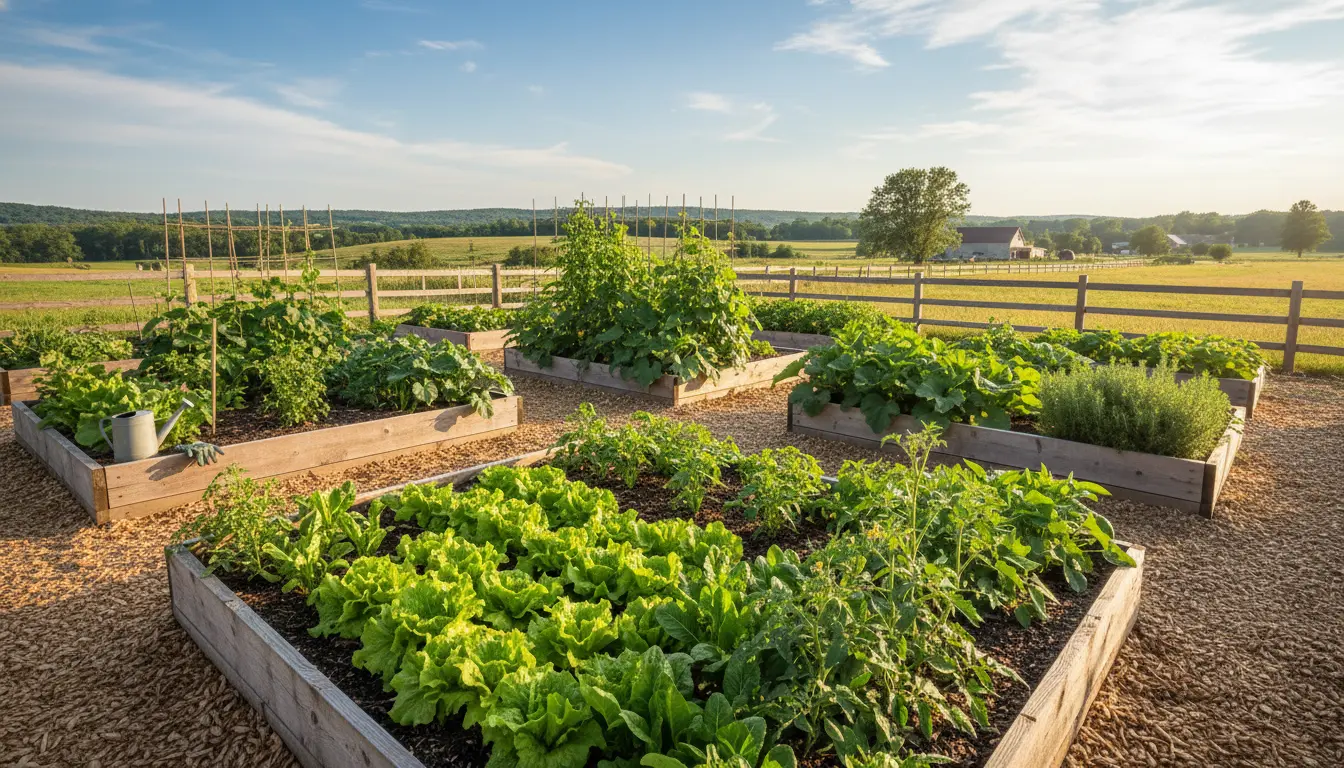
Why Start a Small Vegetable Garden
Starting a small vegetable garden gives fresh produce, saves money, and teaches sustainable habits. A compact garden fits balconies, patios, or a small backyard and is easier to manage than a large plot.
Planning Your Small Vegetable Garden
Start with a simple plan that defines location, size, and goals. Decide whether you want raised beds, containers, or an in-ground patch based on the space and your physical needs.
Set Clear Goals for Your Small Vegetable Garden
List what you want to grow and why—salad greens for weekly meals, tomatoes for canning, or herbs for cooking. Prioritize 3–6 crops for your first season to keep the garden manageable.
Choosing the Best Location for a Small Vegetable Garden
Vegetables need at least 6 hours of direct sunlight; most prefer 8 hours. Choose a level spot with good drainage and access to water.
Sunlight and Microclimates
Observe the spot across a day to confirm sunlight. Note nearby trees or walls that create shade or wind protection, and use them to your advantage.
Soil and Containers for a Small Vegetable Garden
Soil quality is the most important factor for a productive small vegetable garden. If using containers, choose a high-quality potting mix and containers with drainage holes.
Building Good Soil
For raised beds or in-ground plots, mix compost with native soil in a 1:3 ratio and loosen the top 12 inches. Test soil pH and adjust if needed: most vegetables prefer pH 6.0–7.0.
What to Plant in a Small Vegetable Garden
Select vegetables that match your climate, space, and cooking habits. Compact varieties and vertical growers maximize yields in small areas.
- Beginner-friendly crops: lettuce, radishes, bush beans, cherry tomatoes, basil, and spinach.
- Space-savers: pole beans, cucumbers on a trellis, and indeterminate tomatoes.
- Stagger plantings: sow fast crops every 2–3 weeks for continuous harvest.
Planting and Scheduling in a Small Vegetable Garden
Create a simple calendar based on your last frost date. Start seeds indoors for slow-growing crops or buy seedlings to speed success.
Companion Planting and Succession
Use companion planting to improve pollination and deter pests. Follow early harvests with a second crop to make the most of limited space.
Watering and Feeding Your Small Vegetable Garden
Water deeply and less often to encourage strong roots. Aim for an inch of water per week, adjusting for heat and rainfall.
- Use drip irrigation or soaker hoses for consistent moisture.
- Feed with compost or a balanced organic fertilizer every 4–6 weeks during the growing season.
Pest and Disease Management in a Small Vegetable Garden
Monitor plants weekly to catch problems early. Use cultural controls first: crop rotation, clean beds, and removing affected leaves.
Safe Control Options
Introduce beneficial insects, handpick larger pests, and use organic sprays like neem oil as a last resort. Avoid broad-spectrum pesticides that harm pollinators.
Harvesting and Saving Extra Produce
Harvest vegetables at peak ripeness to enjoy best flavor and to encourage continued production. Preserve excess by freezing, pickling, or drying.
Troubleshooting Common Small Vegetable Garden Problems
If plants are yellowing, check for nutrient deficiencies or overwatering. Stunted growth usually points to compacted soil or root issues.
- Yellow leaves: test soil, adjust watering, add compost.
- Poor fruiting: ensure enough sunlight and consistent feeding.
- Pest damage: identify pest and use targeted methods to remove it.
Case Study: A Small Vegetable Garden That Worked
Maria converted a 4 x 8 ft raised bed in an urban backyard into a productive small vegetable garden. She used a 60/40 mix of compost and native topsoil and planted a mix of salad greens, bush beans, and a single indeterminate tomato.
By staggering plantings of lettuce every three weeks and training the tomato on a simple stake, she harvested salad greens for eight months and had surplus beans for freezing. Her main changes the next year were improving drip irrigation and adding a small cold frame to extend the season.
Quick Checklist for Starting Your Small Vegetable Garden
- Choose a sunny spot and measure available space.
- Decide on raised beds, containers, or in-ground planting.
- Prepare soil with compost and test pH.
- Select 3–6 crops suited to your climate.
- Set up watering, plant on schedule, and monitor weekly.
Final Tips for a Successful Small Vegetable Garden
Start small and expand as you gain experience. Keep notes on planting dates, varieties, and harvests to improve next season’s yields.
With consistent care and simple planning, a small vegetable garden can provide fresh, healthy food and steady satisfaction.