
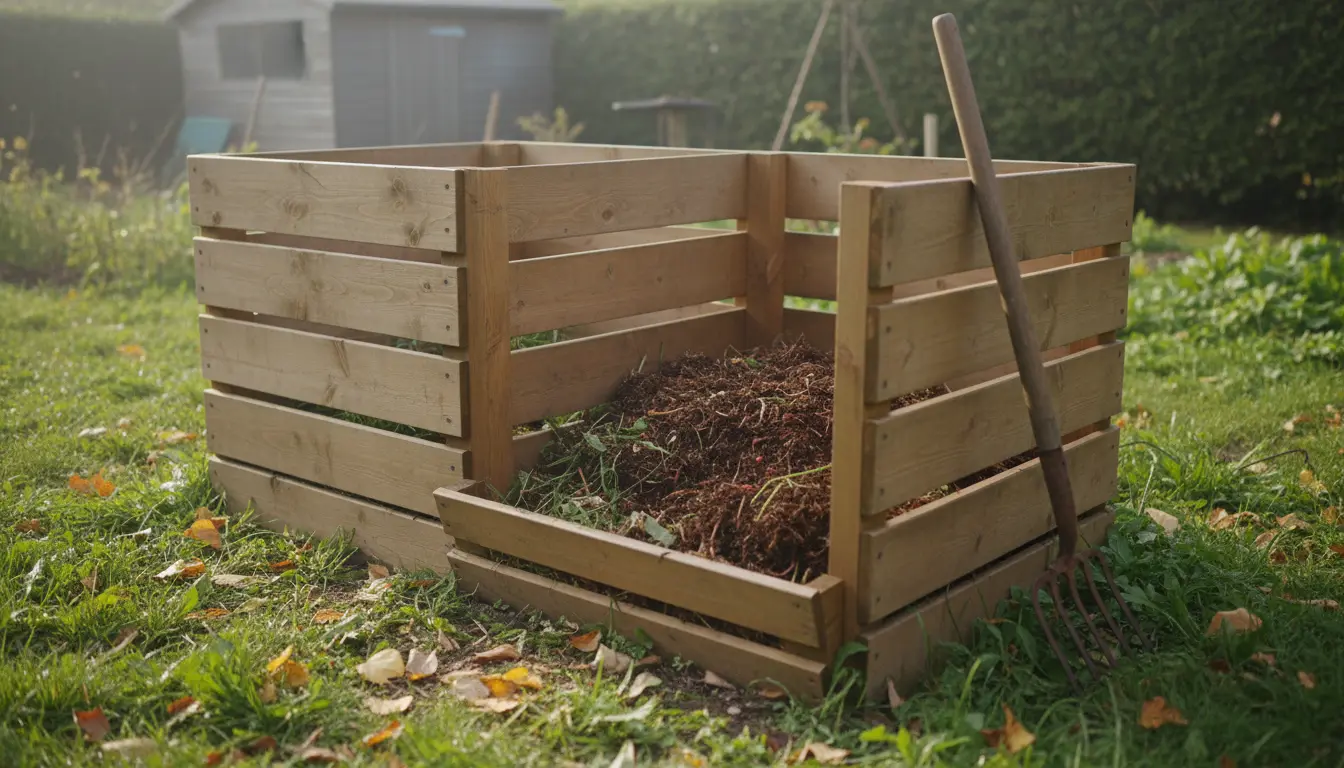
Home composting is a simple way to turn kitchen and yard waste into nutrient-rich soil. This guide explains the basic systems, materials, and steps that make home composting for beginners reliable and low-effort.
Why Home Composting for Beginners Works
Composting speeds up natural decomposition by combining the right balance of carbon, nitrogen, air, and moisture. Home composting for beginners focuses on easy-to-manage systems and common materials so results appear within weeks to months.
Choosing a Compost System for Home Composting for Beginners
Select a system that fits your space, waste volume, and comfort level. Popular options include a simple pile, a tumbler, and a worm bin (vermicompost), each with different maintenance needs.
- Backyard Bin: Good for yards and larger volumes, low cost, moderate maintenance.
- Tumbler: Faster turnaround and easier turning, ideal for small yards or patios.
- Worm Bin: Great indoors or on balconies, handles food scraps well and creates vermicompost.
Selecting the Right Size and Location
Choose a container that matches the amount of waste your household produces. Place the bin on bare soil or a well-drained surface to allow beneficial organisms to access the pile.
What to Compost: The Basics
Home composting for beginners relies on mixing brown and green materials to keep the pile balanced. Browns provide carbon, while greens supply nitrogen, and both are essential for active decomposition.
- Greens (nitrogen): Fruit and vegetable scraps, coffee grounds, fresh grass clippings.
- Browns (carbon): Dry leaves, shredded paper, cardboard, straw, wood chips.
- Avoid: Meat, dairy, oily foods, and pet waste to prevent pests and odors.
Step-by-Step Setup for Home Composting for Beginners
Setting up correctly at the start reduces troubleshooting later and speeds up composting. Follow these simple steps to create a balanced pile or bin that requires minimal weekly effort.
- Prepare the Base: Start with a layer of coarse browns or small branches to improve airflow and drainage.
- Add Materials in Layers: Alternate thin layers of greens and browns, aiming for about three parts brown to one part green by volume.
- Moisture and Aeration: Keep the pile damp like a wrung-out sponge and turn or aerate every 1–2 weeks to supply oxygen.
- Monitor Temperature: A healthy pile warms to 40–60°C (104–140°F) if hot composting; cooler piles still decompose but slower.
- Harvest Finished Compost: When material is dark, crumbly, and earthy-smelling, separate finished compost and return coarse bits to the pile.
Tools That Help Beginners
Simple tools reduce effort and improve results when home composting for beginners. A garden fork, a small shovel, and a compost thermometer speed setup and monitoring.
- Garden fork: For turning and aerating the pile.
- Compost thermometer: To check if the pile is hot enough for faster decomposition.
- Kitchen caddy: A sealed container for collecting kitchen scraps before transfer.
Composting reduces household waste volume by up to 50 percent and cuts methane emissions from landfills. Home compost improves soil structure and can reduce the need for chemical fertilizers.
Troubleshooting Common Problems
Beginners often face odors, pests, or slow decomposition, but these issues usually have simple fixes. The key is balancing moisture, carbon-to-nitrogen ratio, and airflow to restore healthy microbial activity.
- Bad Smell: Add more brown materials and turn the pile to introduce oxygen.
- Pests: Avoid meat and oily scraps, secure the bin, and bury fresh food under browns.
- Slow Breakdown: Chop or shred materials, increase greens if the pile is too dry, and maintain warmth by insulating cold piles.
Small Real-World Example: Apartment Balcony Worm Bin
Maria lives in a two-bedroom apartment and started vermicomposting in a 40-liter bin on her balcony. She collected kitchen scraps in a sealed caddy and added shredded cardboard and dry leaves as browns.
After three months, Maria produced about 10 liters of vermicompost, reduced her kitchen waste by half, and used the compost to feed potted herbs and tomatoes. Regular feeding twice a week and occasional harvesting kept the system odor-free and productive.
Benefits and Practical Tips for Home Composting for Beginners
Composting saves money, returns nutrients to soil, and reduces waste hauling. Beginners can start small and scale as their confidence grows while reaping these benefits quickly.
- Start with a manageable container and a weekly routine to avoid being overwhelmed.
- Record what you add and how the pile behaves for two to three months to learn patterns that work.
- Share or trade finished compost with neighbors and community gardens to expand impact.
Home composting for beginners is accessible, low-cost, and rewarding when followed with consistent care. Start with a small bin, follow the basic balance rules, and you will convert kitchen and yard waste into valuable compost that supports healthier plants.