
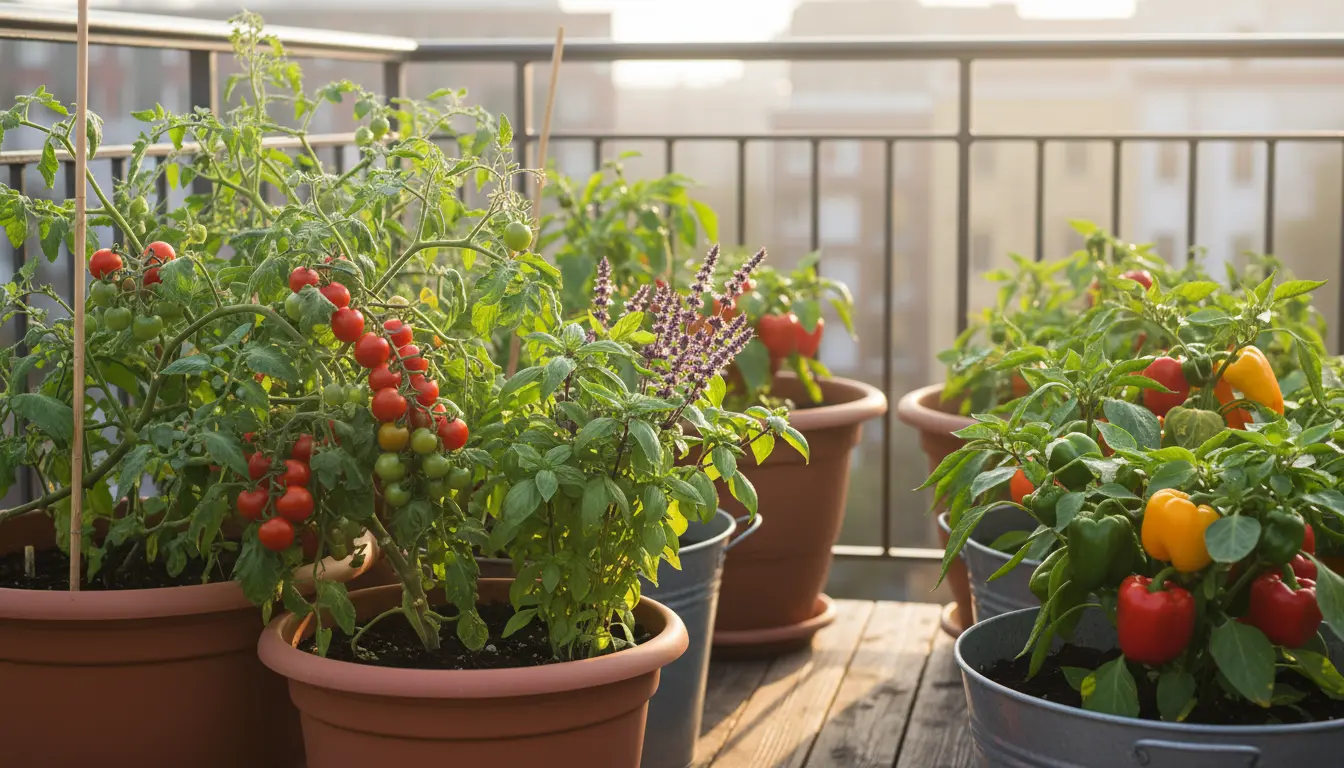
Why choose a Container Vegetable Garden
A container vegetable garden lets you grow fresh produce in small spaces like balconies, patios, or windowsills. It reduces the need for a full yard while giving control over soil and pests.
Containers are flexible, portable, and ideal for beginners or urban gardeners looking to maximize limited space. This guide explains practical steps to plan, plant, and maintain a productive container vegetable garden.
How to plan a Container Vegetable Garden
Start by assessing space, sunlight, and your goals. Most vegetables need 6–8 hours of direct sun; note sunny and shaded areas across the day.
Decide whether you want a few large containers for heavy feeders or many small pots for herbs and leafy greens. Write a short plan: space, container types, and a plant list.
Best vegetables for a Container Vegetable Garden
- Tomatoes (compact or determinate varieties)
- Peppers (sweet and hot)
- Leafy greens (lettuce, spinach, arugula)
- Herbs (basil, parsley, cilantro)
- Radishes and carrots (short varieties)
- Beans and peas (bush types)
- Cucumbers (compact or bush varieties)
Tools and materials you need
- Containers with drainage holes (pots, grow bags, planters)
- High-quality potting mix (not garden soil)
- Slow-release or liquid fertilizer
- Hand trowel, watering can, and pruning shears
- Stakes or cages for vining crops
Choosing containers for your Container Vegetable Garden
Select containers based on plant size and root depth. Small herbs do well in 6–8 inch pots, while tomatoes and peppers prefer 12–20 inch containers.
Use sturdy materials like plastic, ceramic, or fabric grow bags. Ensure every container has drainage holes to avoid waterlogged roots.
Container size guide
- Herbs and lettuce: 6–8 inch pots
- Root crops (carrots, radish): 10–12 inch deep containers
- Peppers and dwarf tomatoes: 12–16 inch pots
- Large tomatoes, cucumbers: 18–24 inch containers
Soil and planting for a Container Vegetable Garden
Use a high-quality potting mix formulated for containers. These mixes are lighter and drain better than garden soil.
Consider mixing in compost or well-balanced slow-release fertilizer at planting time. For quick nutrient boosts, use a water-soluble fertilizer every 2–4 weeks during the season.
Planting steps
- Fill container with potting mix, leaving 1–2 inches at the top.
- Place plant or seed at recommended depth and firm soil gently around roots.
- Water thoroughly to settle the mix and remove air pockets.
- Mulch the surface with straw or shredded bark to conserve moisture.
Container-grown vegetables often produce earlier than in-ground crops because containers warm up faster in spring. Warmer soil helps seeds germinate and seedlings establish sooner.
Watering and feeding your Container Vegetable Garden
Containers dry out faster than ground beds, so check soil moisture daily during hot weather. Stick your finger 1–2 inches into the soil; water when it feels dry at that depth.
Use consistent, deep watering rather than frequent shallow sprinkles. Aim to moisten the entire root zone when you water.
Fertilizer tips
- Start with a balanced slow-release fertilizer mixed into potting soil.
- Supplement with liquid feed every 2–4 weeks for heavy feeders like tomatoes.
- Reduce feeding late in the season as plants mature and fruit.
Maintenance and common problems in a Container Vegetable Garden
Regular maintenance keeps plants healthy and productive. Remove yellowing leaves, pinch back crowded growth, and harvest frequently to encourage more production.
Watch for pests like aphids, whiteflies, and fungal issues from overwatering. Treat problems early with soap sprays, neem oil, or by removing affected leaves.
Winter and season extension
Move portable containers to a sheltered spot or indoors to extend the season. For overwintering herbs, trim and bring them inside before frost.
Small case study: Balcony Tomato Success
Maria, an apartment renter, grew two determinate tomato plants in 20-inch pots on a south-facing balcony. She used a commercial potting mix with added compost and fed the plants biweekly with a liquid fertilizer.
Using tomato cages and consistent watering, she harvested 12–15 pounds of tomatoes over the season. Her key adjustments were shading the pots during peak afternoon heat and mulching to keep roots cool.
Quick checklist for a successful Container Vegetable Garden
- Assess light and choose appropriate container sizes.
- Use quality potting mix and ensure drainage.
- Plant suitable varieties for containers.
- Water deeply and regularly; monitor moisture daily in heat.
- Feed plants on a schedule and prune as needed.
- Monitor pests and act promptly with safe controls.
With planning and regular attention, a container vegetable garden can supply fresh produce even in the smallest spaces. Start with a few easy crops, learn as you go, and expand each season based on what worked best.