
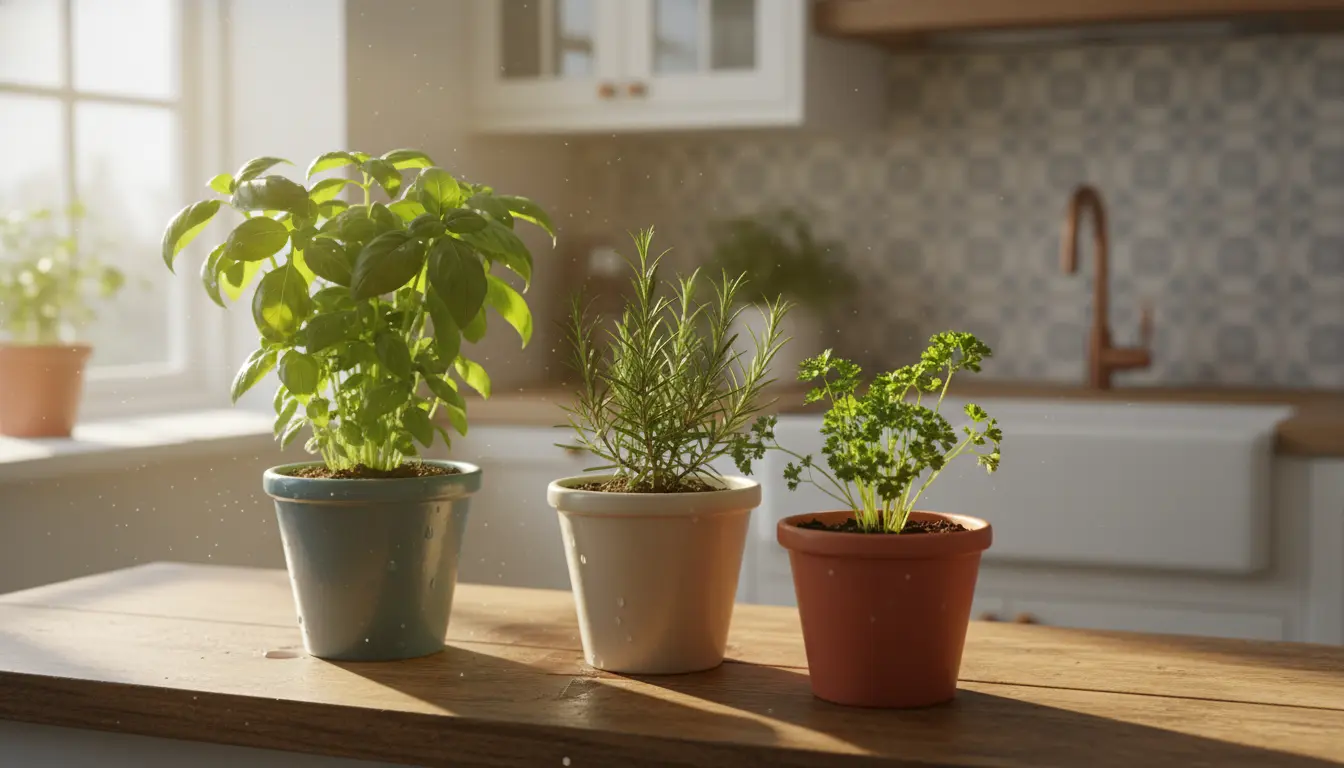
Why Start a Kitchen Herb Garden
Growing a kitchen herb garden is a low-cost way to have fresh flavor on hand and reduce food waste. Herbs require minimal space and can thrive on a sunny windowsill or balcony.
This guide explains the essentials: plant choice, containers, soil, light, watering, and common problems so you can get started confidently.
Planning Your Kitchen Herb Garden
Begin by assessing how much space and light you have. Most culinary herbs need at least 4–6 hours of direct or bright indirect light each day.
Decide if you want indoor pots, a small raised bed on a balcony, or a vertical setup. List the herbs you use most in cooking to prioritize plant choices.
Best Herbs for Beginners
- Basil — fast-growing, great for salads and sauces.
- Parsley — hardy and versatile.
- Mint — vigorous; grow in its own pot to prevent spreading.
- Chives — compact and tolerant of partial shade.
- Thyme and rosemary — prefer good drainage and bright light.
Choosing Pots and Soil for a Kitchen Herb Garden
Use pots with drainage holes to avoid root rot. For small spaces, choose pots 4–8 inches deep for most herbs; deeper pots for rosemary or larger plants.
Use a well-draining potting mix formulated for containers. Avoid garden soil, which compacts and drains poorly in pots.
Container Tips
- Group herbs with similar water needs together.
- Consider self-watering containers if you travel frequently.
- Use saucers to catch excess water and protect surfaces.
Light and Placement for a Kitchen Herb Garden
Place your herb pots where they receive 4–6 hours of bright light. South- or west-facing windows are ideal in the Northern Hemisphere.
If light is limited, supplement with a full-spectrum LED grow light set 6–12 inches above the plants for 10–14 hours a day.
Watering and Feeding Your Kitchen Herb Garden
Water when the top 1 inch of soil feels dry. Water thoroughly until excess drains from the pot, then let the soil dry slightly between waterings.
Fertilize lightly: use a balanced water-soluble fertilizer at half strength every 4–6 weeks during active growth. Overfeeding can reduce flavor and make herbs leggy.
Watering Checklist
- Check soil moisture with a finger or moisture meter.
- Avoid constant soggy soil; most herbs prefer slightly drier conditions.
- Adjust frequency by season: less water in winter, more in hot weather.
Pruning, Harvesting, and Maintaining Flavor
Regular pruning encourages bushy growth and prevents herbs from flowering too early. Pinch back tips and harvest leaves from the outer stems.
Harvest in the morning when oils are concentrated. For basil, pinch above a leaf node to promote branching. Remove flower spikes to keep herbs tasting their best.
Troubleshooting Common Problems in a Kitchen Herb Garden
Yellowing leaves often signal overwatering or poor drainage. Move to a brighter spot and check pot drainage.
Leggy, spaced-out growth indicates insufficient light. Either relocate near stronger light or add a grow light and prune to encourage compact growth.
Pest and Disease Notes
- Aphids and whiteflies can be removed with a strong water spray or insecticidal soap.
- Root rot: trim affected roots and repot into fresh well-draining mix if necessary.
- Good air circulation reduces fungal issues—avoid overcrowding pots.
Seasonal Care and Winter Tips
Most herbs slow growth in winter. Reduce watering and place plants where they get the most light. Consider moving tender herbs indoors before the first frost.
Rotate pots every week so all sides receive light and grow evenly. Trim back any leggy stems to maintain shape.
Case Study: A Small Apartment Kitchen Herb Garden
Laura, a city renter, started a kitchen herb garden on a 3-foot windowsill. She selected basil, chives, and parsley in 6-inch pots and used a windowsill reflector to increase light.
She watered weekly, fed lightly every month, and harvested basil twice a week. After three months, she reported fresher meals and reduced grocery spend on herbs.
Key takeaways: start small, choose herbs you use regularly, and adjust care for your light conditions.
Quick Start Checklist for a Kitchen Herb Garden
- Choose 3–5 herbs you use regularly.
- Pick pots with drainage and use a quality potting mix.
- Place in bright light or add a grow light if needed.
- Water when the top inch of soil dries and fertilize lightly.
- Prune and harvest regularly to encourage growth and flavor.
Final Tips for Success
Keep a small notebook with watering and feeding dates to learn what works for your environment. Start with easy herbs and expand as confidence grows.
With simple care and regular harvesting, a kitchen herb garden becomes a reliable source of fresh flavor and a rewarding small-scale gardening project.