
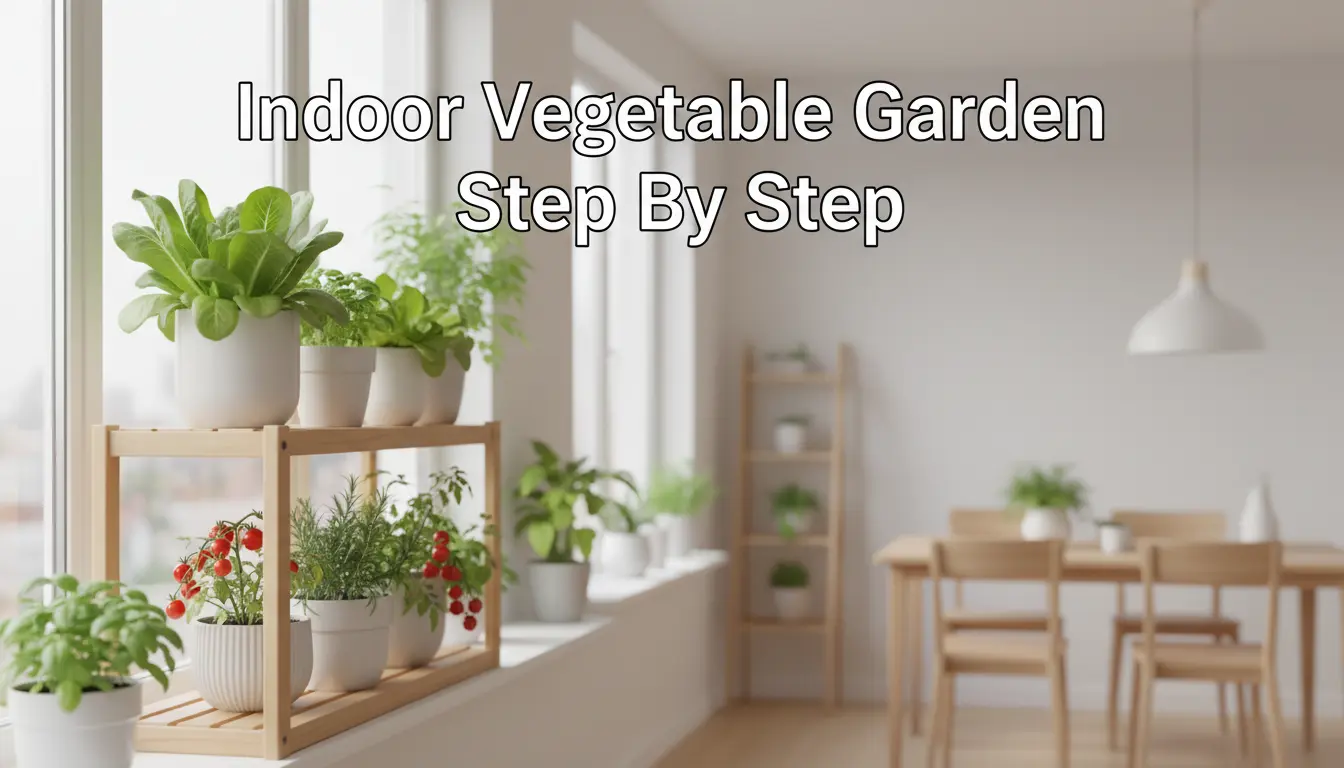
Why an Indoor Vegetable Garden Works
An indoor vegetable garden lets you grow fresh produce year-round, even with limited outdoor space. It reduces trips to the store and gives you control over soil, pests, and growing conditions.
This guide explains practical steps for setup, plant choice, light, watering, and ongoing care so you can get reliable results quickly.
Plan Your Indoor Vegetable Garden
Start by assessing available space and light. A south- or west-facing window is ideal, but grow lights can substitute if natural light is lacking.
Decide whether you will use containers, shelves, or a hydroponic setup. Each choice affects plant selection and maintenance.
Choose the Right Location
Pick a spot with stable temperature and minimal drafts. Avoid placing plants directly above heating vents or in rooms that get very cold at night.
Consider proximity to a power outlet for grow lights and ease of watering.
Select Containers and Medium
Use pots with drainage holes and trays to catch runoff. Lightweight plastic or fabric pots work well in indoor setups.
For soil, choose a high-quality potting mix labeled for vegetables; avoid garden soil, which compacts and can carry pests.
Best Vegetables for an Indoor Vegetable Garden
Pick compact, fast-growing crops to maximize success indoors. Start with easy varieties that tolerate container life.
- Lettuce and salad greens — quick harvests and low light needs.
- Herbs like basil, parsley, and chives — compact and forgiving.
- Cherry tomatoes — choose determinate or patio varieties and stake them.
- Peppers — small pepper varieties adapt well to pots.
- Spinach and kale — nutritious greens that grow well in containers.
Light Requirements for an Indoor Vegetable Garden
Light is the most common limitation indoors. Most vegetables need 12–16 hours of light daily for best growth.
Use LED grow lights with a full spectrum to mimic daylight. Mount lights 12–18 inches above plants and adjust height as plants grow.
Types of Grow Lights
- LED panels — energy efficient and low heat; best choice for most homes.
- Fluorescent tubes — affordable for seedlings and greens.
- HID lights — high output for large installations but generate heat and use more power.
Watering and Fertilizing Your Indoor Vegetable Garden
Indoor plants in containers dry differently than outdoor plants. Check soil moisture with your finger and water when the top 1–2 inches feels dry.
Avoid overwatering by ensuring proper drainage. Empty drip trays to prevent root rot and pests.
Feeding Schedule
Use a balanced liquid fertilizer or slow-release granules labeled for vegetables. Feed every 2–4 weeks during the active growing season.
Reduce feeding in cooler months or when plants are not actively producing.
Pest Control and Disease Management
Indoor gardens have fewer pests but can still be affected by aphids, whiteflies, and fungus. Regular inspection is key.
Use these practical controls:
- Hand removal or a spray of water for small infestations.
- Insecticidal soap or neem oil for persistent pests.
- Improve air circulation with a small fan to reduce fungal issues.
Many salad greens can be harvested in as little as 30 days indoors. Growing leaves as “cut-and-come-again” allows multiple harvests from one planting.
Routine Care for Consistent Harvests
Create a simple weekly routine: inspect plants, trim yellow leaves, check moisture, and rotate containers for even light exposure.
Record planting dates and harvests to learn which varieties perform best in your space.
Common Troubleshooting Tips
- Leggy seedlings: increase light or move lights closer for stronger growth.
- Yellow lower leaves: check drainage and reduce watering frequency.
- Poor fruit set on tomatoes: ensure 12–16 hours of light and hand-pollinate flowers if needed.
Small Case Study: Balcony to Table in 8 Weeks
Maria had a small balcony with limited sun. She set up a two-shelf unit with LED lights and four 6-inch pots filled with potting mix.
She planted lettuce, basil, and a patio tomato. With consistent light and weekly fertilizer, she harvested baby greens in 4 weeks and cherry tomatoes by week 8. The setup cost under $150 and cut her grocery salad purchases significantly.
Quick Checklist to Start Your Indoor Vegetable Garden
- Choose location and measure light availability.
- Select containers and quality potting mix.
- Pick easy vegetable varieties for containers.
- Install LED grow lights if natural light is insufficient.
- Set a watering and feeding schedule and inspect weekly.
Final Tips for Success with an Indoor Vegetable Garden
Start small and expand after a few successful crops. Track what works and adjust light, water, and plant choices gradually.
Growing food indoors is a practical way to increase freshness, reduce waste, and learn about plant care with reliable results.