
Why Home Composting Matters
Home composting turns kitchen scraps and yard waste into nutrient-rich soil. It reduces landfill waste and improves garden health with minimal cost.
This guide explains how to start home composting with simple, practical steps you can follow today.
Basic Principles of Home Composting
Composting is a natural process where microorganisms break down organic matter into humus. To succeed, balance three elements: carbon, nitrogen, and moisture.
Think of carbon as browns (dry leaves, paper) and nitrogen as greens (vegetable scraps, grass clippings). Both must be present for efficient composting.
Key Materials for Composting at Home
- Greens (nitrogen): fruit and vegetable scraps, coffee grounds, fresh grass clippings.
- Browns (carbon): dry leaves, straw, cardboard, shredded paper.
- Aeration: turn the pile; oxygen feeds compost microbes.
- Water: maintain dampness similar to a wrung-out sponge.
What to Avoid When Composting
Avoid adding meat, dairy, oils, and diseased plants to an open home compost pile. These items attract pests or cause odors.
Also avoid excessive citrus or onion waste in small systems; they slow microbial activity if overused.
Choosing a Method for Composting at Home
Select a method that fits your space, budget, and time. Common options include compost bins, tumblers, open piles, and vermicomposting.
Compost Bin
Bins are tidy and help retain heat and moisture. They are ideal for small yards and beginners.
Compost Tumbler
Tumblers speed up decomposition because turning is easy. They are more expensive but cleaner and faster than simple bins.
Open Pile
Open piles work well for larger yards where appearance is less important. They require regular turning and monitoring.
Vermicomposting
Worm bins use red wigglers to break down kitchen scraps. They are compact and excellent for apartment dwellers with indoor space.
Step-by-Step Guide to Start Home Composting
Follow these steps to build a simple, functioning compost system at home.
1. Pick a Location
Choose a level, partially shaded spot near a water source. This keeps the pile moist and accessible for turning.
2. Choose Your Container
Select a bin, tumbler, or decide on an open pile. For beginners, a bin or tumbler reduces pests and looks neater.
3. Build the Layering
Start with coarse browns (twigs, small branches) for drainage. Alternate 2–3 inches of greens with 3–5 inches of browns.
Cover fresh food scraps with a layer of browns to reduce odors and flies.
4. Maintain Moisture and Aeration
Keep the pile as damp as a wrung-out sponge. Turn the pile every 1–2 weeks to add oxygen and speed decomposition.
5. Monitor Temperature
A healthy compost pile warms to 120–160°F (50–70°C) when active. Smaller piles may not heat much but can still compost slowly over months.
Troubleshooting Common Problems
If the pile smells bad, add more browns and turn it to introduce air. Bad smells usually mean excess moisture or too much nitrogen.
If decomposition is slow, chop materials into smaller pieces, add nitrogen-rich greens, and ensure adequate moisture and aeration.
Benefits of Composting at Home
- Reduces household waste and landfill contributions.
- Produces free soil amendment to improve garden structure and fertility.
- Helps retain moisture in soil and reduces need for chemical fertilizers.
Small Real-World Case Study
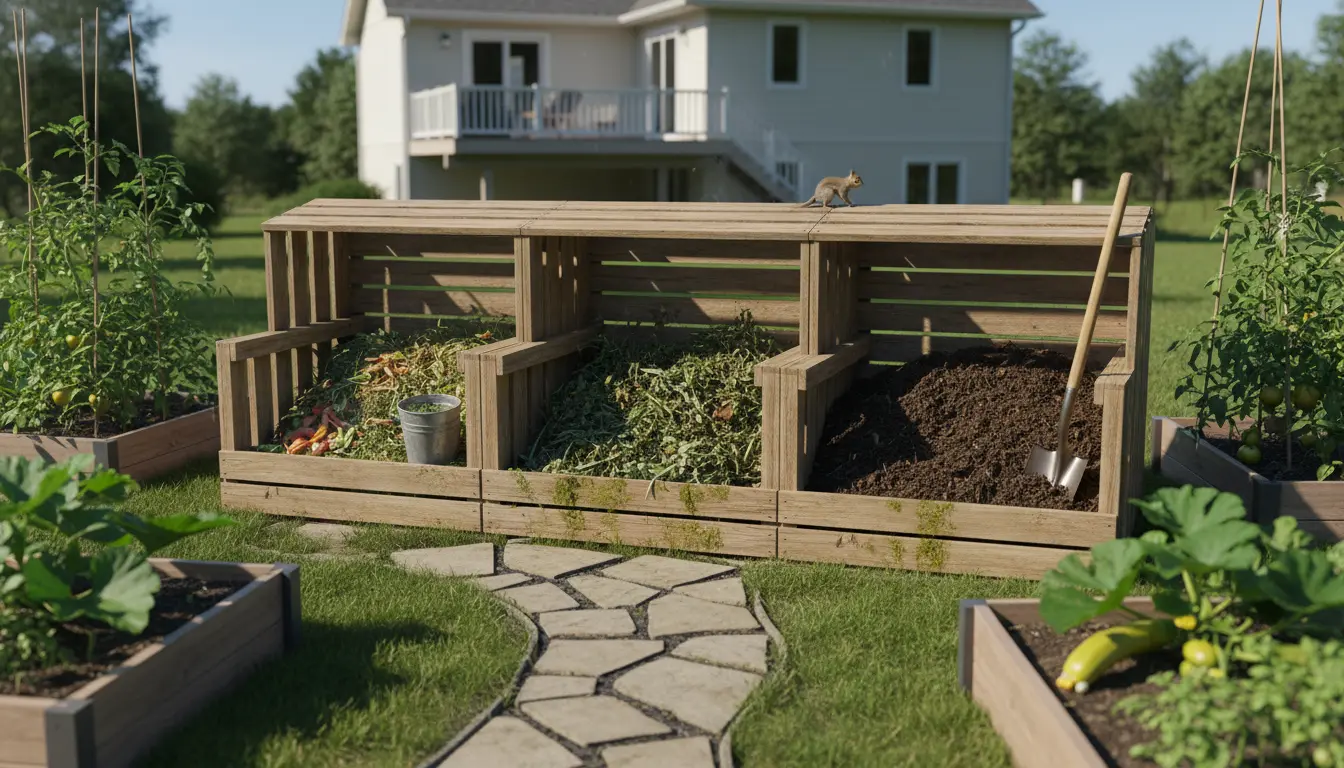
Example: A family of four in Portland started a 3-bin system in their backyard. They balanced kitchen scraps with fall leaves and turned the middle bin weekly.
Within six months they had dark, crumbly compost. They used it on their vegetable beds and reduced supermarket soil purchases by 80% the following season.
Quick Tips and Checklist for Home Composting
- Chop large materials to speed breakdown.
- Cover food scraps with browns to avoid pests.
- Turn the pile regularly for faster results.
- Use finished compost as a top dressing or soil amendment.
Final Thoughts on Composting at Home
Home composting is practical, affordable, and effective for reducing waste and improving garden health. Start small, monitor the pile, and adjust materials and aeration as needed.
With a simple routine and a bit of patience, you can create rich compost and contribute to a more sustainable household.