
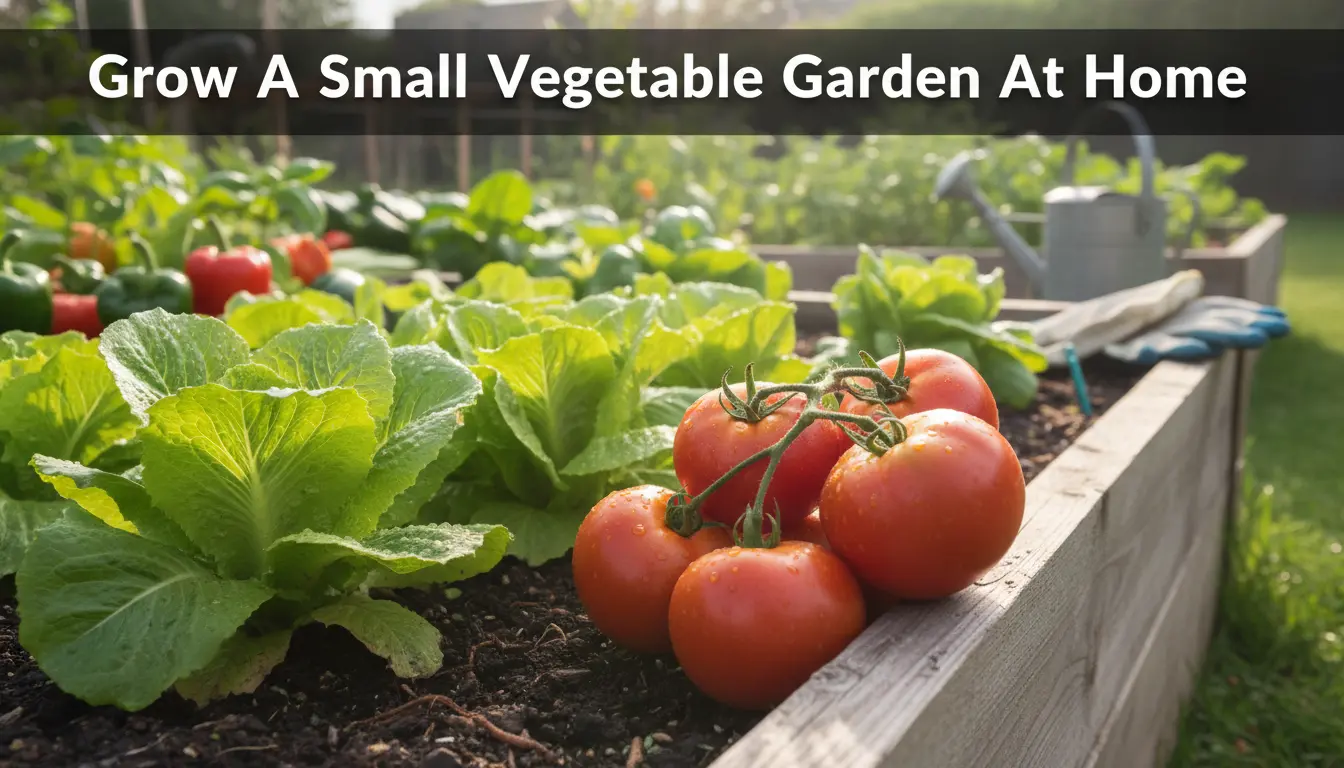
Why start a small vegetable garden
Starting a small vegetable garden gives you fresh produce, saves money, and connects you with nature. It is ideal for beginners because it requires less time and space than large plots.
This guide covers the essentials to help you start a small vegetable garden and keep it productive through the season.
Choose the right location for your small vegetable garden
Pick a spot with at least 6 hours of direct sunlight for most vegetables. Good light makes a big difference in plant health and yield.
Consider access to water, protection from strong winds, and proximity to your kitchen for easy harvesting.
Sunlight, soil, and access
- Sunlight: 6–8 hours daily for tomatoes, peppers, cucumbers.
- Soil: Well-drained loam is best; heavy clay needs amendment.
- Access: Place beds near a hose or rain barrel for easy watering.
Decide on garden style and size
Small gardens can be in-ground beds, raised beds, or containers. Each has pros and cons depending on space and budget.
Choose a manageable size—4×8 feet or a few containers—to limit maintenance and still grow enough produce for a household.
Common small garden layouts
- Raised bed (4×8 ft): Good drainage and easier on the back.
- Container garden: Perfect for balconies or patios.
- In-ground small bed: Lower cost but may need more soil prep.
Prepare soil to start a small vegetable garden
Healthy soil is the foundation of any garden. Test soil pH if possible; most vegetables prefer pH 6.0–7.0.
Amend soil with compost to improve structure, fertility, and water retention.
Soil preparation steps
- Clear the area of weeds and debris.
- Loosen soil to 8–12 inches for in-ground beds; fill raised beds with a mix of topsoil and compost.
- Add 2–4 inches of compost and work it in well.
Pick easy crops for your first small vegetable garden
Choose vegetables that are forgiving and quick to harvest. This keeps motivation high and reduces early failure.
- Leafy greens: lettuce, spinach, arugula.
- Root crops: radishes, carrots, beets (in deep enough containers).
- Fruiters for small spaces: cherry tomatoes, bush beans, dwarf peppers.
Planting tips for a small vegetable garden
Follow seed packet or plant tag spacing for optimal yields. Overcrowding reduces airflow and increases disease risk.
Stagger plantings of quick crops like lettuce every 2–3 weeks to extend harvests.
Example planting schedule
- Early spring: peas, radishes, spinach.
- Mid spring: tomatoes, peppers (after frost risk), basil.
- Late summer: second sowing of lettuce and radishes.
Watering and feeding your small vegetable garden
Water deeply and less frequently to encourage strong root systems. Aim for 1 inch of water per week, more in hot weather.
Mulch around plants to retain moisture and suppress weeds. Use compost or a balanced organic fertilizer during the season as needed.
Handy watering tips
- Water at the base of plants in the morning to reduce leaf diseases.
- Soaker hoses and drip irrigation are efficient for small gardens.
- Check soil moisture with a finger—water when the top 1–2 inches are dry.
Pest and disease basics for a small vegetable garden
Inspect plants regularly to catch problems early. Many issues are easier to manage when the garden is small.
Use physical barriers like row covers, hand-pick pests, and encourage beneficial insects by planting flowers and herbs nearby.
Simple pest control steps
- Remove diseased leaves immediately.
- Use companion plants like marigolds or nasturtiums to deter pests.
- Apply organic controls, such as insecticidal soap, only when necessary.
Small garden maintenance checklist
- Water deeply 1–3 times weekly depending on weather.
- Weed regularly to reduce competition.
- Harvest frequently to encourage more production.
- Add compost or mulch midseason if needed.
Planting basil near tomatoes can improve tomato flavor and help deter some pests. Many herbs act as natural companions in small vegetable gardens.
Case study: A small urban backyard garden
Maria converted a 6×6 foot corner of her backyard into two raised beds. She filled them with a 60/40 mix of topsoil and compost and planted cherry tomatoes, lettuce, and bush beans.
By staggering lettuce sowings and using a drip line, Maria harvested fresh salad greens all summer and had surplus tomatoes to share. Her annual cost was under $50 after the initial setup.
Quick checklist to start a small vegetable garden today
- Choose a sunny 4×8 ft or smaller spot.
- Decide raised bed, container, or in-ground.
- Amend soil with compost and loosen it well.
- Plant easy crops and stagger sowings.
- Water deeply, mulch, and monitor pests.
With small, consistent steps and a simple plan, you can start a small vegetable garden that feeds your family and fits your schedule. Begin with a few reliable crops and build skills each season.