
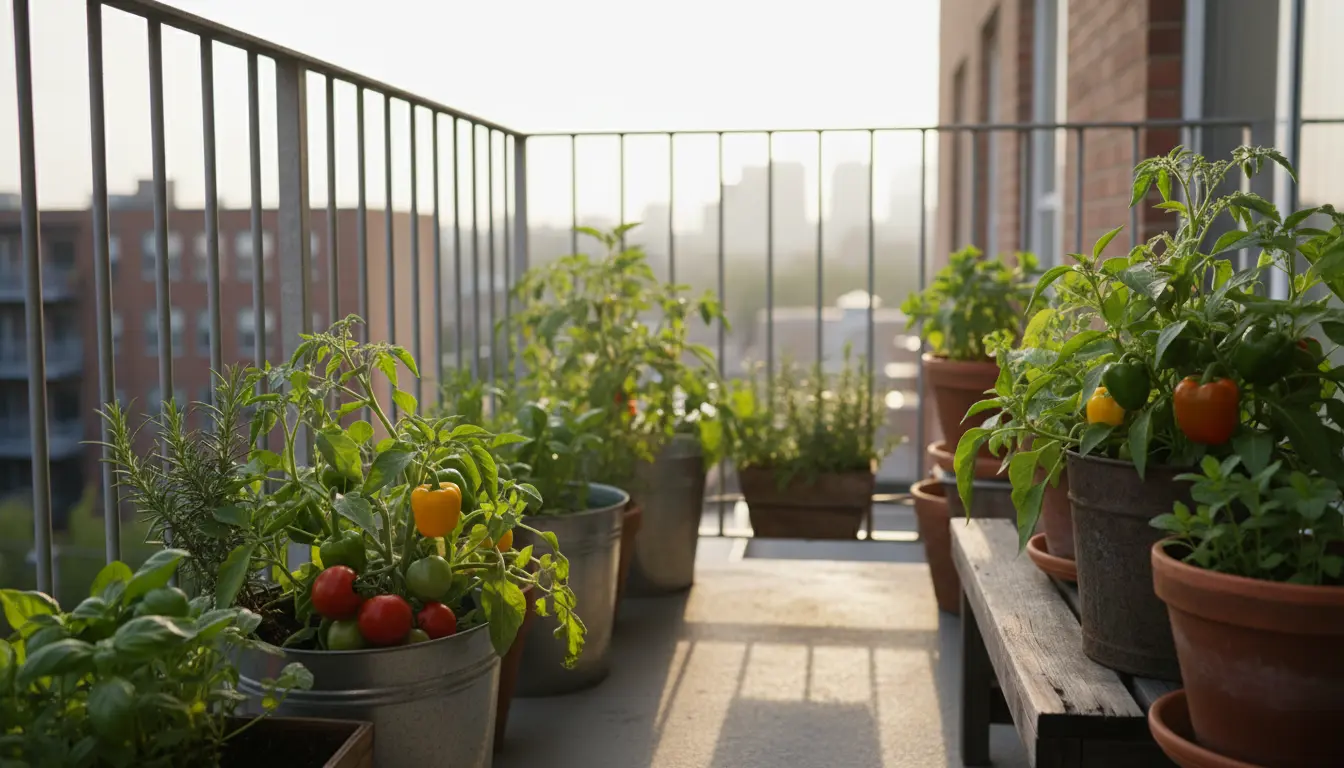
Why Choose a Container Vegetable Garden
A container vegetable garden lets you grow food on small patios, balconies, or limited yard space. It reduces soil issues, improves drainage, and makes pest control easier.
Containers are flexible and portable, so you can adapt sunlight and move plants as needed. This guide shows practical steps to start and maintain a productive container vegetable garden.
Planning Your Container Vegetable Garden
Before buying pots and soil, assess light, space, and goals. Most vegetables need 6–8 hours of direct sunlight, so check daily sun exposure.
Decide what you want to grow and how much. Leafy greens require less depth than tomatoes or peppers, so match plant choices to available containers.
Choosing Vegetables for Containers
Pick plants suited to container life to maximize success. Good options include:
- Tomatoes (determinate or patio varieties)
- Peppers and eggplants
- Leafy greens: lettuce, spinach, arugula
- Herbs: basil, parsley, chives
- Root vegetables: radishes, small carrots
Think about harvest frequency and space. Fast-growing greens provide quick rewards while fruiting crops take longer but produce more over time.
Selecting Containers for a Container Vegetable Garden
Container size influences root development and watering frequency. Use containers with drainage holes to prevent root rot.
Common choices include plastic pots, fabric grow bags, and wooden planters. Each has pros and cons for weight, insulation, and longevity.
Container Size Guidelines
- Leafy greens: 6–8 inches deep
- Herbs: 6–12 inches deep
- Peppers and small tomatoes: 12–18 inches deep
- Indeterminate tomatoes, squash: 18–24 inches deep
Soil, Drainage, and Fertility
Use a high-quality potting mix formulated for containers. Do not use garden soil, which compacts and drains poorly.
Amendments like compost and slow-release fertilizer help maintain nutrients. For faster uptake, use a water-soluble fertilizer every 2–3 weeks during active growth.
Potting Mix Recipe Example
Mix these components for a well-draining container mix:
- 50% premium potting mix
- 25% compost for nutrients
- 25% perlite or coarse sand for drainage
Planting and Spacing in a Container Vegetable Garden
Follow seed packet or plant tag spacing, but reduce slightly for containers. Overcrowding increases disease risk and reduces airflow.
Group plants with similar light and water needs in the same container. For example, basil and tomatoes work well together because they share requirements.
Watering and Maintenance
Containers dry out faster than garden beds. Check soil moisture daily during warm weather by sticking a finger 1–2 inches into the mix.
Water deeply until excess drains from the holes. Mulch the top of containers with straw or shredded bark to slow evaporation.
Pest and Disease Management
Inspect leaves regularly for pests like aphids or whiteflies. Remove affected foliage and use insecticidal soap if needed.
Rotate crops seasonally and avoid replanting the same family in the same containers to reduce disease buildup.
Harvesting from Your Container Vegetable Garden
Harvest often to encourage production. For leafy greens, pick outer leaves and leave the center to regrow. For fruiting crops, harvest at peak ripeness for best flavor.
Record harvest dates and yields to improve planning next season.
Small Case Study: Emma’s Balcony Container Vegetable Garden
Emma, an apartment renter, converted a 6-foot balcony into a container vegetable garden. She used three 20-inch pots for tomatoes, two tall fabric planters for peppers, and four small pots for herbs.
Within three months she harvested cherry tomatoes weekly and continued to pick basil and parsley. Strategic container placement improved sunlight exposure and reduced watering needs.
Key outcomes: consistent weekly harvests, reduced grocery herb purchases, and minimal pest problems due to regular monitoring.
Container-grown tomatoes can ripen earlier than those in-ground because pots warm up faster in sunlight. Choose darker-colored pots to increase soil warmth in cooler climates.
Quick Checklist to Start Your Container Vegetable Garden
- Assess light and space where containers will sit.
- Choose appropriate vegetables and container sizes.
- Buy high-quality potting mix and compost.
- Plant with proper spacing and water deeply.
- Fertilize regularly and monitor pests.
Simple Troubleshooting for Container Vegetable Garden Problems
Yellow leaves: check for overwatering or nutrient deficiency. Wilting: often underwatering or root-bound plants.
Poor fruit set: ensure at least 6 hours of direct sun and consistent fertilization. Stunted growth: repot into a larger container if roots are crowded.
Conclusion: Start Small and Learn
Begin with a few easy crops to build confidence and techniques. Container vegetable gardening is forgiving and scalable, so you can expand once you have one or two successful seasons.
With the right containers, potting mix, and routine care, even small outdoor spaces can produce meaningful amounts of fresh vegetables year after year.