
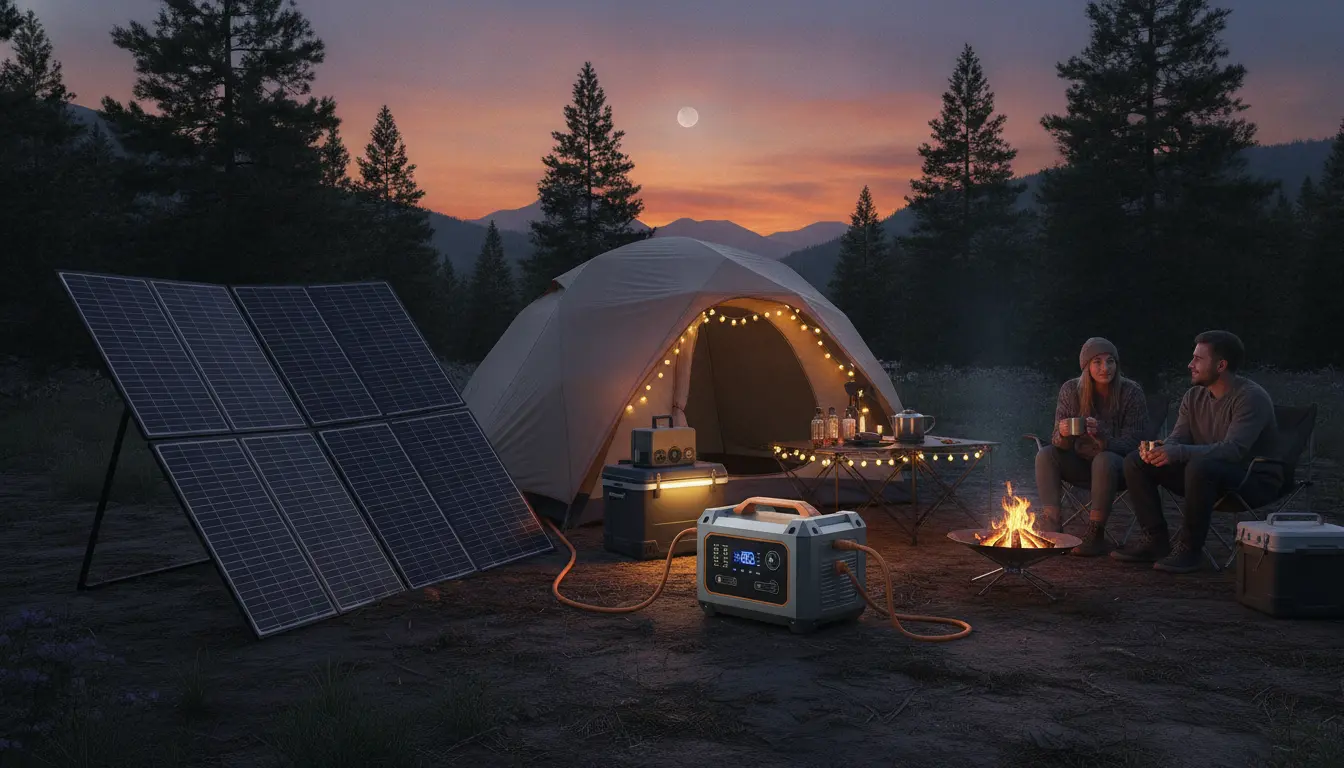
What Portable Solar Generators Are and Why They Matter
Portable solar generators combine a battery pack with a solar inverter and often a charge controller. They store electricity from solar panels and provide AC and DC power without a gas engine.
These systems matter for camping, off-grid work, and home backup. They are quiet, low-maintenance, and produce no direct emissions.
Key Features to Compare in Portable Solar Generators

Choosing a reliable unit starts with clear priorities. Focus on capacity, output, charging options, and portability.
Battery Capacity and Type
Capacity measures stored energy in watt-hours (Wh). More Wh means longer run time. For most uses, look between 500 Wh and 2000 Wh.
Lithium iron phosphate (LiFePO4) batteries last longer than lead-acid units and are safer for repeated cycling.
Inverter Output and Sine Wave

Inverter power, listed in watts (W), determines which appliances you can run. Continuous and peak output both matter.
Choose a pure sine wave inverter for sensitive electronics like laptops and CPAP machines. Modified sine inverters are cheaper but less compatible.
Solar Input and Charging Speed
Solar input rating (in watts) tells how fast the generator can charge from panels. Higher input shortens recharge time on sunny days.

Also check for MPPT charge controllers. MPPT is more efficient and extracts more power from panels than PWM controllers.
Portability and Build
Weight and handles influence real-world portability. A 1000 Wh unit might weigh 20 to 30 pounds and be easy to carry for two people.
Durability matters if you plan to use the generator outdoors often. Look for sturdy casing and weather resistance.
How to Size Portable Solar Generators for Your Needs
Start by listing the devices you want to power and their wattage. Multiply watts by hours per day to get daily watt-hours.
Add a 20 to 30 percent buffer for inefficiencies. That gives the minimum battery capacity you should target.
- Small devices: phone charging, LED lights — 50 to 300 Wh per day.
- Mid load: small fridge, laptop — 400 to 800 Wh per day.
- High load: CPAP, microwave, power tools — 800+ Wh per day.
Example Sizing Calculation
If a laptop uses 60 W and runs 5 hours, that is 300 Wh. Add a phone and lights for another 100 Wh, total 400 Wh. With 25 percent buffer choose a 500 Wh generator.
Most portable solar generators retain 80 percent of their original capacity after 2,000 LiFePO4 cycles. That can equal 5 to 10 years of regular use.
How to Use Portable Solar Generators Safely
Always follow manufacturer instructions for charging and connecting loads. Overloading a generator can cause shutdowns or damage.
Keep the unit and panels dry and on stable ground. Avoid covering ventilation ports during use.
Charging Strategies
For fastest recharge, combine solar input with AC wall charging if your model supports simultaneous input. Use MPPT panels matched to the generator’s voltage range.
Park panels in full sun, and orient them perpendicular to the sun for best output. Reposition during long use for consistent charging.
Maintenance Tips
- Store the battery at about 40–60 percent charge for long-term storage.
- Inspect cables and connectors regularly for corrosion or damage.
- Run a full charge/discharge cycle every 3–6 months to keep the battery balanced.
Cost and Value: What to Expect
Entry-level portable solar generators start around a few hundred dollars for small units. Reliable mid-size systems fall in the $700 to $1,500 range.
Spending more typically buys longer battery life, faster solar input, and higher inverter capacity. Consider total cost of ownership including panels and replacement accessories.
Real-World Case Study: Weekend Camping and Emergency Backup
A family of four bought a 1000 Wh portable solar generator for weekend trips. They paired it with a 200 W portable solar panel and used it to run a mini-fridge, charge phones, and power LED lights.
During one stormy night at home, the generator provided emergency lighting and kept a medical device running for 10 hours. The parents reported peace of mind and lower fuel expenses compared to a gas generator.
Quick Buy Checklist for Portable Solar Generators
- Determine required daily Wh and inverter peak power.
- Choose LiFePO4 battery if you need long life and safety.
- Pick a pure sine inverter for sensitive electronics.
- Match panel wattage to the generator’s solar input rating.
- Check weight and case durability for your intended use.
Final Tips on Portable Solar Generators
Test your setup before relying on it in an emergency. Simulate typical loads and ensure charging works under expected conditions.
Keep spare cables, a multi-port USB charger, and a small tool kit with your generator. These simple extras extend usefulness in the field.
Portable solar generators are practical tools for modern outdoor life and home preparedness. With the right sizing, setup, and care they deliver quiet, clean power when you need it most.