
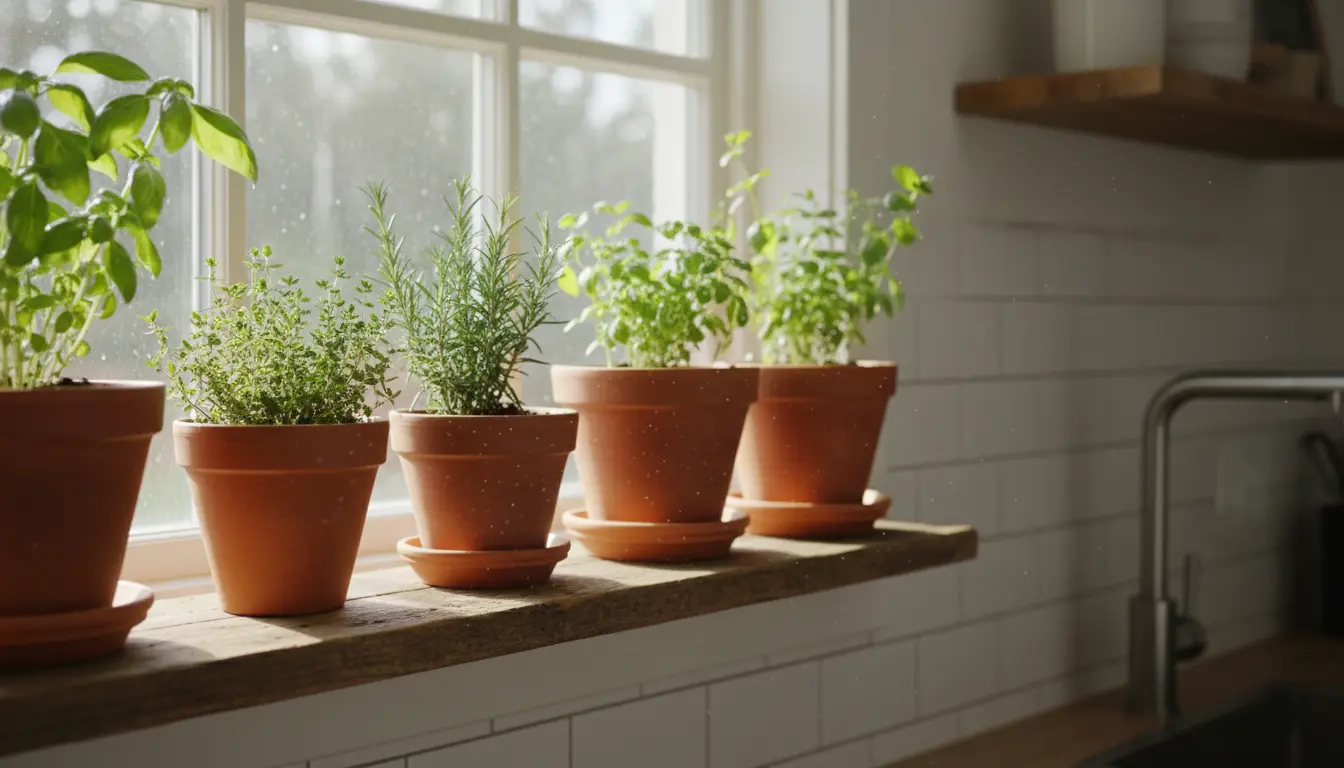
Why choose indoor herb gardening
Indoor herb gardening brings fresh flavors to your kitchen and can save money on store-bought herbs. It also connects you to plants year-round, even in small spaces.
The goal of this guide is to give clear, actionable steps so you can start and maintain a small herb garden indoors.
Choosing herbs for indoor herb gardening
Not all herbs thrive indoors. Pick varieties known to do well in containers and lower light conditions. Good starter herbs include basil, parsley, chives, mint, thyme, and rosemary.
Consider taste, growth habit, and how you plan to use the herbs in cooking.
Easy herbs for beginners
- Basil — loves bright light and regular watering.
- Parsley — tolerant of moderate light and good for cut-and-come-again harvesting.
- Chives — hardy, easy to grow in shallow pots.
- Mint — aggressive grower; keep in its own pot to avoid invasions.
- Thyme — prefers bright light and well-draining soil.
Containers and soil for indoor herb gardening
Choose containers with drainage holes to prevent root rot. Terracotta, ceramic, and quality plastic pots all work if they drain well.
Use a light, well-draining potting mix labeled for herbs or vegetables. Avoid garden soil, which can compact in pots.
Container tips
- Size: Start with pots 4–8 inches wide for most herbs.
- Drainage: Add a layer of coarse material only if pot has no holes; otherwise ensure holes are open.
- Group plants with similar light and water needs together.
Light requirements for indoor herb gardening
Light is the most common reason indoor herbs fail. Most culinary herbs need at least 6 hours of bright light per day.
Place herbs on a south- or west-facing windowsill if possible. If natural light is limited, use a full-spectrum LED grow light for 10–14 hours daily.
Signs of inadequate light
- Leggy stems and small leaves
- Slow growth or leaf drop
- Pale color or yellowing
Watering and feeding in indoor herb gardening
Watering frequency depends on pot size, soil, light, and temperature. Check soil with your finger — water when the top inch feels dry for most herbs.
Avoid overwatering. Let excess water drain and empty saucers after 10–15 minutes to prevent root rot.
Fertilizing schedule
Feed herbs with a balanced, water-soluble fertilizer at half-strength every 4–6 weeks during active growth. Too much fertilizer can reduce flavor intensity.
Pruning, harvesting, and maintenance
Regular pruning keeps herbs productive and bushy. Harvest by snipping above a leaf node to encourage new growth.
Remove any yellow or dead leaves promptly. Rotate pots slightly every week so plants grow evenly toward the light.
Common maintenance tasks
- Pinch back flower buds if you want more leaf growth (especially for basil and mint).
- Repot herbs when roots become crowded, typically every 12–18 months.
- Inspect regularly for pests such as aphids or spider mites and treat early with insecticidal soap.
Many herbs release stronger essential oils when slightly stressed by less frequent watering. Mildly drier soil between waterings can increase flavor intensity for rosemary, thyme, and oregano.
Small case study: One kitchen, four pots
Sarah, a city renter with a narrow windowsill, started indoor herb gardening with four pots: basil, parsley, mint, and chives. She used 6-inch terracotta pots and a lightweight potting mix.
She placed basil and parsley on the sunniest side and put mint in a slightly shadier spot. After two months of weekly watering and monthly feeding, she had enough herbs for cooking and cut back grocery purchases by 30%.
Troubleshooting common problems in indoor herb gardening
Yellow leaves may indicate overwatering or poor drainage. Leggy plants usually mean not enough light. Brown leaf tips can be a sign of low humidity or inconsistent watering.
Address issues by adjusting light, repotting into fresh soil, or changing the watering routine. Small, early adjustments prevent bigger problems later.
Quick troubleshooting checklist
- Leggy growth: increase light or add a grow light.
- Yellowing leaves: check drainage and reduce watering.
- Pest sightings: isolate plant and treat with insecticidal soap.
- Poor flavor: avoid over-fertilizing and ensure adequate sunlight.
Practical weekly routine for indoor herb gardening
- Inspect plants for pests and disease (5 minutes).
- Water if the top inch of soil is dry (5 minutes).
- Rotate pots for even light exposure (1 minute).
- Harvest small amounts as needed; prune to encourage bushiness (5–10 minutes).
Final tips for successful indoor herb gardening
Start small and learn each herb’s habits before expanding. Keep a simple log for light, watering, and fertilizer to spot patterns that help or harm growth.
With a little daily attention and the right conditions, indoor herb gardening can supply fresh flavor and a satisfying hobby year-round.