
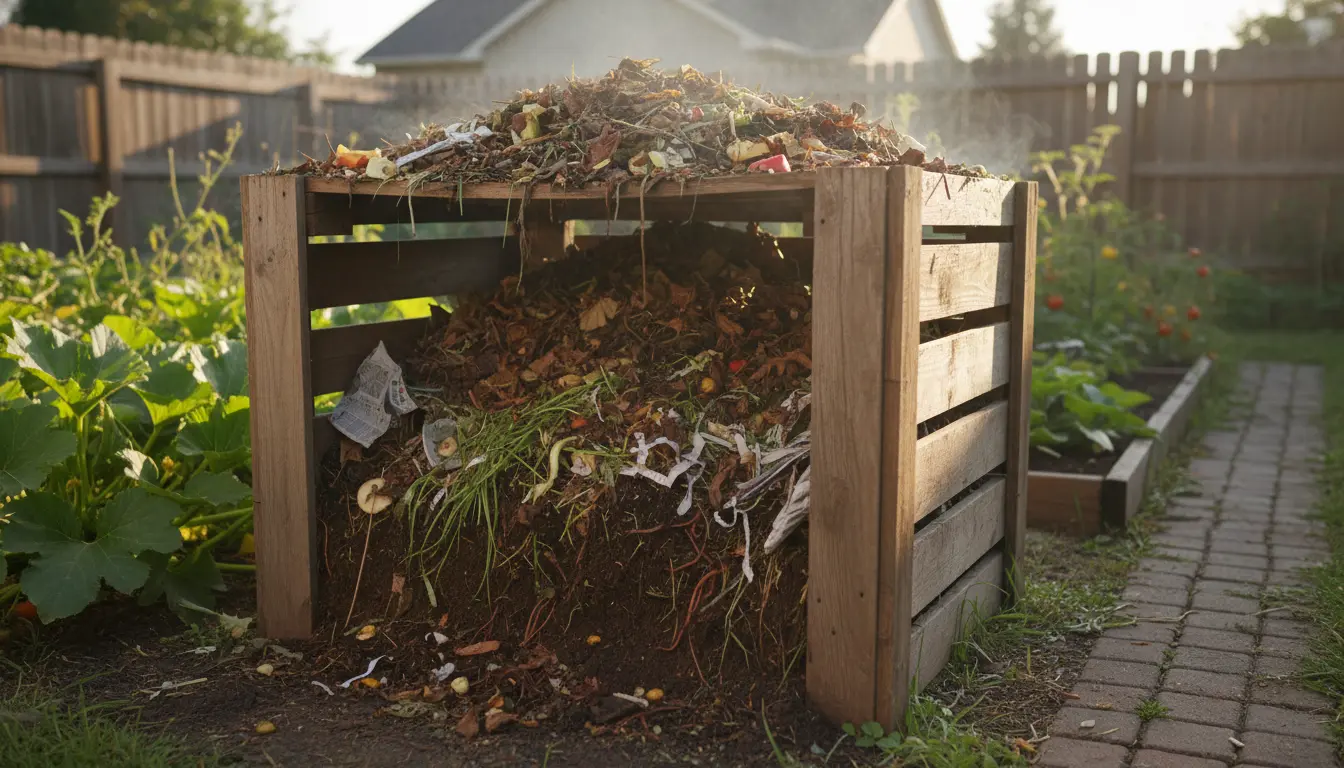
Start Composting at Home: Overview
Home composting turns kitchen scraps and yard waste into rich soil that feeds plants. This guide gives practical steps to begin, maintain, and troubleshoot a compost pile or bin.
Why Home Composting Matters
Composting reduces landfill waste and methane emissions while returning nutrients to soil. It also saves money on fertilizer and improves garden health.
Benefits of Home Composting
- Reduces household waste volume.
- Creates nutrient-rich amendment for lawns and gardens.
- Improves soil structure and water retention.
- Supports local biodiversity and soil organisms.
Choose a Method for Home Composting
Select a method that fits your space, time, and goals. Common approaches work well for most households and require minimal setup.
Open Pile
Good for large yards and heavy gardeners. Requires turning and more space but handles large volumes.
Compost Bin
Bins keep material contained, help retain heat, and suit smaller yards or patios. Choose a bin with good drainage and aeration.
Worm Composting (Vermicomposting)
Ideal for indoor or balcony composting. Red worms break down food scraps quickly and produce worm castings, a potent soil amendment.
What to Compost at Home
Knowing what to compost ensures faster decomposition and avoids odors. Balance green and brown materials for a healthy pile.
Greens (Nitrogen)
- Kitchen scraps: fruit and vegetable peels, coffee grounds, tea bags.
- Fresh lawn clippings and green garden trimmings.
Browns (Carbon)
- Dry leaves, straw, shredded paper, cardboard, and wood chips.
- Paper products should be shredded and free of heavy inks or coatings.
Materials to Avoid
- Meat, dairy, and oily foods that attract pests.
- Diseased plants, pet waste, and invasive weeds with seeds.
Step-by-Step Home Composting
Follow these practical steps to set up and maintain your compost system. Each step helps balance moisture, aeration, and microbes.
- Pick a dry, shaded spot near a water source for your bin or pile.
- Start with a layer of coarse brown material to aid drainage.
- Add alternating layers of greens and browns, aiming for roughly a 2:1 brown-to-green volume.
- Keep the mix moist like a wrung-out sponge; water occasionally if dry.
- Turn the pile every 1–2 weeks to introduce oxygen and speed decomposition.
Troubleshooting Common Home Composting Problems
Problems are usually due to imbalance in moisture, aeration, or materials. Simple fixes keep your compost active and odor-free.
Bad Smell
Cause: Too much green or not enough air. Fix: Add dry browns, mix, and turn the pile to aerate.
Slow Decomposition
Cause: Too dry, too cold, or too coarse. Fix: Moisten slightly, add smaller chopped materials, and insulate or move to a sunnier spot in cool months.
Pests
Cause: Meat, dairy, or accessible food scraps. Fix: Bury food in the center, use a closed bin, or consider a tumbler to secure scraps.
Composting a single household can divert hundreds of pounds of organic waste from the landfill each year and return valuable nutrients to your garden.
Small Real-World Example
Case Study: A family of three in Austin set up a 65-gallon compost bin in their backyard. After six months of regular additions and turning every two weeks, they produced about 50 liters of finished compost.
They used the compost on vegetable beds, which improved soil moisture retention and reduced the need for store-bought fertilizer by nearly half that season.
Use and Storage of Finished Compost
Finished compost is dark, crumbly, and earthy-smelling. Use it as a top dressing, mix into potting soil, or blend into garden beds.
- Top dressing: Spread 1–2 inches around plants and mulch lightly.
- Soil amendment: Mix 10–20% compost into garden soil before planting.
- Seed starting: Blend a small amount with potting mix for seedlings.
Final Tips for Successful Home Composting
Keep it simple and consistent. Small, regular inputs and occasional turning are better than sporadic large additions.
Monitor moisture, chop bulky items, and maintain the brown-to-green balance. Over time, you will learn what works best for your climate and household waste.
Home composting is a low-cost, high-impact step toward sustainable living. Start small, stay patient, and enjoy the benefits to your garden and the environment.