
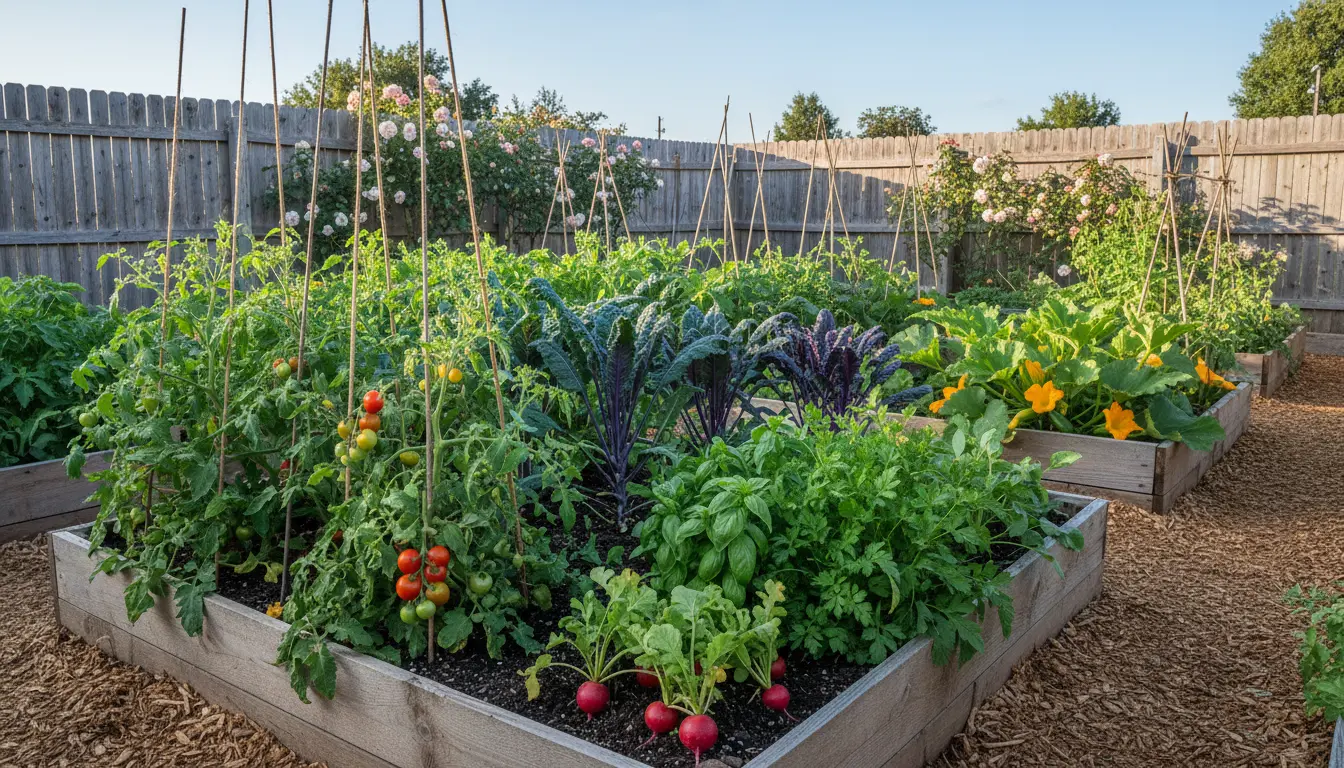
How to Start a Vegetable Garden: First Steps
Starting a vegetable garden is achievable with basic planning and a few tools. This guide breaks down practical steps so you can begin growing vegetables at home.
Choose the Right Location
Pick a spot that gets at least 6 hours of direct sunlight per day. Vegetables like tomatoes, peppers and beans need full sun to produce well.
Also consider access to water and how close the bed will be to your home for easier maintenance. Good drainage and a level area reduce future problems.
Decide Garden Type
Choose between in-ground, raised beds, or containers based on space, budget, and soil quality. Raised beds warm faster in spring and offer better control over soil.
Containers are ideal for balconies or patios and require less bending and weeding.
How to Start a Vegetable Garden: Soil and Preparation

Healthy soil is the foundation of a successful vegetable garden. Aim for loose, well-draining soil rich in organic matter.
Test and Improve Soil
Use a simple soil test kit to check pH and basic nutrients. Most vegetables prefer a pH between 6.0 and 7.0.
Add compost to improve soil structure and fertility. Spread 2–4 inches of compost and till or dig it into the top 6–8 inches of soil.
Tools and Materials
- Spade or shovel
- Garden fork or tiller
- Rake
- Wheelbarrow
- Soil test kit and compost
How to Start a Vegetable Garden: Choosing Plants

Start with easy, high-yield vegetables suited to your climate and season. Beginners often have success with lettuce, radishes, bush beans, zucchini, and cherry tomatoes.
Plan a Planting Calendar
Check your local frost dates to plan spring planting and fall crops. Use transplants for longer-season crops and direct-seed quick growers.
Stagger planting dates for continuous harvests rather than planting everything at once.
Planting, Watering, and Mulching
Follow seed packet or plant tag spacing and depth instructions to reduce crowding and disease. Proper spacing improves air flow and light penetration.
Watering Basics
Water deeply and infrequently to encourage strong roots. Aim for about 1 inch of water per week, adjusting for rain and soil type.
Use soaker hoses or drip irrigation to reduce leaf wetness and prevent disease.
Mulching Benefits
Apply a 2–3 inch layer of organic mulch, like straw or shredded leaves, to conserve moisture and suppress weeds. Mulch also moderates soil temperature.
Pest Control and Maintenance
Regular monitoring reduces pest and disease problems before they spread. Look under leaves and inspect stems at least once a week.
Practical Pest Strategies
- Handpick pests like beetles and caterpillars when practical.
- Encourage beneficial insects by planting flowers like marigolds and borage.
- Use row covers early in the season to protect seedlings from insects and birds.
Disease Prevention
Rotate crops each year to minimize soil-borne diseases. Remove and compost diseased plant material away from the garden area.
Adding one inch of compost to a square foot of garden bed improves soil by approximately 20 pounds of organic matter per 100 square feet each season.
Harvesting and Storage
Harvest vegetables when they reach the recommended size for best flavor and texture. Frequent harvesting often encourages continued production.
Store produce promptly: cool leafy greens, keep root crops in a cool dry place, and refrigerate delicate items like herbs and berries.
Small Case Study: One Raised Bed Success
Maria converted a 4×8 raised bed in her sunny backyard and began with lettuce, tomatoes, and bush beans. She improved poor clay soil by adding a 50/30/20 mix of topsoil, compost, and aged manure before planting.
By following a simple watering schedule and using mulch, Maria harvested salad greens within six weeks and continued picking tomatoes and beans through late summer. Her bed produced enough for her family and occasional neighbor shares.
Common Mistakes to Avoid
- Planting too close together, which increases disease risk.
- Overwatering seedlings; soggy soil causes root rot.
- Ignoring soil fertility—regular additions of compost are key.
Quick Start Checklist
- Select a sunny site and determine garden type (raised bed, in-ground, container).
- Test soil and add compost or amendments.
- Choose beginner-friendly vegetables and check planting dates.
- Water deeply, mulch, and monitor weekly for pests and disease.
- Harvest regularly and adjust planting for continuous yields.
Starting a vegetable garden is a learning process that improves each season. With basic planning, consistent care, and small adjustments, most beginners see satisfying results in their first year.