
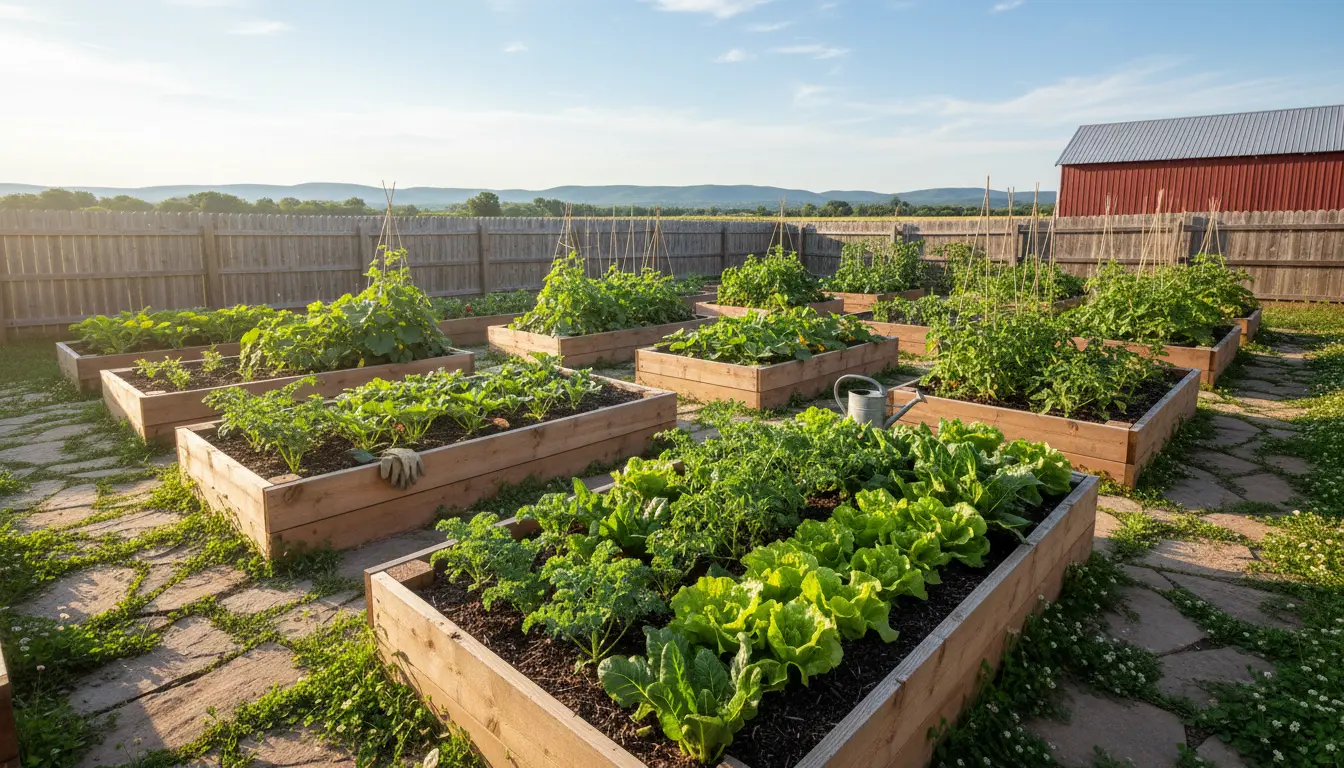
Why Start a Vegetable Garden
Growing your own vegetables saves money, improves food quality, and gives you control over how crops are grown. It also provides satisfying hands-on work and fresh produce in season.
This guide explains how to start a vegetable garden in a simple, practical way so beginners can get steady results without being overwhelmed.
Planning to Start a Vegetable Garden
Good planning prevents common mistakes. Decide the spot, the scale, and the type of vegetables before you dig.
Choose the Right Location
Most vegetables need at least six hours of direct sunlight. Pick a level area with good drainage and easy access to water.
If space is limited, consider container gardening or raised beds on a patio or balcony.
Decide How Much to Grow
Start small to learn the basics. A 4×8 foot raised bed is ideal for beginners and can supply a family with greens, tomatoes, and herbs.
List the vegetables your household eats most and prioritize those for your first season.
Preparing Soil to Start a Vegetable Garden
Soil quality determines how well plants grow. Focus on structure, nutrients, and pH to establish a reliable growing medium.
Test and Improve Soil
Use a simple soil test kit to check pH and basic nutrients. Most vegetables prefer a pH between 6.0 and 7.0.
Improve soil with organic matter: mix in 2–4 inches of compost and work it into the top 6–8 inches of soil.
Choose Soil Type for Containers
For containers, use a high-quality potting mix with good drainage and added compost. Avoid using plain garden soil in pots.
Planting and Care When You Start a Vegetable Garden
Planting at the right time and giving consistent care reduces pest and disease problems. Follow local frost dates and seed packet instructions.
Planting Basics
- Read seed packet or plant tag for spacing and depth.
- Stagger plantings for continuous harvest (succession planting).
- Group plants by water needs to make irrigation efficient.
Watering and Fertilizing
Water deeply and less frequently to encourage deep roots. Aim for consistent moisture rather than wet-dry cycles.
Use a balanced organic fertilizer once or twice during the season, or side-dress with compost for steady nutrients.
Pest Control and Troubleshooting
Monitor plants weekly and address problems early. Many issues can be solved with cultural changes rather than chemicals.
- Handpick large pests like beetles and caterpillars.
- Use row covers to protect young plants from insects and birds.
- Rotate crops each year to reduce disease build-up in soil.
Common Problems and Quick Fixes
Yellow leaves often signal nutrient deficiency or overwatering. Check drainage and add compost or a gentle fertilizer.
Stunted growth can mean compaction or root damage. Loosen the soil carefully and avoid walking on beds.
Many common garden pests prefer certain plants. For example, basil planted near tomatoes can reduce whiteflies and improve tomato flavor in some gardens.
Harvesting and Storage
Harvest vegetables when they are mature but still tender for best flavor. Regular picking encourages more production in many crops.
Store produce properly: leafy greens in moist bags in the fridge, root crops in cool dark spots, and tomatoes at room temperature until used.
Case Study: Small Patio Garden That Fed a Family of Two
Sarah started a vegetable garden on her 200-square-foot patio using three 4×2 foot raised beds and several containers. She focused on salad greens, cherry tomatoes, peppers, beans, and herbs.
Within one season she harvested continuous salad greens, weekly cherry tomato bowls, and enough herbs to share with neighbors. Key choices were using a mix of transplants and succession sowings, installing a drip line for consistent watering, and adding compost every six weeks.
Her practical approach made the garden low-maintenance and productive without requiring full-time work.
Quick Checklist to Start a Vegetable Garden
- Pick a sunny location with good drainage.
- Decide garden size and plant list.
- Test soil and add compost to improve structure.
- Choose seeds or healthy transplants timed to your frost dates.
- Water deeply, mulch to conserve moisture, and monitor pests.
- Harvest regularly and store produce correctly.
Final Tips for Beginners
Keep a simple garden journal to track planting dates, harvests, and problems. This record helps you plan better next season.
Start small, learn from one growing season, and expand as your confidence and skills increase. Gardening is a practical skill learned over time.