
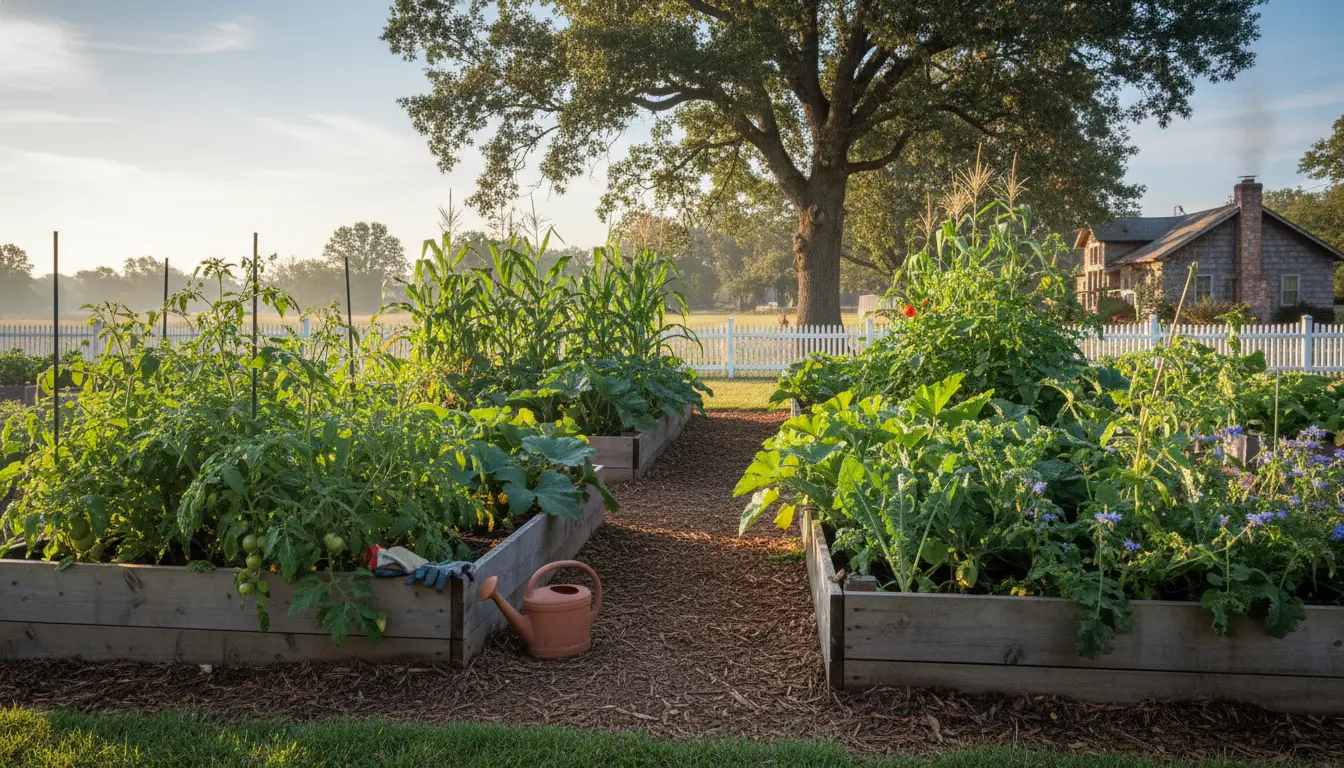
Start a Vegetable Garden: First Steps
Starting a vegetable garden is easier than many people think. With a clear plan, basic tools, and the right plants, even small spaces can produce fresh vegetables.
This guide walks through practical, actionable steps to start a vegetable garden that fits your space and schedule.
Decide Why You Want to Start a Vegetable Garden
Knowing your goals shapes every decision. Are you growing for flavor, saving money, teaching kids, or building resilience?
Choose a focus to narrow plant choices and care needs.
Choose a Site to Start a Vegetable Garden
Light, access, and soil are the main site factors. Most vegetables need at least six hours of direct sun each day.
Pick a spot near water and with good drainage to reduce daily effort and avoid standing water after rain.
Assess Soil and Space
Check soil texture and slope. Compact, clay soils can be improved, but deep, well-draining soil gives the best results.
If soil is poor or space is limited, use raised beds or containers to control mix and drainage.
Prepare Your Garden Bed
Clear grass and weeds, loosen the soil, and add organic matter. Aim for a loamy mix so roots can grow freely.
Preparation reduces future weeding and improves water retention and nutrients.
Soil Tests and Amendments
Get a basic soil test to check pH and nutrient levels. Most vegetables prefer pH 6.0–7.0.
Common amendments include compost, aged manure, and balanced organic fertilizer. Work these into the top 6–8 inches of soil.
Plan What to Plant
Select crops that fit your climate, season, and skill level. Fast-growing, reliable plants work best for beginners.
Consider plant spacing, companion planting, and succession planting to maximize yield in limited space.
- Easy starter vegetables: lettuce, radishes, cherry tomatoes, bush beans, zucchini.
- Choose disease-resistant varieties when possible.
- Start with a few crops you actually like to eat.
Use a Simple Planting Calendar
Map sowing dates by frost dates for your region. Seed packets and local extension services list ideal planting windows.
Plan early spring cool-season crops and later warm-season crops to keep beds producing longer.
Planting and Ongoing Care
Plant at the right depth and spacing, and water consistently. New seeds and transplants need steady moisture until they establish roots.
Mulch around plants to conserve moisture, suppress weeds, and moderate soil temperature.
Watering, Mulching, and Weeding
Water deeply once or twice a week instead of light daily sprinkling. Deep watering encourages strong root systems.
Pull weeds early when they are small, and consider a 2–3 inch organic mulch layer to cut weed pressure.
Pest and Disease Basics
Inspect plants frequently. Early detection of pests or disease makes treatment simpler and less toxic.
Use these low-impact strategies first:
- Handpick larger pests like slugs and caterpillars.
- Use row covers for seedlings to prevent insect damage.
- Rotate crops yearly to reduce soil-borne diseases.
When to Use Treatments
Apply organic or targeted treatments only after identifying the pest. Broad-spectrum sprays can harm beneficial insects.
Follow label instructions and prefer products labeled for edible crops.
Harvesting, Saving Seed, and Crop Rotation
Harvest vegetables at peak ripeness for best flavor and nutrition. Frequent harvesting can encourage more production.
Save seeds from open-pollinated varieties and rotate plant families to reduce disease buildup.
Post-Harvest Care
Clean beds after harvest, remove diseased plant material, and add compost to replenish nutrients. Plan fall cover crops to protect and rebuild soil.
Many common vegetables, like lettuce and radishes, can mature in 25–45 days, letting you harvest multiple successions in one season.
Small Real-World Example: Case Study
Laura, a city renter, started a 4×8 raised bed on her balcony. She used a 50:50 mix of compost and screened topsoil and planted tomatoes, lettuce, and bush beans.
Cost: $120 initial (bed, soil, basic tools). Time: 2–3 hours weekly during peak season. Outcome: Enough salad greens all summer and 10–12 cherry tomato harvests for the family.
Key takeaways from Laura’s case:
- Start small and expand as you gain confidence.
- Choose compact or container-friendly varieties in limited spaces.
- Invest in soil quality first; it reduces other problems.
Quick Checklist to Start a Vegetable Garden
- Choose a sunny, well-drained site near water.
- Test and amend soil; add compost.
- Select beginner-friendly crops suited to your season.
- Plant with proper spacing and mulch to retain moisture.
- Inspect weekly for pests and harvest regularly.
Starting a vegetable garden doesn’t require perfection. Begin with a clear plan, improve your soil, and learn by doing. Most gardeners find the process becomes easier and more rewarding each season.