
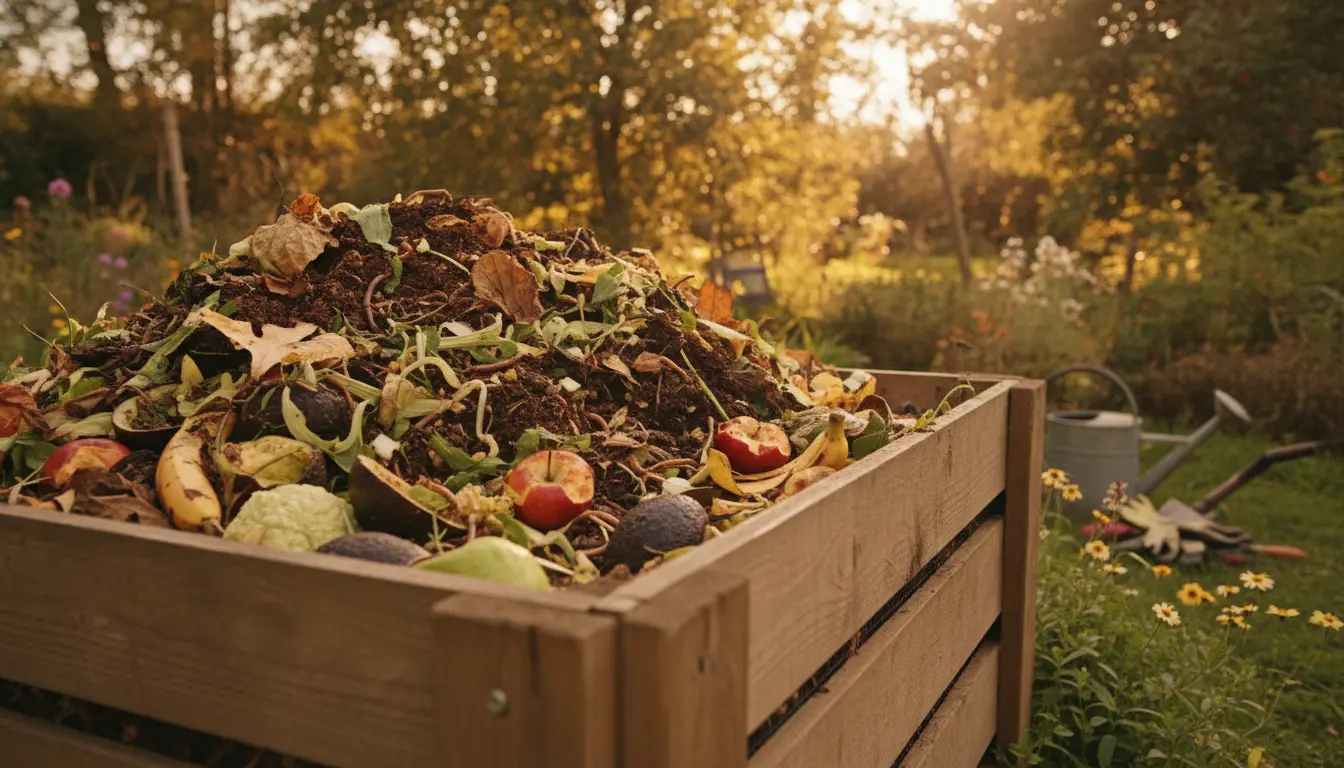
What Is Home Composting?
Home composting is the natural process of turning kitchen scraps and yard waste into nutrient-rich soil. It reduces household waste and creates a free soil amendment for gardens and houseplants.
For beginners, composting can feel technical, but basic methods work well if you follow a few simple rules about materials, moisture, and airflow.
Benefits of Home Composting

Home composting reduces landfill waste, lowers household methane emissions, and recycles nutrients back into soil. It also improves soil structure, water retention, and plant health.
Many cities offer reduced waste fees or curbside collection discounts for households that compost, making it a cost-effective practice.
How to Start Home Composting
Starting home composting requires choosing a method, collecting materials, and maintaining the pile or bin. Here are clear steps to begin.
1. Choose a Composting Method
Pick a method that fits your space and routine. Common options include:
- Open pile: Best for yards with space; low cost and simple.
- Compost bin or tumbler: Contained, neater, and easier to turn.
- Vermicomposting: Uses worms for apartment or indoor composting.
2. Select a Location
Place your compost bin on bare soil to allow beneficial organisms to migrate in. Choose a partly shaded spot to prevent drying out in summer and freezing in winter.
Ensure easy access so you will actually add materials and turn the pile regularly.
3. Gather the Right Materials
Balance carbon-rich “browns” and nitrogen-rich “greens.” Aim for roughly a 3:1 ratio of browns to greens by volume.
Examples:
- Greens: vegetable peelings, coffee grounds, fresh grass clippings, tea bags.
- Browns: dry leaves, straw, shredded paper, cardboard (small pieces).
Avoid meat, dairy, and oily foods that attract pests.
4. Build and Maintain the Pile
Start with a layer of coarse browns to improve airflow. Alternate greens and browns in 2–6 inch layers. Keep the pile moist like a wrung-out sponge.
Turn the pile every 1–2 weeks to speed decomposition and prevent odors. Tumblers make turning easier, but a pitchfork also works for open piles.
Troubleshooting Home Composting Problems
Common problems have simple fixes. Here are quick diagnostics and solutions.
- Bad smell: Add more browns and turn the pile to add oxygen.
- Pile too dry: Add water and more greens; cover to retain moisture.
- Slow breakdown: Chop or shred materials and increase turning.
- Pests or rodents: Avoid meat and dairy, use a closed bin, or bury food scraps in the center.
Compost can raise soil organic matter by up to 5 percent over multiple seasons, improving water retention and reducing the need for chemical fertilizers.
Using Finished Compost
Finished compost is dark, crumbly, and smells earthy. Use it as a soil topdressing, mix it into potting soil, or create a planting mix for raised beds.
Apply a 1–2 inch layer around trees and shrubs, or blend 10–30% compost into garden beds when planting.
Small Real-World Case Study: Maria’s Balcony Compost
Maria lives in a small apartment and started vermicomposting in a 10-liter bin. She collected vegetable scraps and shredded paper, added red wiggler worms, and kept the bin in a shaded corner of her balcony.
After three months, Maria harvested a cup of rich worm castings to top a potted herb mix. Her herb plants grew faster, and she reduced her kitchen waste by nearly half.
Quick Home Composting Checklist
- Choose a bin type (open pile, tumbler, or worm bin).
- Gather greens and browns; keep a 3:1 brown to green ratio.
- Keep the pile moist like a wrung-out sponge.
- Turn the pile every 1–2 weeks to add oxygen.
- Avoid meat, dairy, and oily foods to prevent pests.
- Harvest finished compost when it is dark and crumbly.
Final Tips for Successful Home Composting
Start small and be consistent. Composting is forgiving — small adjustments will keep the process moving. Use a kitchen bucket or compost pail to collect scraps and empty it into your outdoor system regularly.
Record simple notes (what you added and when) during the first few months. You will quickly learn the balance that works for your climate and materials.
With minimal effort, home composting reduces waste and produces a valuable resource for healthier plants and soil. Begin with the steps above and adapt as you gain experience.