
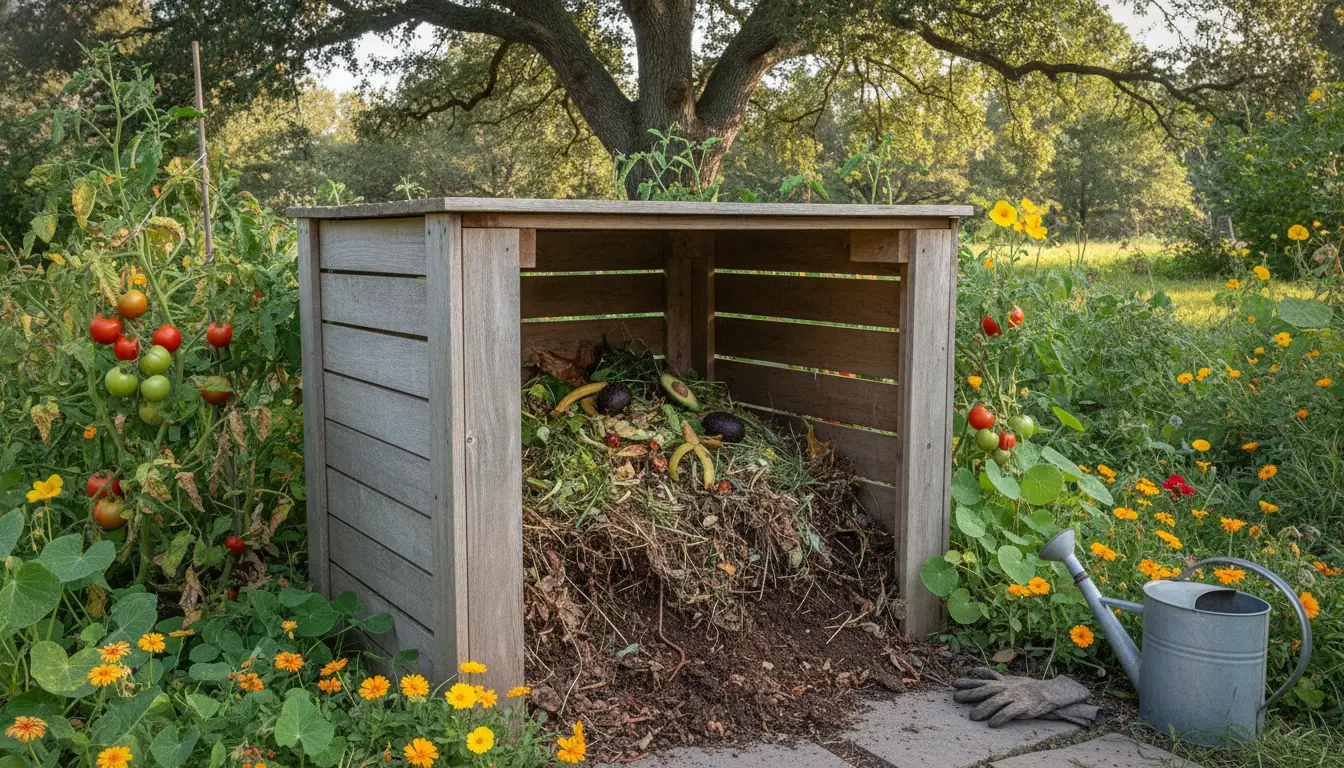
Why Home Composting for Beginners Matters
Home composting transforms kitchen scraps and yard waste into nutrient-rich soil. It reduces landfill waste and improves garden health without complicated equipment.
This guide gives clear, practical steps for home composting for beginners so you can start recycling organic matter today.
Benefits of Home Composting for Beginners
Composting saves money on soil amendments and reduces trash volume. It also builds healthy soil structure that retains moisture and supports plants.
- Reduces household waste
- Feeds gardens with natural nutrients
- Improves soil texture and water retention
- Reduces need for chemical fertilizers
Getting Started: Materials for Home Composting for Beginners
Start with simple materials you likely already have at home. Two categories matter: browns and greens.
What to Add: Browns and Greens
Greens are nitrogen-rich and moist. Examples include vegetable scraps, coffee grounds, and fresh grass clippings.
Browns are carbon-rich and dry. Examples include shredded paper, dry leaves, and cardboard. Aim for a mix of both.
What Not to Compost
- Meat, fish, and dairy (can attract pests)
- Oily foods and greasy leftovers
- Diseased plants or weeds with seeds
- Pet waste from carnivores
Choosing a Bin for Home Composting for Beginners
You can compost in many containers: simple piles, tumblers, or enclosed bins. Choose based on space and convenience.
For beginners, a covered bin or simple stationary bin is low-maintenance and keeps pests out.
- Backyard bin: good for larger volumes
- Tumbler: easier turning, faster results
- Indoor worm bin (vermicompost): ideal for small kitchens
Step-by-Step Home Composting for Beginners
Follow these steps to build a healthy compost pile that decomposes steadily.
- Pick a location with partial sun and good drainage.
- Start with a layer of coarse browns like twigs for air flow.
- Add alternating layers of greens and browns, aiming for roughly a 2:1 ratio of browns to greens by volume.
- Keep the pile moist like a wrung-out sponge. Water lightly if dry.
- Turn or mix the pile every 1–2 weeks to add oxygen and speed decomposition.
Tips for Layering and Aeration
Use smaller pieces to speed breakdown; chop or shred cardboard and kitchen scraps. Aeration is critical—oxygen supports the microbes that compost material.
If you use a closed bin, turn or stir the contents monthly to prevent compacting and anaerobic smells.
Troubleshooting Home Composting for Beginners
Common issues are easy to fix once you know the signs.
- Bad odors: add more browns and increase turning. Odors usually mean too much moisture or nitrogen.
- Slow decomposition: check particle size, moisture, and oxygen. Add more greens or turn more often.
- Pests: use a sealed bin and avoid meat or oily foods. Bury food scraps in the pile center.
Simple Timeline and Maintenance
Compost can be ready in 2–6 months depending on conditions. Hot, well-turned piles decompose faster than cold piles.
Maintenance is minimal: monitor moisture, add material regularly, and turn periodically. The finished compost looks dark, crumbly, and earthy-smelling.
Small Real-World Case Study
Case: A two-person household in a small yard started composting kitchen scraps and yard trimmings in a 90-liter bin. They used a 2:1 ratio of dry leaves to food scraps and turned the bin weekly.
Result: In four months they produced a steady supply of compost for potted herbs and a vegetable bed. Their weekly trash volume decreased by about 30%.
Practical Examples and Uses
- Mix finished compost into potting soil for seedlings (10–20% by volume).
- Top-dress established plants with a thin layer to slowly release nutrients.
- Use compost tea (steeped compost) as a mild liquid fertilizer for houseplants.
Final Checklist for Home Composting for Beginners
- Collect greens and browns separately for easy layering.
- Choose a bin that fits your space and turning ability.
- Maintain moisture and aerate regularly.
- Monitor for pests and odors and adjust materials as needed.
Starting home composting for beginners is straightforward and rewarding. Small, consistent steps lead to usable compost and a healthier garden. Try a modest bin first and adjust your routine as you learn what works for your household.