
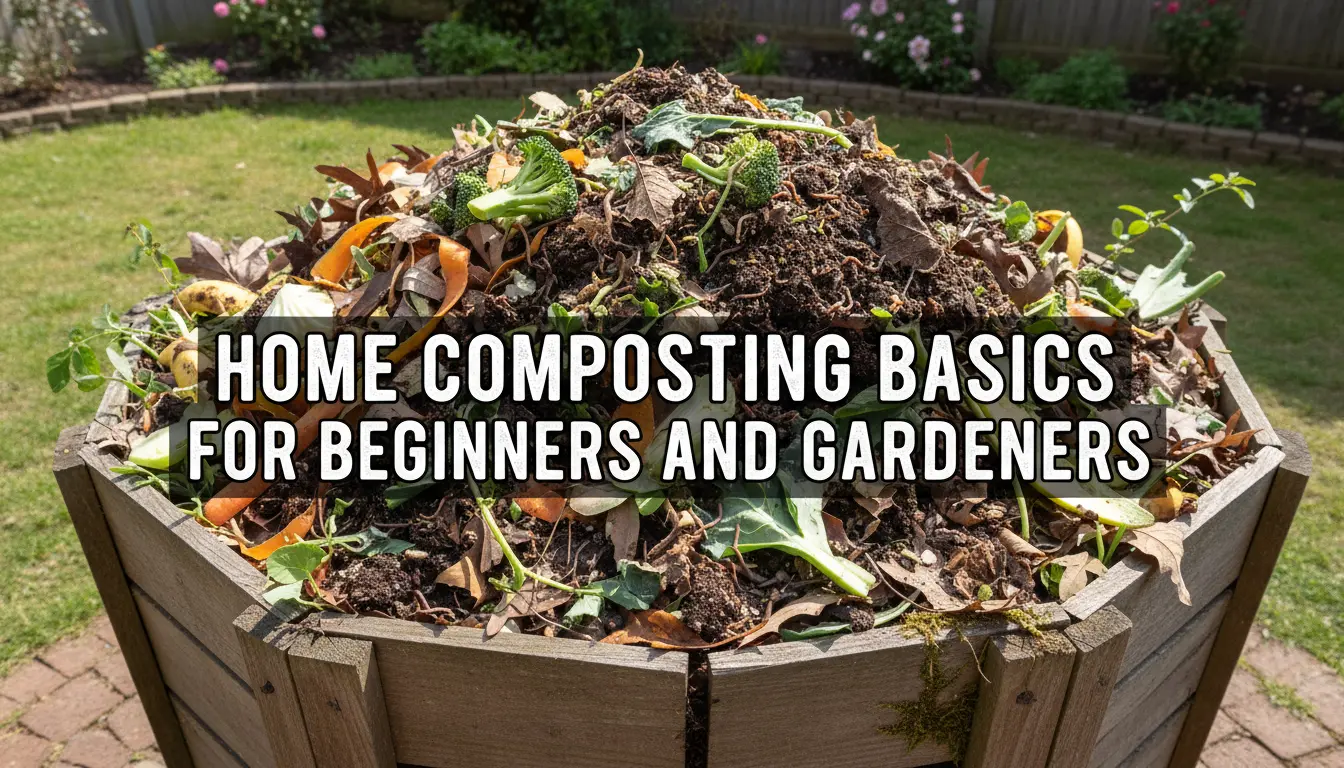
Why Start Home Composting
Home composting turns kitchen scraps and yard waste into a valuable soil amendment. It reduces household waste, improves garden soil, and saves money on fertilizers.
For beginners, composting is a low-cost step toward a more sustainable home. You don’t need special skills—just a few practical steps and basic equipment.
What Is Home Composting?
Home composting is the natural breakdown of organic materials by microbes, worms, and insects. The result is dark, crumbly compost that feeds plants and improves soil structure.
Compost requires a balance of carbon-rich ‘browns’ and nitrogen-rich ‘greens’, moisture, and airflow. When these elements are right, decomposition is fast and odor-free.
Essential Materials for Home Composting
Start by collecting common kitchen and garden waste. Keep two groups separate: browns and greens.
- Greens: vegetable scraps, coffee grounds, fresh grass clippings, tea bags
- Browns: dry leaves, shredded paper, cardboard, straw
- Do not add: meat, dairy, oily foods, diseased plants, or pet waste
How to Build a Simple Compost Bin
You can use a purchased tumbler, a plastic bin, or a simple open pile. The key is containment, drainage, and airflow.
- Choose a level spot with some shade and good drainage.
- Place a bin or build a 3-sided pallet box to contain material.
- Start with a 4–6 inch layer of browns for drainage and air.
- Add alternating layers of greens and browns, moistening each layer slightly.
Layering Example
A useful rule is one part greens to two or three parts browns by volume. For example, mix a bucket of vegetable scraps with two buckets of shredded leaves or paper.
Maintaining Your Compost Pile
Maintenance is simple: monitor moisture, aerate, and balance materials. Aim for the texture of a wrung-out sponge—damp but not soggy.
- Turn the pile every 1–2 weeks to add oxygen and speed decomposition.
- If it smells, add more browns and turn more often.
- If it’s dry, add water and more greens.
Common Problems and Quick Fixes
Problems are usually easy to fix when you know the cause. Use these quick checks:
- Bad odor: Too wet or too many greens. Add browns and turn the pile.
- Slow breakdown: Not enough nitrogen or moisture. Add greens and water.
- Fruit flies: Cover fresh scraps with a layer of browns or bury them in the pile.
Compost can retain water and reduce garden irrigation needs by up to 50 percent when mixed into soil. It also locks nutrients in a form plants can use gradually.
When Is Compost Ready?
Finished compost is dark brown, crumbly, and earthy-smelling. It typically takes 2–6 months depending on how often you turn the pile and the materials used.
Use a screen or sift to remove large bits, then mix finished compost into garden beds or potting mixes at 10–30 percent by volume.
Small Real-World Case Study
Case: A suburban family of four started composting in a 200-liter bin. They collected food scraps and yard waste for six months.
Results: After six months they produced about 60 liters of finished compost. Their weekly trash volume dropped by 35 percent. They used the compost on vegetable beds and saw improved soil moisture and healthier plants the next season.
Simple Tools and Supplies
You don’t need expensive tools. These items are useful and inexpensive:
- Compost bin or DIY pallet bin
- Pitchfork or compost aerator for turning
- Kitchen container for scraps with a lid
- Shredder or scissors for paper and cardboard
Tips for Success with Home Composting
- Keep a small container in the kitchen to collect daily scraps and empty it to the bin every few days.
- Shred large materials to speed decomposition.
- Monitor the pile’s temperature; a warm pile (50–65°C or 122–149°F) breaks down faster but is not required.
- Be patient—composting is a natural process that improves with practice.
Using Finished Compost
Apply compost to vegetable beds, around shrubs, or mix into potting soil. It improves structure, nutrient content, and water retention.
Start with a thin top-dressing or mix 1 part compost to 4 parts soil for new beds and potted plants.
Final Thoughts on Home Composting
Home composting is a practical way to reduce waste and enrich garden soil. Beginners can succeed with simple bins, proper balance, and routine checks.
Start small, learn from each batch, and adjust layers and turning frequency. Over time you’ll produce rich compost that benefits your garden and the environment.