
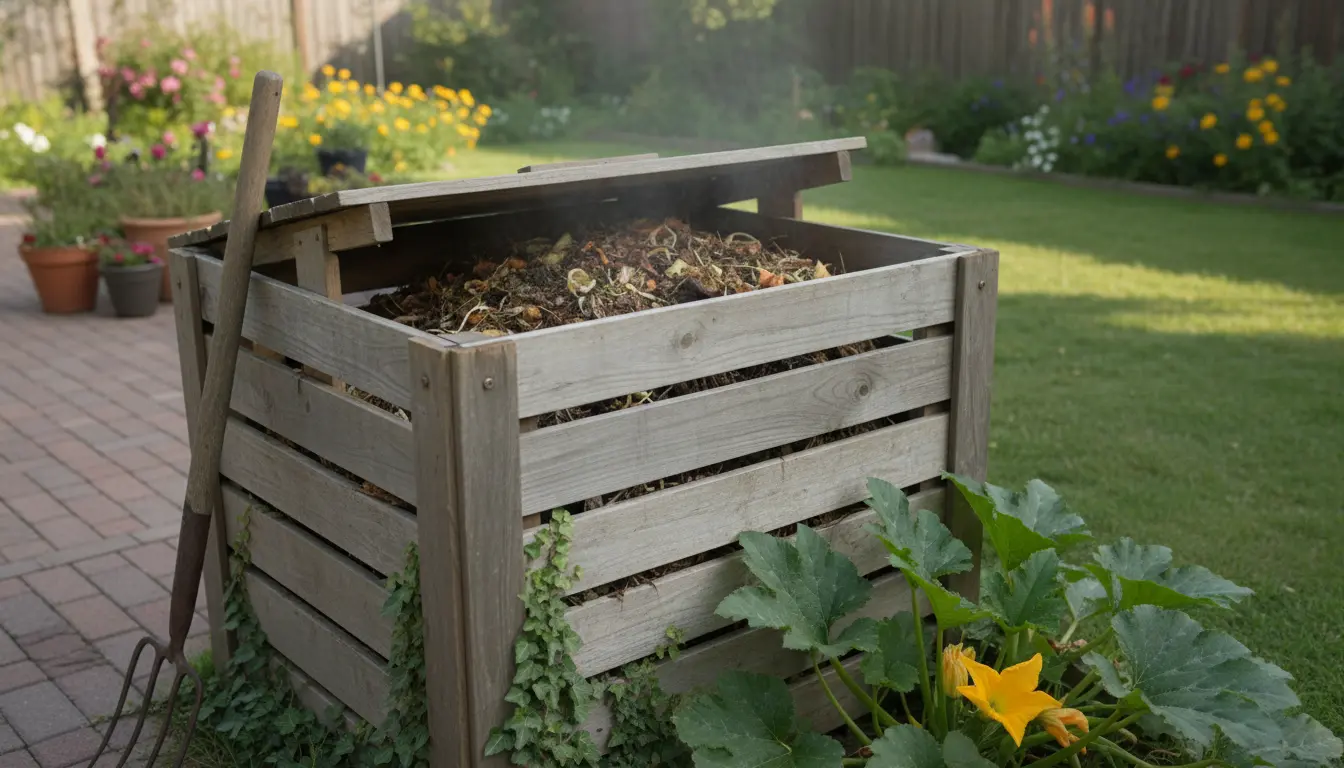
Why Home Composting Matters
Home composting turns kitchen and yard waste into a useful soil amendment. It reduces trash, lowers methane emissions from landfills, and feeds plants naturally.
For beginners, composting can seem technical, but simple systems work well and require little time. This guide focuses on practical steps you can apply this week.
Choose a Method for Home Composting
Pick a system that fits your living situation and schedule. Three common options work well for home composting for beginners.
- Backyard bin: A tumbling or stationary bin for gardens. Low maintenance and fast for yard waste.
- Worm compost (vermicompost): Great for apartments and small spaces. Uses worms to break down food scraps.
- Bokashi: An anaerobic method that ferments food waste, including meat and dairy, before burying the material in soil.
How to Choose
Consider space, how much food waste you produce, and how hands-on you want to be. Backyard bins handle volume; worm bins suit small volumes and faster, odor-free processing.
What to Compost: Simple Rules
Knowing what can and cannot be composted prevents common problems. Use the brown/green rule to balance materials.
- Greens (nitrogen): Fruit and vegetable scraps, coffee grounds, fresh grass clippings.
- Browns (carbon): Dry leaves, shredded paper, cardboard, straw.
A useful mix is about 2–3 parts browns to 1 part greens by volume for a backyard pile. For worm bins, keep materials soft and avoid large amounts of citrus or onion.
Step-by-Step Start-Up for Backyard Bin
This quick plan gets a backyard compost bin working in days, not months.
- Locate the bin on bare soil or grass for good drainage and worm access.
- Start with a 4–6 inch base of coarse browns (twigs or straw) for airflow.
- Add alternating layers of greens and browns. Moisten each layer so it feels like a wrung-out sponge.
- Turn or mix every 1–2 weeks to add oxygen and speed decomposition.
- Harvest finished compost in 2–6 months depending on temperature and turning frequency.
Speed Tips
Chop or shred materials for faster breakdown. Keep the pile moist but not soggy, and maintain a good brown-to-green balance.
Adding a handful of finished compost or garden soil to a new pile inoculates it with beneficial microbes and can reduce time to usable compost by weeks.
Troubleshooting Common Problems
Even simple compost systems can have issues. Here are quick fixes for common problems encountered by beginners.
- Bad odors: Usually from too much green or too little airflow. Add browns and turn the pile.
- Slow breakdown: Materials are too large or too dry. Chop and moisten the pile, then mix.
- Fruit flies: Bury fresh food scraps deeper or cover with a layer of browns. Use indoor food scrap containers with tight lids.
Using Your Finished Compost
Finished compost is dark, crumbly, and smells earthy. Use it as a soil amendment, potting mix ingredient, or mulch top dressing.
Apply a 1–2 inch layer to flower beds, mix 10–30% compost into potting mixes, or work it into vegetable garden beds before planting.
Small Real-World Example: Apartment Worm Bin Case Study
Case study: Sarah, a city renter, started a 20-liter worm bin under her kitchen counter. She added shredded paper, vegetable scraps, and coffee grounds. Over six months she reduced her kitchen waste by about 30% and produced enough vermicompost to amend several potted herbs.
She kept the bin out of direct sun, fed small amounts of food at a time, and harvested worm castings twice a year. The system was low-odor and fit her apartment lifestyle.
Practical Checklist to Start Composting This Week
- Decide method: backyard bin, worm bin, or bokashi.
- Collect a week of kitchen scraps to estimate volume.
- Gather browns: dry leaves, shredded paper, or straw.
- Set up the bin on soil or in a ventilated indoor spot.
- Follow the layering and moisture rules; monitor weekly.
Final Tips for Home Composting for Beginners
Start small and learn by doing. Monitor smell, moisture, and the size of materials. Adjust browns and greens until the system becomes stable.
Composting saves landfill space, enriches your soil, and connects you to the natural cycle of decomposition. With a simple system, even beginners can succeed and see results in months.