
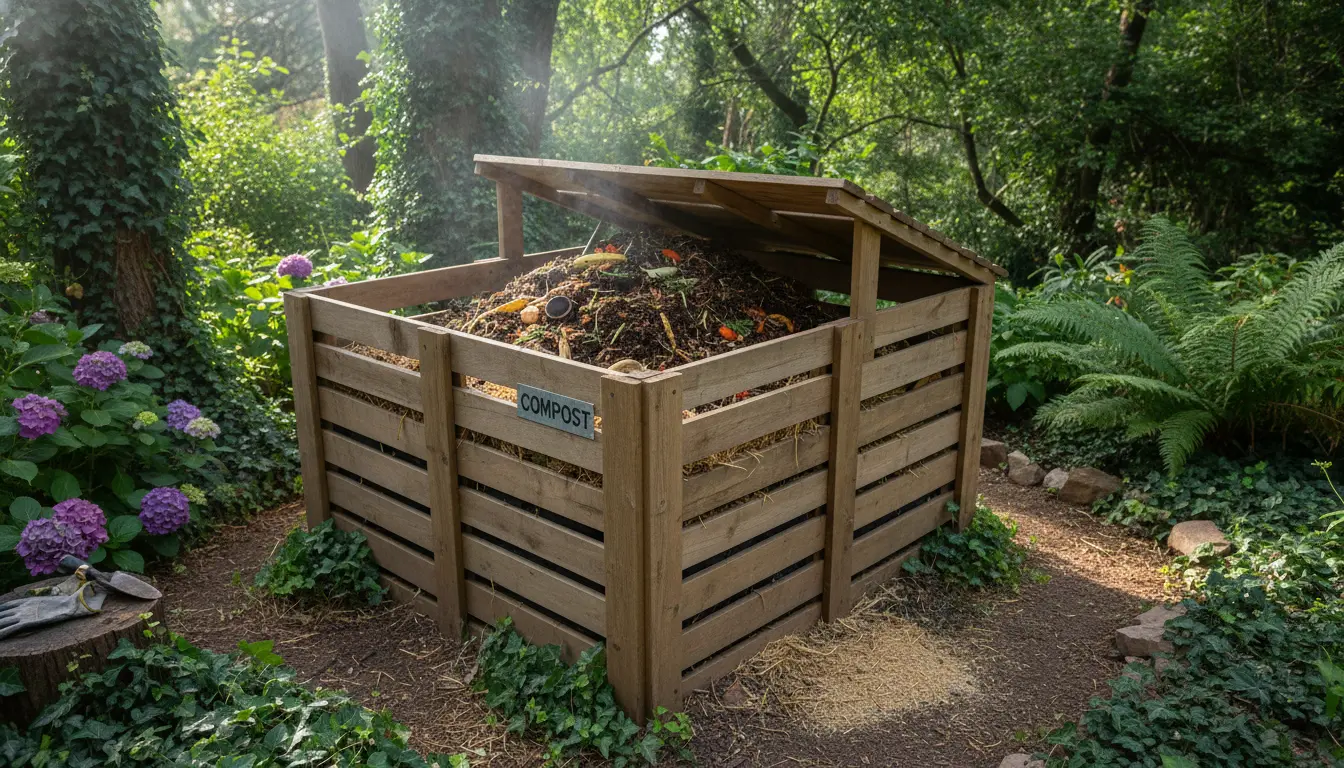
Why Home Composting Matters
Home composting turns kitchen and yard waste into nutrient-rich soil. It reduces landfill waste and improves garden health with minimal cost.
Starting composting is practical and suitable for many living situations, including small yards and balconies.
What Is Home Composting
Home composting is the natural decomposition of organic materials into humus. Microbes, worms, air, and moisture break down the waste into usable compost.
Compost improves soil structure, moisture retention, and plant nutrition when applied to gardens or potted plants.
Essential Materials for Home Composting
Gather two groups of materials: greens and browns. Greens are nitrogen-rich; browns supply carbon.
- Greens: fruit and vegetable scraps, coffee grounds, fresh grass clippings.
- Browns: dried leaves, shredded paper, cardboard, straw.
- Optional: garden soil or finished compost to speed microbial activity.
Choosing a Bin: Types for Home Composting
Select a system that matches space and effort. Common options work for homes and apartments.
- Tumbler bins: Faster decomposition, easy turning, good for small yards.
- Static bins: Affordable and low maintenance, require occasional turning.
- Bokashi buckets: Fermentation method, works indoors and in apartments.
- Open pile: Simple and free for larger yards, needs space and more time.
Step-by-Step: How to Start Home Composting
Follow simple steps to set up and maintain a healthy compost system.
- Choose a bin and place it on bare soil or a stable surface for drainage.
- Start with a layer of coarse browns like twigs for airflow.
- Add alternating layers of greens and browns, aiming for roughly 2:1 browns to greens by volume.
- Maintain moisture like a wrung-out sponge; add water if dry or browns if too wet.
- Turn or mix the pile every 1–2 weeks for faster, less smelly results.
Common Composting Ratios and Tips
A practical ratio is 2 parts browns to 1 part greens. This balances carbon and nitrogen for efficient breakdown.
- If the pile smells, add more browns and turn to aerate.
- If decomposition is slow, chop materials smaller and ensure adequate moisture and air.
What Not to Compost
Avoid items that attract pests or spread disease. Keep these out of home compost bins.
- Meat, fish, bones, and dairy
- Diseased plants and pet waste
- Oily foods and synthetic materials
Troubleshooting Home Composting Problems
Smells, pests, and slow decomposition are common but fixable issues.
- Smelly or slimy pile: Add dry browns, mix, and ensure proper aeration.
- Pests: Use a closed bin, bury food scraps, and avoid meat/dairy.
- Slow breakdown: Increase surface area by chopping, add starter soil, and check moisture.
How to Use Finished Compost
Finished compost looks dark, crumbly, and earthy-smelling. It should be free of recognizable food bits.
- Top-dress lawns or mix into garden beds at a 1–2 inch layer.
- Blend with potting mix for container plants to improve water retention.
- Use as a seed starting amendment in small amounts for better germination.
Small Real-World Example: A Family Garden Case Study
Case: A family of four in a suburban home started a 90-gallon tumbler in spring. They saved kitchen scraps and mixed in autumn leaves from their yard.
After four months and regular turning, they produced rich compost used in six raised beds. Tomato yields increased and they cut grocery produce waste by nearly half.
Key takeaway: Regular turning, balanced materials, and consistent moisture produced usable compost within a single growing season.
Quick Checklist to Start Home Composting
- Choose a bin that fits your space (tumbler, static, bokashi).
- Collect kitchen scraps and separate browns like leaves or paper.
- Layer materials, maintain moisture, and turn regularly.
- Use finished compost in garden beds and containers.
Final Tips for Successful Home Composting
Start small and learn by doing. Keep a small countertop container for scraps to reduce trips outside.
Record what you add and how you manage the pile for a few weeks. Adjust browns, greens, and turning frequency based on results.
With basic care, home composting becomes an easy, sustainable habit that benefits your garden and the planet.