
What Is Home Composting?
Home composting is the natural process of turning kitchen scraps and yard waste into nutrient-rich soil. It reduces household waste and produces a useful amendment for gardens and potted plants.
This guide gives clear steps to set up and maintain a compost system at home, whether you live in a house or an apartment.
About 30% of household waste is food scraps and yard trimmings that can be composted instead of sent to a landfill.
Why Start Home Composting
Home composting reduces trash volume and lowers your carbon footprint by keeping organic waste out of landfills. It also creates a free, rich soil amendment that improves plant health and water retention.
Compost supports healthier plants and can reduce the need for store-bought fertilizers and soil conditioners.
How to Start Home Composting
Starting home composting is straightforward. Follow a few basic steps to create a steady supply of compost for your garden.
1. Choose a Compost Bin
Select a bin type that fits your space and budget. Common options include tumblers, stationary bins, and DIY wooden or wire enclosures.
- Tumbler: Faster decomposition, easy turning, good for small yards.
- Stationary bin: Cheaper, larger capacity, needs manual turning with a pitchfork.
- Indoor bokashi or worm (vermicompost) bins: Best for apartments and limited space.
2. Gather Materials: Greens and Browns
Successful home composting relies on a balance of nitrogen-rich “greens” and carbon-rich “browns.” Aim for a ratio near 1:2 (greens to browns) by volume.
- Greens (nitrogen): Fruit and vegetable scraps, coffee grounds, fresh grass clippings.
- Browns (carbon): Dry leaves, shredded paper, cardboard, straw.
Examples: Mix one bucket of kitchen scraps with two buckets of shredded leaves or cardboard.
3. Build and Maintain the Pile
Start with a layer of coarse browns to aid airflow, then alternate greens and browns. Keep the pile moist, like a wrung-out sponge, and turn it every 1–2 weeks to aerate.
- Add material in small batches to avoid compaction.
- Turn the pile to introduce oxygen and speed decomposition.
- Monitor temperature; a hot pile (100–140°F / 38–60°C) breaks down materials faster.
Troubleshooting Home Composting
Common issues are easy to fix once you know what to look for. Regular observation prevents problems and keeps decomposition steady.
Problem: Bad Odor
Cause: Too many greens or lack of oxygen. Fix: Add more browns and turn the pile to air it out.
Problem: Pests or Flies
Cause: Exposed food scraps or meat and dairy added. Fix: Avoid meat and dairy, bury food under browns, or use a sealed indoor system like bokashi or worm bins.
Problem: Slow Decomposition
Cause: Too dry, too compacted, or poor carbon-nitrogen balance. Fix: Moisturize the pile, add porous browns, and turn regularly.
Case Study: Small Apartment Composting
Sarah lives in a two-bedroom apartment and started vermicomposting in a two-tray worm bin on her balcony. She collected about 2 liters of food scraps per week and mixed them with shredded paper.
After three months, Sarah produced enough worm castings to top-dress three balcony planters. Her kitchen waste dropped by 40%, and her tomato plants showed stronger growth.
Practical Tips for Ongoing Success
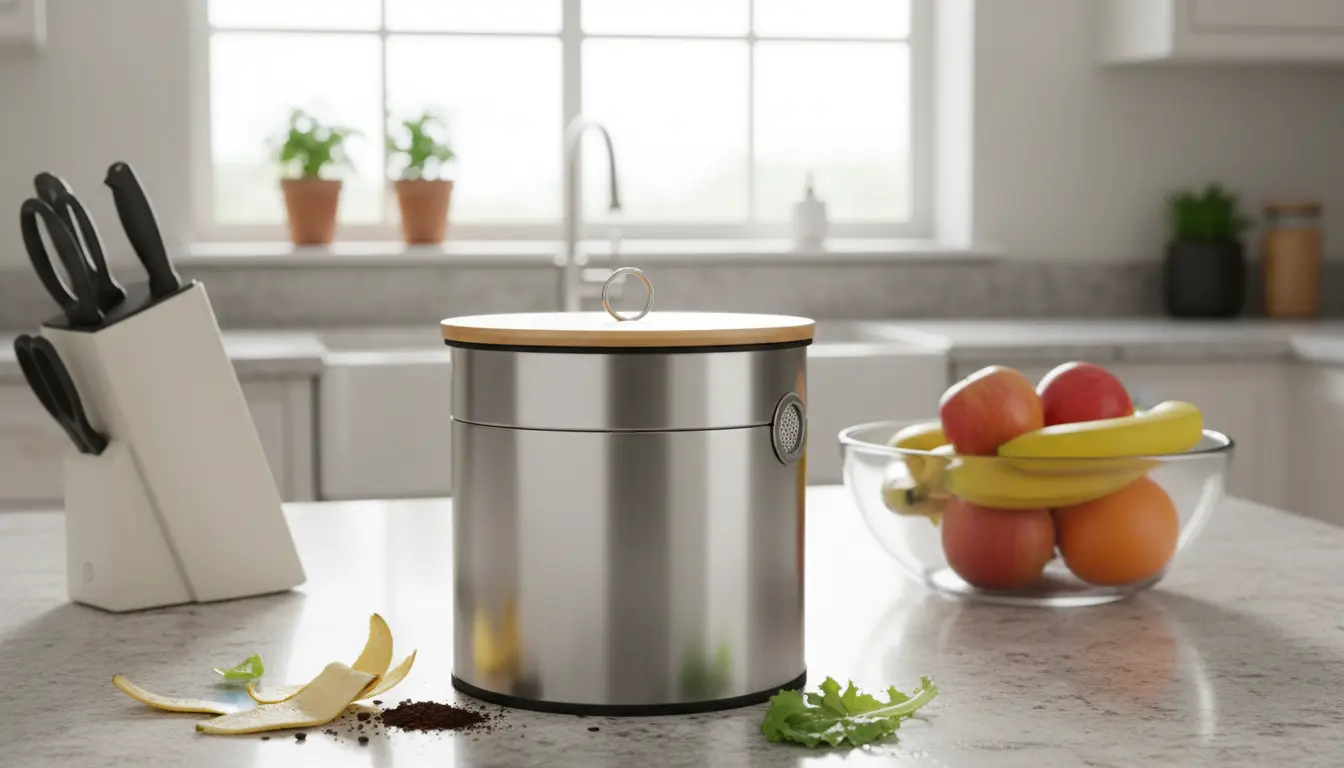
- Keep a small countertop container with a tight lid to collect scraps; empty it into the main bin twice a week.
- Chop larger items to speed decomposition.
- Use finished compost around vegetables, flowers, or potted plants to improve soil structure.
- Record what you add and how the pile reacts; small adjustments improve results over time.
Home Composting Safety and Best Practices
Always wash hands after handling raw scraps and compost. Avoid adding pet waste, grease, or diseased plant materials to home compost meant for gardens.
If you want weed-free compost, avoid adding seedy weeds or allow finished compost to fully cure before use.
Final Steps and Next Actions
Choose a bin, start a small batch, and adjust your greens and browns until the system stabilizes. Home composting takes a few cycles to learn, but it quickly becomes a low-effort habit with high rewards.
Begin today with a simple indoor or outdoor bin, collect scraps, and watch your waste become rich soil in a few months.