
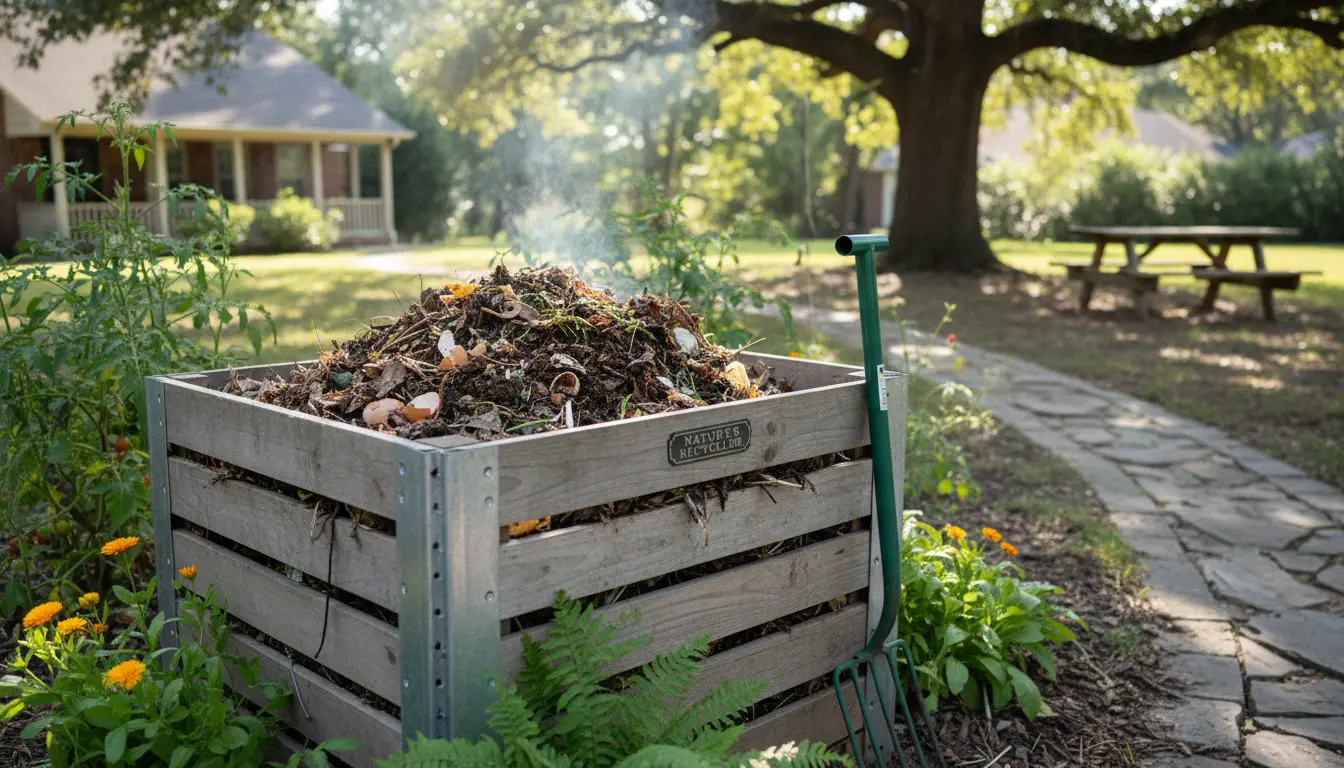
Why Home Composting Matters
Home composting reduces kitchen and yard waste while producing a valuable soil amendment. It helps cut landfill trash and returns nutrients to your garden.
For beginners, composting can seem technical, but basic steps make it manageable and low work. This guide walks you through straightforward methods and common challenges.
Home Composting Basics
Compost is organic material that breaks down into dark, crumbly humus. Microbes, worms, and oxygen drive the decomposition process.
Begin with two categories of materials: brown (carbon) and green (nitrogen). Balancing these helps compost break down efficiently.
Common Brown and Green Materials
- Brown: dry leaves, shredded paper, cardboard, straw
- Green: kitchen scraps, fresh grass clippings, coffee grounds
- Avoid: meat, dairy, oils, diseased plants, and pet waste
How to Start Home Composting
Choose a method that fits your space: open pile, bin, tumbler, or vermicompost (worms). Each method works; pick based on convenience and available area.
Follow these steps to begin:
- Pick the location: a well-drained, partially shaded spot near water.
- Assemble a container or build a simple bin with pallets or wire mesh.
- Layer brown and green materials. Aim for roughly 3:1 browns to greens by volume.
- Moisten materials; they should feel like a wrung-out sponge.
- Turn or aerate the pile every 1–2 weeks, or use a tumbler for easier mixing.
Quick Start Checklist
- Bin or pile in place
- First layer of coarse browns (twigs, straw)
- Mix greens and browns
- Water to maintain moisture
Troubleshooting Home Composting
Problems are common and usually easy to fix. Check these signs and solutions before changing your system.
Bad Smell
A sour or rotten smell means too much nitrogen or poor aeration. Add brown materials and turn the pile to introduce oxygen.
Slow Breakdown
If compost seems stalled, check moisture and particle size. Chop larger pieces and add water if too dry. A balanced carbon-to-nitrogen ratio helps speed decomposition.
Pests
Attracting rodents or flies often comes from adding meat, dairy, or uncovered scraps. Avoid those items and bury food scraps in the center of the pile.
How to Use Finished Compost
Finished compost is dark, crumbly, and earthy-smelling. Use it to improve soil structure, add nutrients, and retain moisture.
- Top-dress lawn: spread 1/4 inch and let it work into the soil.
- Mix into garden beds: use 2–4 inches of compost mixed into the top 6–8 inches of soil.
- Make potting mixes: blend compost with sand and peat or coco coir for containers.
Vermicomposting Option for Small Spaces
Vermicomposting uses worms to convert food scraps into rich castings. It is ideal for apartments or small yards.
Basic steps: get a bin, add bedding (shredded paper), introduce red wiggler worms, and feed small amounts of kitchen scraps regularly.
Vermicompost Tips
- Keep bedding moist but not soggy.
- Avoid citrus and spicy foods in large amounts.
- Harvest castings every 3–6 months.
Simple Case Study: Small Suburban Garden
A homeowner in a small suburb started a 3-foot tumbler next to their vegetable bed. They added kitchen scraps and yard trimmings over one season.
After four months of turning the tumbler weekly, they produced about 100 liters of compost. They mixed it into raised beds and reported healthier tomato and pepper plants the next season.
Key takeaways: consistent turning, correct moisture, and mixing browns and greens delivered usable compost in a single growing season.
Practical Tips to Keep Going
Start small and scale up as you build confidence. Use a countertop collection container to make weekly transfers to the bin easy.
Learn by doing: small adjustments solve most issues. Keep a simple log of inputs and outcomes to refine your routine.
Quick Reminders
- Balance browns and greens for faster composting.
- Maintain moisture and aeration.
- Avoid adding banned items like meat and pet waste.
Home composting for beginners is practical and effective when you follow basic rules. With a little attention, anyone can turn food and yard waste into a valuable resource for healthier soil and plants.