
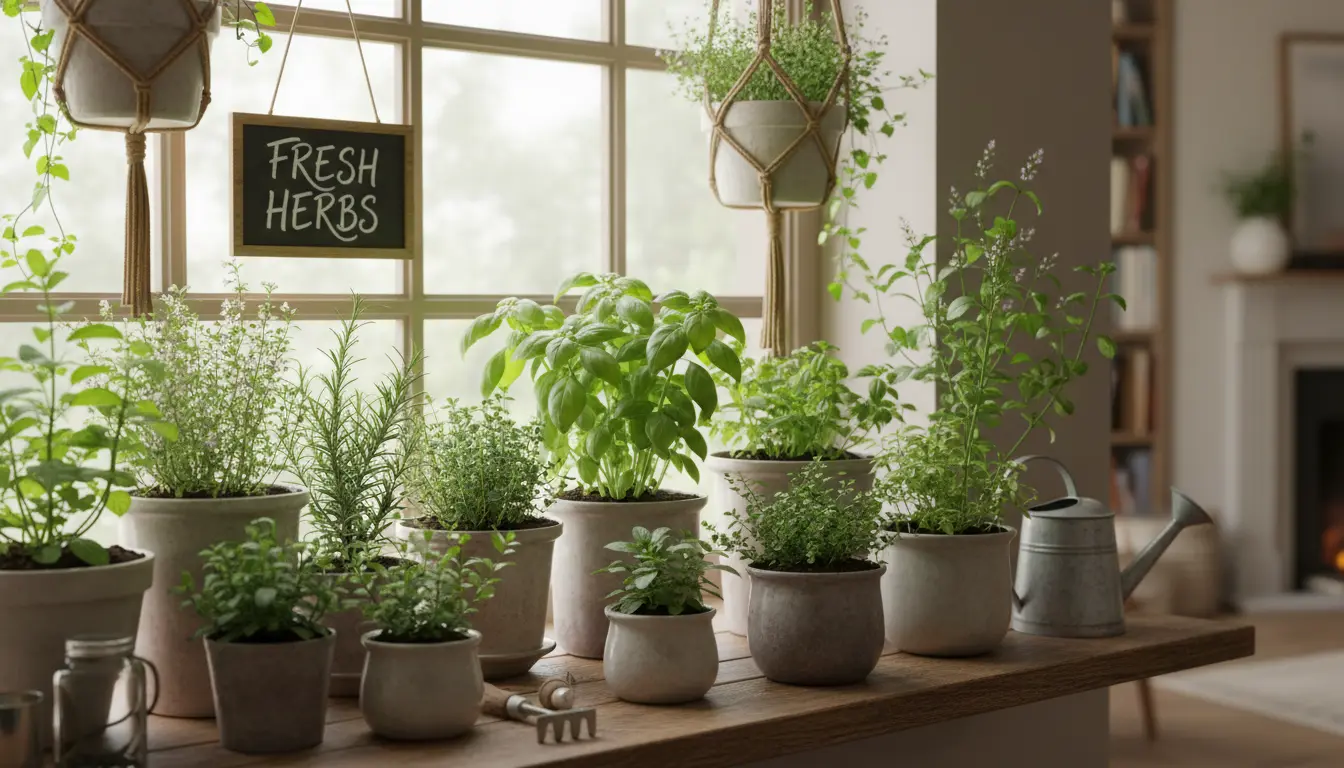
Growing herbs indoors is a simple way to add fresh flavor to meals and brighten small spaces. With the right light, soil, and routine, many common culinary herbs thrive inside.
Growing Herbs Indoors: Essentials You Need
Before you start, gather basic supplies: pots with drainage, good potting mix, a bright window or grow light, and a watering can. Choosing the right herbs for indoor life makes the project easier.
Best Herbs for Growing Herbs Indoors
- Basil — prefers bright light and regular watering.
- Parsley — tolerates moderate light and cooler temps.
- Thyme — likes drier soil and high light.
- Chives — forgiving and grows well on a sunny sill.
- Mint — vigorous; keep in a separate pot to prevent spreading.
Light Requirements for Growing Herbs Indoors
Light is the single most important factor for indoor herbs. Most herbs need at least 6 hours of direct or strong indirect light per day.
Window Placement and Grow Lights
South- and west-facing windows are best in the northern hemisphere. If you lack bright windows, use a full-spectrum LED grow light. Position the light 6–12 inches above small herbs and 12–24 inches above larger pots.
Soil, Drainage, and Pots
Use a well-draining potting mix designed for indoor plants. Avoid garden soil because it compacts and restricts roots.
Choosing Containers
- Pick pots with drainage holes to avoid root rot.
- Use saucers to catch excess water and protect surfaces.
- Consider terracotta for dry-loving herbs and plastic for moisture-loving types.
Watering and Fertilizing While Growing Herbs Indoors
Overwatering is the most common mistake. Water when the top 1 inch of soil feels dry to the touch. Reduce watering in cooler months when growth slows.
Fertilizer Tips
Feed herbs with a balanced liquid fertilizer at half strength every 4–6 weeks during active growth. Avoid over-fertilizing, which can reduce flavor intensity in some herbs like basil.
Pruning, Harvesting, and Encouraging Bushy Growth
Regular pruning keeps herbs productive and prevents legginess. Harvest from the top and trim above a leaf node to encourage branching.
Practical Pruning Routine
- Pinch or trim regularly to maintain shape.
- Remove flowers if you want to prolong leaf production, except when saving seeds or attracting pollinators outdoors.
- Use harvested stems fresh, or dry them for later use.
Common Problems and Solutions for Growing Herbs Indoors
Indoor herbs face a few predictable issues. Identifying the cause quickly helps you correct it without losing plants.
Pest and Disease Management
- Whitefly, aphids, and spider mites appear on weak plants; remove by wiping leaves and use insecticidal soap if needed.
- Root rot comes from overwatering; let soil dry and repot if roots smell sour or are black.
- Leggy growth indicates low light; move herbs to brighter spots or add supplemental lighting.
Case Study: A Small Apartment Herb Setup
Maria lives in a one-bedroom apartment with a north-facing balcony. She placed a three-tier plant stand by her east window and set a full-spectrum LED light on a timer for 8 hours daily.
She started with basil, chives, and mint in 6-inch pots with well-draining soil. By following a weekly watering check and pruning basil twice a month, she harvested enough basil for weekly pesto and fresh garnishes.
Her key adjustments were moving mint to its own pot to prevent crowding and reducing watering frequency in winter. Within three months, the herbs were consistently productive.
Quick Start Checklist for Growing Herbs Indoors
- Choose herbs suited to your light level (e.g., basil for bright sun, parsley for moderate light).
- Select pots with drainage and use quality potting mix.
- Provide 6+ hours of light or a grow light on a timer.
- Water when the top inch of soil is dry; avoid standing water.
- Prune regularly to encourage bushy growth and harvest often.
Final Tips for Consistent Success Growing Herbs Indoors
Start small and focus on one or two herbs you use most. Observe light and moisture patterns, and adjust placement or watering as seasons change.
Keep notes on what works—frequency of watering, fertilizer timing, and harvest amounts. Simple records help you avoid common mistakes and scale up your indoor herb garden with confidence.