
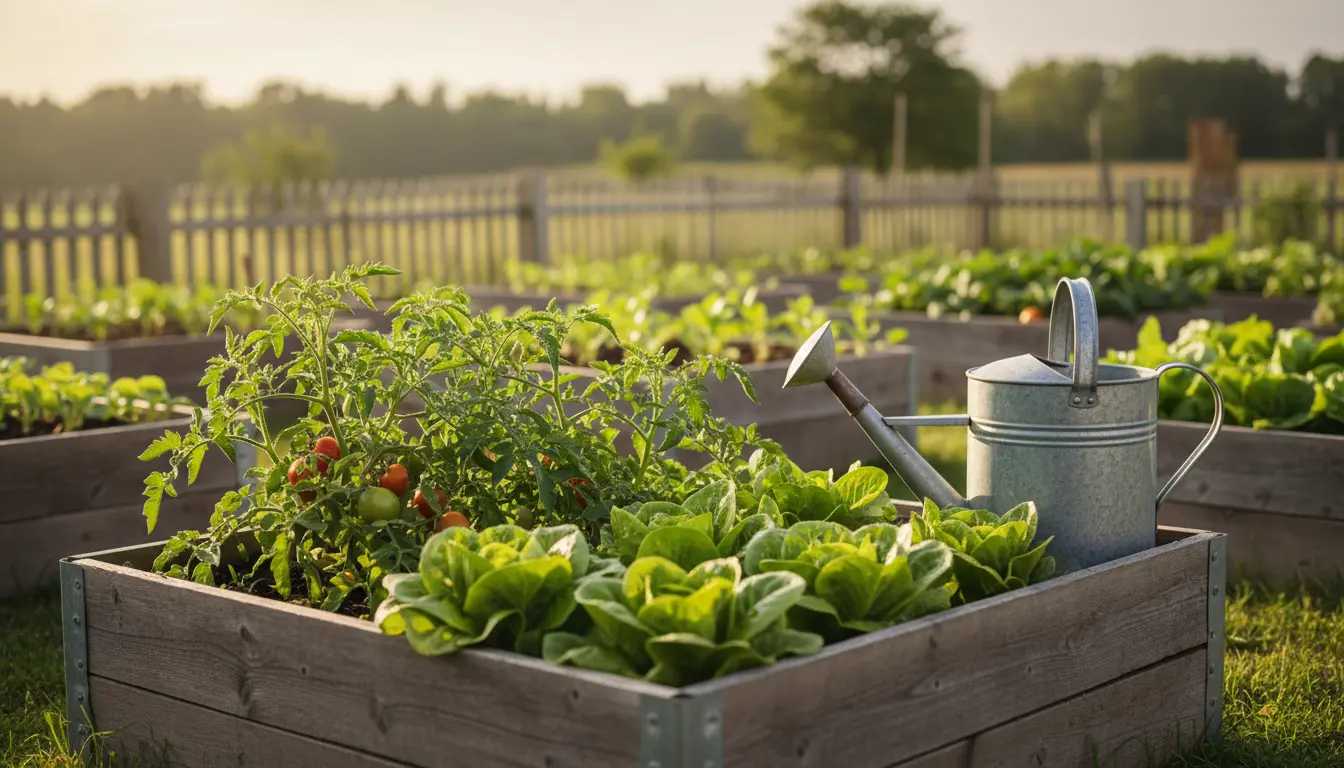
Why a Vegetable Garden for Beginners Works
Starting a vegetable garden as a beginner is practical and rewarding. With a few simple choices you can grow fresh food without needing advanced tools or large areas.
Plan Your Vegetable Garden for Beginners
Begin with a basic plan that lists the space you have, the amount of sun, and what you want to eat. Planning prevents wasted time and keeps the project manageable.
Decide Location and Size
Most vegetables need at least 6 hours of direct sun. Choose a spot that is close to water and gets good light. If space is limited, use containers or a small raised bed.
Choose Simple Crops
As a beginner, pick fast, forgiving plants. These give quick results and build confidence.
- Lettuce and salad greens (quick, cool-season)
- Radishes (ready in a month)
- Cherry tomatoes (compact varieties)
- Herbs like basil, parsley, and chives
- Snap peas or bush beans (easy to grow)
Prepare Soil for a Vegetable Garden for Beginners
Good soil is the most important factor. Healthy soil gives plants nutrients and holds water well.
Test and Improve Soil
Use a simple soil test kit or send a sample to a local extension. Aim for loose, well-draining soil rich in organic matter.
To improve soil, add compost or well-rotted manure. Mix 2–4 inches of compost into the top 6–8 inches of soil before planting.
Planting Tips for a Vegetable Garden for Beginners
Follow seed packet directions for depth and spacing. Small seeds need shallower planting; larger seeds go deeper.
Timing and Succession Planting
Plant cool-season crops in early spring or fall. Warm-season crops go in after the last frost. Use succession planting to have steady harvests: plant a new row every two weeks for quick crops.
Watering and Feeding a Vegetable Garden for Beginners
Consistent watering is key. Most vegetables need about 1 inch of water per week, more in hot weather.
- Water early in the morning to reduce disease.
- Use a soaker hose or drip irrigation to keep foliage dry.
- Mulch with straw or shredded leaves to keep soil moist and suppress weeds.
Feed plants with a balanced organic fertilizer or compost tea once they begin to set fruit. Avoid over-fertilizing leafy crops if you want more flavor.
Common Problems and Simple Solutions
Pests and diseases are part of gardening, but many issues have easy fixes. Inspect plants weekly and act early.
- Slugs: hand-pick or use beer traps.
- Aphids: spray with water or use insecticidal soap.
- Fungal diseases: improve air circulation and avoid overhead watering.
- Poor growth: check soil pH and add compost.
Harvesting From Your Vegetable Garden for Beginners
Harvest regularly to encourage more production. Pick lettuce outer leaves or snip herbs just above a set of leaves.
Tomatoes are ready when fully colored and slightly soft. Beans should be tender and snapped easily.
Small Real-World Example
Case study: A renter in Portland started a 4×4 foot raised bed on a sunny balcony. They planted mixed lettuce, radishes, and two cherry tomato plants in May.
After eight weeks they harvested weekly salads and a steady supply of tomatoes by late summer. Minimal tools and weekly 20-minute maintenance sessions kept the bed productive.
Seasonal Checklist for a Vegetable Garden for Beginners
Use this quick checklist to keep tasks manageable throughout the season.
- Spring: prepare soil, start seeds, plant cool-season crops.
- Early summer: thin seedlings, install supports, mulch.
- Mid summer: monitor water, pick regularly, watch for pests.
- Fall: harvest remaining crops, add compost, clean up beds.
Interplanting quick crops like radishes between slower ones like tomatoes makes efficient use of space and gives early harvests while larger plants mature.
Simple Tools and Materials
You don’t need fancy gear. A few basic tools will do most jobs in a small vegetable garden.
- Hand trowel and cultivator
- Watering can or hose with a gentle nozzle
- Pruning shears and garden gloves
- Compost or organic fertilizer
- Mulch (straw, leaves, or wood chips)
Final Tips for a Vegetable Garden for Beginners
Start small and focus on a few easy crops. Learn from each season and expand gradually.
Keep a simple notebook: note planting dates, varieties, and any problems. This record helps you improve every year.
With basic planning, simple soil improvement, and regular care, a vegetable garden for beginners can supply fresh food, reduce grocery bills, and provide a satisfying hobby.