
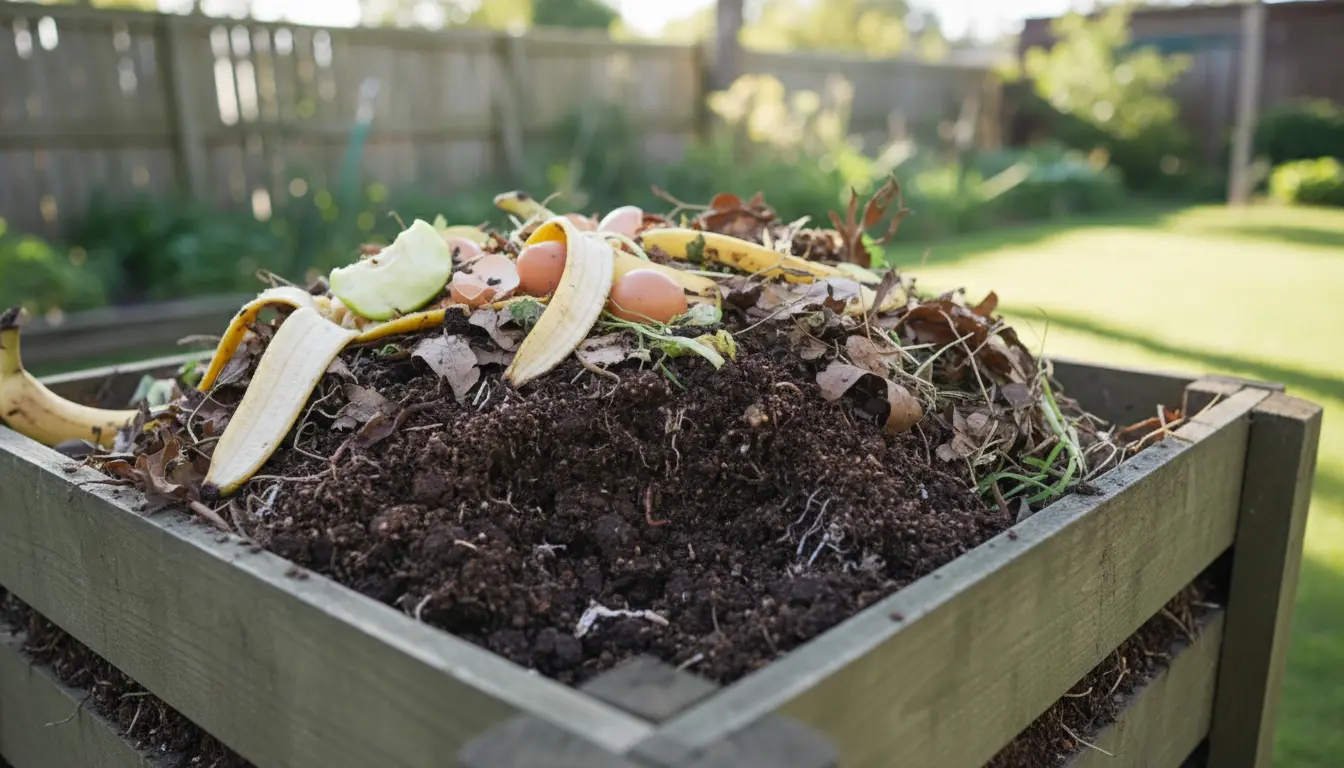
Home composting turns kitchen scraps and yard waste into nutrient-rich soil. This guide gives step-by-step, practical advice for beginners to start and maintain compost at home.
Why Home Composting for Beginners Matters
Composting reduces household waste and improves garden soil without chemicals. It saves money on landfill fees and store-bought fertilizers.
For beginners, composting is a low-cost, low-effort habit once you understand the basics. You only need basic tools and a simple system that fits your space.
Home Composting for Beginners: Choose a System
Pick a compost system that fits your living situation and time. Common choices are a backyard bin, a tumbling composter, or a small indoor vermicompost setup.
- Backyard bin — Good for yards, low maintenance, larger capacity.
- Tumbler — Faster aeration, easier turning, needs more frequent rotation.
- Vermicompost (worms) — Ideal for apartments, quiet, produces fine compost quickly.
Home Composting: What to Put In
Balance carbon-rich “browns” and nitrogen-rich “greens” for healthy decomposition. Aim for roughly 2–3 parts browns to 1 part greens.
- Browns: dry leaves, shredded paper, cardboard, straw.
- Greens: vegetable scraps, fresh grass clippings, coffee grounds.
- Avoid: meat, dairy, oils, diseased plants, and pet waste.
How to Start Home Composting: Step-by-Step
Follow these basic steps to build your first compost pile or start your bin. Each step helps create a stable environment for microbes.
- Pick a dry, shaded spot near a water source if possible.
- Start with a layer of coarse material (twigs) to improve drainage.
- Add alternating layers of greens and browns, keeping pieces small to speed breakdown.
- Keep the pile moist like a wrung-out sponge — not soggy, not dry.
- Turn or mix every 1–2 weeks for faster composting, or less often for slower systems.
Home Composting Tools and Supplies
You don’t need many tools to get started. Simple items can make the process easier and cleaner.
- Pitchfork or compost aerator for turning.
- Bin or tumbler to contain the pile and deter pests.
- Kitchen compost caddy to collect scraps before transferring.
Adding crushed eggshells helps supply calcium for plants, while coffee grounds add nitrogen and attract earthworms to your compost.
Maintaining Your Home Composting System
Routine checks keep your compost healthy and odor-free. Adjust moisture, aeration, and ingredient mix as needed.
- Moisture: If too dry, add water and greens. If too wet, add browns and turn the pile.
- Air: Turn to introduce oxygen; a compacted pile slows decomposition and smells bad.
- Temperature: A hot pile (130–150°F or 55–65°C) breaks down materials faster, but cool compost still works fine for beginners.
Troubleshooting for Home Composting
Common issues are easy to fix once you identify the cause. Look at smell, pests, and decomposition speed to diagnose problems.
- Bad odor — usually too wet or too much green material. Add browns and aerate.
- Pests — avoid meat and dairy, secure your bin, and bury food scraps under browns.
- Slow breakdown — increase surface area by chopping materials and maintain moisture and warmth.
Small Real-World Example: Urban Apartment Worm Bin
Maria, a city renter, started a worm compost bin under her kitchen sink. She used a plastic bin with drainage, red wiggler worms, and shredded newspaper as bedding.
Within eight weeks she produced enough vermicompost for her balcony herbs. She kept the bin slightly moist, fed small portions of vegetable scraps, and avoided citrus and onion overload.
Her system produced consistent compost and eliminated most kitchen waste that used to go to the trash.
Using Finished Compost
Finished compost looks dark, crumbly, and smells earthy. Use it to enrich potting mixes, topdress lawns, or work into garden beds.
Blend finished compost at 10–25% by volume into potting soil, or sprinkle a 1–2 inch layer around plants as a mulch and soil conditioner.
Benefits of Home Composting
- Reduces household waste and methane emissions from landfills.
- Improves soil structure, water retention, and nutrient availability.
- Saves money and supports healthier plants without chemicals.
Home composting for beginners is practical and scalable. Start small, keep the balance of browns and greens, and adjust as you learn. Within a few months you can turn everyday waste into a valuable resource for your garden.