
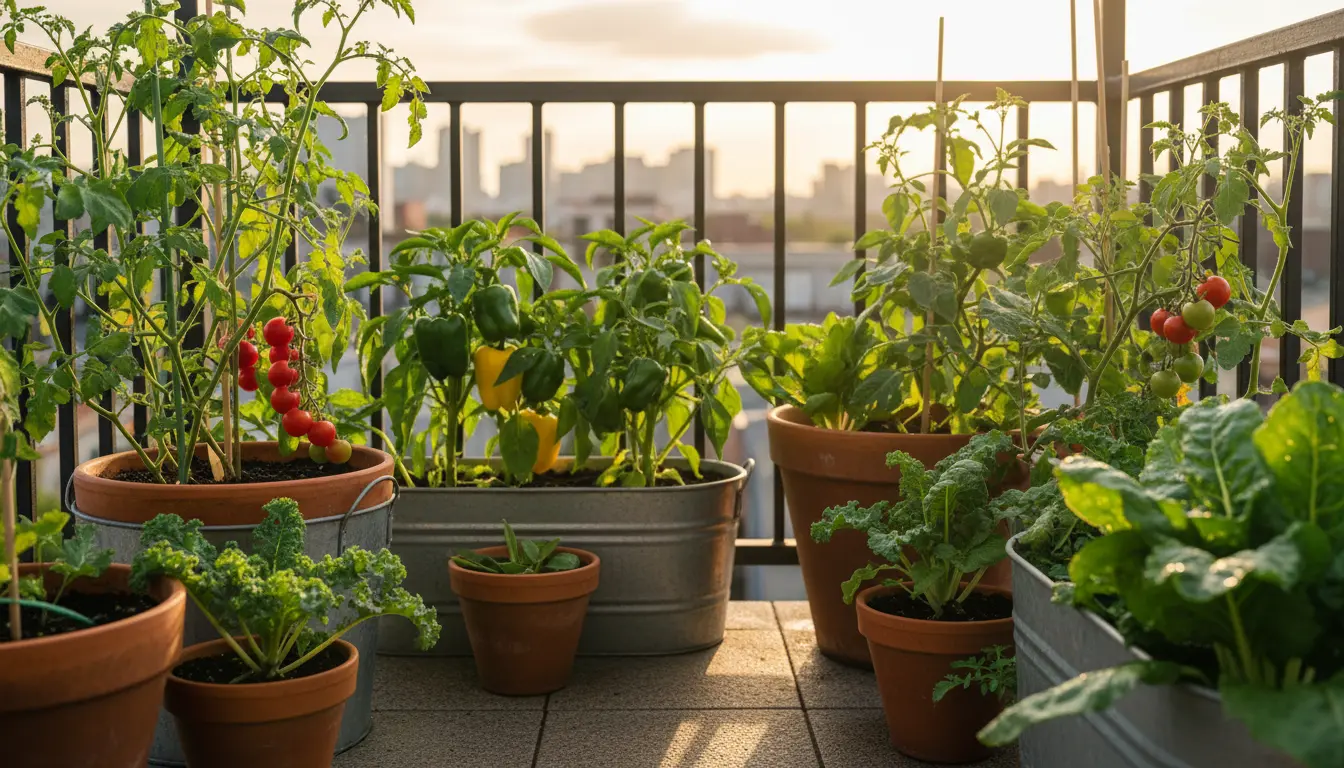
Why start a container vegetable garden
Container vegetable gardening is ideal for small spaces, balconies, and patios. It gives you control over soil, drainage, and plant placement.
This guide explains how to plan, plant, and maintain a productive container vegetable garden with practical, step-by-step advice.
Getting started with a container vegetable garden
Choose a sunny spot first. Most vegetables need 6–8 hours of direct sun each day to set flowers and produce fruit.
Consider wind, access to water, and how you will move or secure containers in bad weather.
Pick the right containers for a container vegetable garden
Select containers with drainage holes and enough volume for the crop. Depth and width matter more than aesthetics for root growth.
- Small herbs and lettuce: 6–8 inch pots
- Tomatoes, peppers, eggplants: 12–20 gallon containers
- Root crops (carrots, beets): deep troughs or tall pots
Soil and potting mix for a container vegetable garden
Use a high-quality potting mix, not garden soil. Potting mixes are lighter, drain better, and resist compaction.
Look for mixes labeled for containers, or blend your own with peat-free compost, coir, perlite, and composted bark.
Plant selection and spacing in a container vegetable garden
Choose compact or patio varieties if space is limited. Read plant labels for mature size and spacing needs.
Companion planting in containers can improve yields and reduce pests. For example, basil with tomatoes or marigolds with most vegetables.
Examples of good container vegetables
- Tomatoes (determinate or patio types)
- Peppers and chilies
- Leafy greens: spinach, lettuce, mustard
- Herbs: basil, parsley, chives
- Root crops adapted to deep containers: carrots, radishes
Watering and feeding your container vegetable garden
Containers dry out faster than in-ground beds, so check moisture daily during warm weather. Stick your finger 1–2 inches into the mix to test.
Use a consistent watering routine. Deep, thorough watering encourages strong roots more than frequent light sprinkling.
Fertilizer schedule for a container vegetable garden
Potting mixes have limited nutrients, so feed regularly. Use a balanced liquid feed every 1–2 weeks or a slow-release fertilizer at planting.
Follow label rates. Overfeeding can burn roots; underfeeding reduces yield and vigor.
Pest and disease basics for container vegetable gardens
Inspect plants weekly for pests and disease signs like yellowing leaves, holes, or sticky residue. Early detection makes control easier.
Use integrated pest management: handpick pests, encourage beneficial insects, and use targeted organic treatments when necessary.
Common issues and quick responses
- Aphids: spray with water or use insecticidal soap
- Slugs and snails: handpick at night or use traps
- Powdery mildew: improve airflow and remove affected leaves
Seasonal care and rotation for a container vegetable garden
Rotate crops between containers each season to reduce disease carryover. Replace or refresh potting mix yearly for best results.
In colder climates, move containers to a sheltered spot or bring sensitive plants indoors for winter to extend the season.
Small real-world example: One balcony, three containers
Case Study: Maria is a city renter with a south-facing balcony. She used three containers: a 15-gallon for a determinate tomato, a 10-gallon for peppers, and a long trough for salad greens.
She placed the tomato against the railing for sun and staked it early. Maria used a commercial potting mix and fed weekly with a liquid fertilizer. Her harvest included several pounds of tomatoes and continuous salad greens all summer.
Key wins: choosing correct container sizes, regular watering, and weekly feeding. Pests were minimal due to weekly inspections and removing affected leaves early.
Practical checklist to start your container vegetable garden
- Select a sunny location and choose containers with drainage
- Buy quality potting mix and fertilizers for containers
- Pick suitable vegetable varieties for pot size and climate
- Plan a watering schedule and set reminders for feeding
- Inspect plants weekly and act early on pests
Final tips for a successful container vegetable garden
Start small and expand as you learn what your space can handle. Growing a few productive plants is better than many neglected pots.
Keep a simple journal: planting dates, varieties, and notes on yield and problems. That record greatly improves next season’s planning.
With the right containers, soil, and routine care, you can successfully grow vegetables in limited space and enjoy fresh produce all season.