
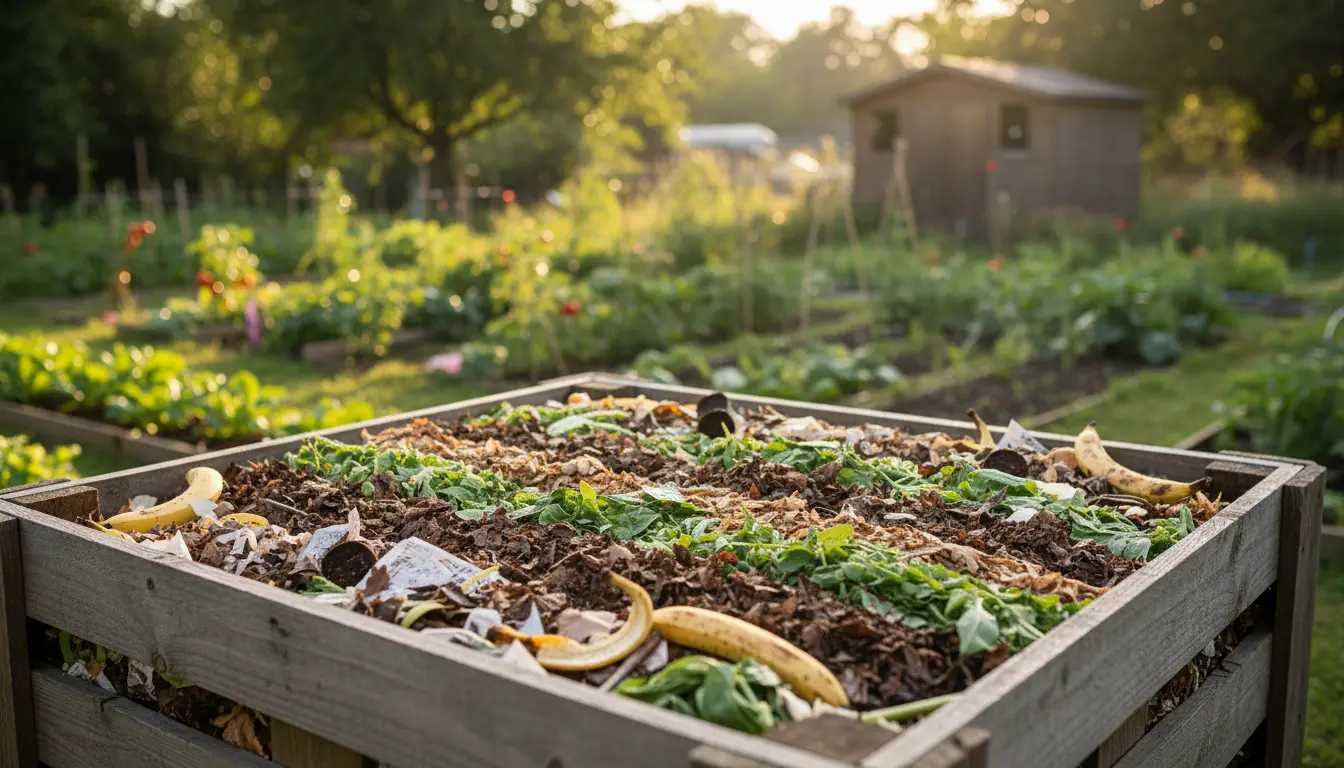
Home composting turns kitchen and yard waste into nutrient-rich soil that improves plant health and cuts household waste. This guide gives clear, actionable steps to begin composting at home with minimal tools and common materials.
How to Start Home Composting
Decide which compost method fits your space and lifestyle. Options include a simple outdoor pile, a bin, a tumbler, worm composting (vermicompost), or bokashi for small indoor spaces.
Choose a Compost Method for Home Composting
- Backyard bin or pile: Best for yards with space and moderate effort.
- Compost tumbler: Easier turning, tidier, good for small yards.
- Worm bin (vermicompost): Ideal for apartments and kitchens; produces rich castings.
- Bokashi: Fermentation method for true indoor composting including meat and dairy scraps.
Select a Location for Home Composting
Pick a spot with partial sun and good drainage. For worm bins or bokashi, a balcony or utility room works well. For outdoor bins, place on soil rather than concrete to allow organisms to access the pile.
Gather Materials for Home Composting
Successful composting needs the right balance of green (nitrogen) and brown (carbon) materials. Aim for a mix close to 30:1 carbon to nitrogen by weight, but practical results come from alternating layers.
- Green materials: vegetable scraps, fruit peels, coffee grounds, grass clippings.
- Brown materials: dry leaves, straw, shredded paper, cardboard, sawdust.
- Do not compost: pet waste from carnivores, oily cooking grease, diseased plants, invasive weeds with seeds.
Build and Maintain Your Home Composting System
Start the Pile or Bin
Begin with a base layer of coarse brown material to promote airflow. Add alternating layers of green and brown. Keep pieces small; chop kitchen scraps and shred cardboard to speed decomposition.
Moisture and Aeration for Home Composting
Compost should be as damp as a wrung-out sponge. Too dry and microbes slow down; too wet and the pile becomes anaerobic and smelly. Turn or aerate the pile every 1–2 weeks to introduce oxygen and speed breakdown.
Temperature and Speed
Hot composting (130–160°F / 55–70°C) breaks down materials quickly and kills pathogens. Cold composting takes months but requires less maintenance. Choose a method that fits how fast you want finished compost and how much effort you can give.
Troubleshooting and Common Questions
Why Does My Compost Smell Bad?
Bad odors usually mean too much moisture or not enough air. Turn the pile, add dry brown materials, and check drainage. If smells persist, add more browns and reduce fresh greens.
Why Is Decomposition Slow?
Slow breakdown comes from low moisture, large pieces, or lack of nitrogen. Chop materials, moisten, and add some fresh greens or a handful of compost starter to boost activity.
Pests and Rodents
Avoid open piles with meat or oily foods that attract pests. Use a closed bin, keep food buried under brown layers, and avoid feeding meat or dairy to a regular backyard bin.
Using Finished Compost from Home Composting
Finished compost is dark, crumbly, and smells earthy. Use it as a soil amendment, top dressing, or potting mix ingredient. Mix 1 part compost to 3 parts soil when planting vegetables or flowers.
Signs Compost Is Ready
- Uniform dark color and crumbly texture
- No recognizable food pieces
- Earthy smell
Small Real-World Example: Apartment Vermicompost Case Study
Case: Sarah, a city apartment dweller, started a 20-liter worm bin under her sink. She fed it daily kitchen scraps and shredded cardboard. Within three months she harvested rich worm castings and reduced her kitchen waste by 60%.
Results: Sarah used the castings in indoor plants and a balcony herb garden. The bin stayed odor-free when she maintained proper moisture, fed modest portions, and turned bedding weekly.
Quick Start Checklist for Home Composting
- Choose a method: bin, tumbler, worm bin, or bokashi.
- Gather greens and browns and chop materials small.
- Maintain moisture like a wrung-out sponge.
- Turn or aerate regularly for faster composting.
- Harvest when the mix is dark and crumbly.
Home composting is a low-cost, high-impact way to reduce waste and build healthy soil. Start small, observe how your system responds, and adjust layers, moisture, and turning schedule as you learn. Within months you can transform scraps into garden gold and cut your household landfill waste.