
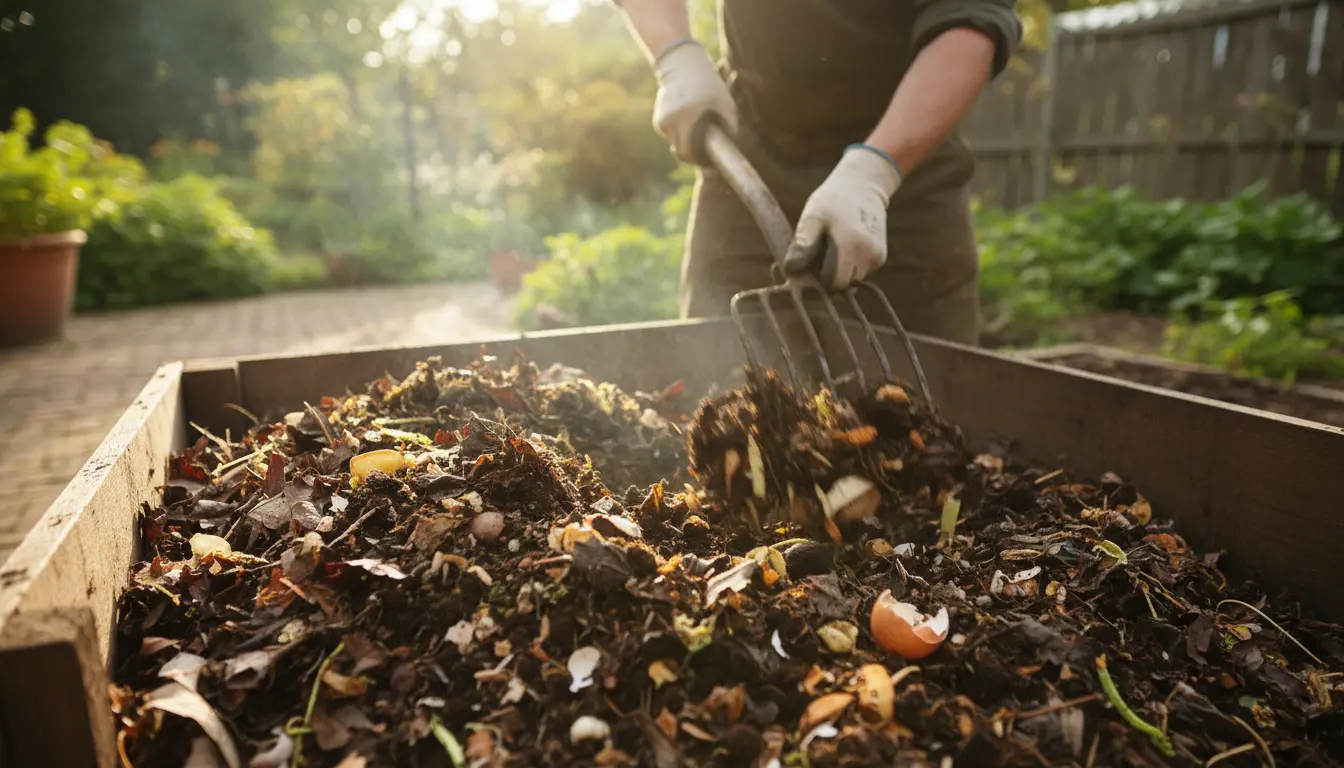
Why Home Composting for Beginners Is Worth Doing
Home composting turns kitchen scraps and yard trimmings into rich soil amendment. It reduces waste, lowers trash volume, and improves garden health with minimal cost.
For beginners, composting may seem technical, but basic systems are forgiving and simple to maintain. This guide focuses on practical steps you can apply today.
How to Start Home Composting for Beginners
Starting composting requires only a bin or pile, a mix of materials, and occasional attention. Follow the steps below to set up a reliable system.
Choose the Right Bin for Home Composting
Select a bin that fits your space and needs. Options include tumblers, stationary bins, wooden pallets, or a simple open pile for larger yards.
Consider these points when choosing a bin:
- Tumblers: Faster turning, better aeration, good for small spaces.
- Stationary bins: Cheaper, hold more material, slower decomposition.
- Open pile: Lowest cost, good for large gardens but can attract pests if unmanaged.
Balance Materials for Home Composting
Effective compost needs a balance of ‘greens’ (nitrogen) and ‘browns’ (carbon). A good rule of thumb is roughly 2 parts browns to 1 part greens by volume.
Examples of compostable materials:
- Greens: fruit and vegetable scraps, coffee grounds, fresh grass clippings.
- Browns: dry leaves, shredded paper, straw, cardboard.
Maintaining Your Home Composting System
Maintenance is straightforward: manage moisture, aeration, and particle size. Regular monitoring prevents odors and speeds up decomposition.
Moisture and Aeration Tips for Home Composting
Your pile should be as damp as a wrung-out sponge. Too dry slows decomposition; too wet creates odors and compaction.
To aerate, turn the pile every 1–2 weeks with a shovel or use a tumbler. Turning introduces oxygen and distributes moisture.
Speeding Up Compost for Beginners
To produce finished compost faster, chop materials small and maintain the green-to-brown balance. Adding finished compost or garden soil can introduce beneficial microbes.
Use these quick tips to speed up breakdown:
- Shred or chop large pieces before adding them.
- Layer greens and browns instead of dumping one type only.
- Keep temperatures moderate by adding bulk during hot months to avoid overheating.
Composting can reduce household waste by up to 30 percent. Finished compost improves soil structure, water retention, and nutrient content for plants.
Common Problems and Solutions in Home Composting for Beginners
Beginners often face a few predictable issues: foul smells, pests, or slow breakdown. Each has a simple solution you can apply immediately.
Quick fixes:
- Smell: Add more browns and turn the pile to add oxygen.
- Pests: Avoid meat, dairy, and oily foods; use a closed bin or bury kitchen scraps under a layer of browns.
- Slow decomposition: Chop material smaller, increase greens slightly, and ensure proper moisture.
How to Use Finished Compost
Finished compost looks dark, crumbly, and earthy-smelling. Use it as a soil top dressing, mix into potting soil, or work it into garden beds at planting time.
Application examples:
- Vegetable beds: Mix 1–2 inches of compost into the top 6–8 inches of soil.
- Pots and containers: Blend compost with potting mix up to 20 percent by volume.
- Lawns: Spread a thin layer (about 1/4 inch) and rake in to improve soil health over time.
Small Real-World Case Study
Case: A two-person household in a suburban home began home composting with a 60-liter tumbler. They added kitchen scraps and brown yard waste in a 1:2 ratio, turning weekly.
Result: After six months, they produced enough compost to top-dress potted plants and enrich a raised vegetable bed. Their weekly trash volume decreased noticeably.
Final Checklist for Home Composting for Beginners
- Choose a bin that suits your space and budget.
- Maintain a balance of greens and browns (approx. 1:2).
- Keep the pile moist and turn regularly for aeration.
- Avoid meat, dairy, and oils to prevent pests and odors.
- Use finished compost to feed soil and plants seasonally.
Home composting is accessible, inexpensive, and effective. With a small time commitment and basic care, beginners can produce high-quality compost and reduce waste while improving garden health.