
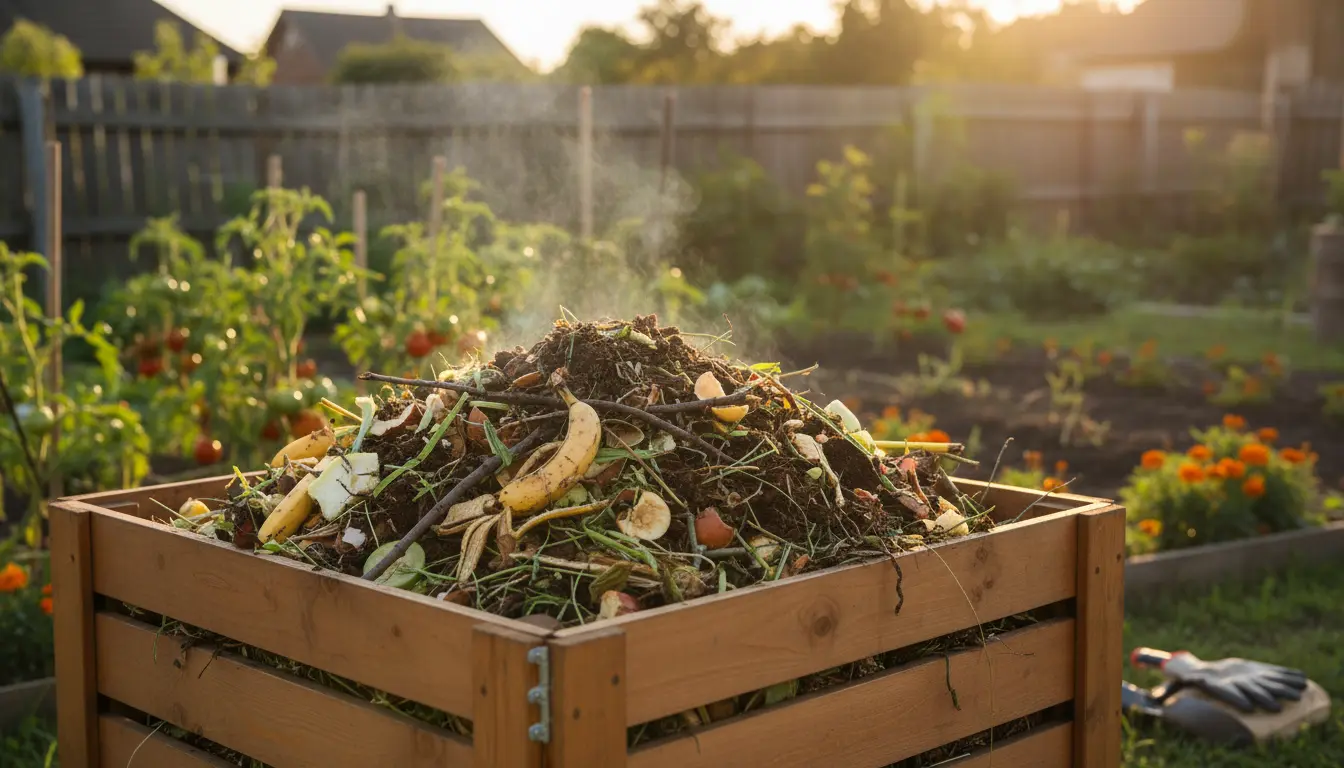
Why Start Composting at Home
Composting at home turns kitchen scraps and yard waste into nutrient-rich soil. It reduces household waste and improves garden health.
With a few basic tools and simple practices, most people can compost successfully in a backyard, balcony, or small apartment.
Basic Components for Composting at Home
Start by assembling the right materials. Compost needs three main elements: carbon, nitrogen, and moisture.
- Carbon (browns): dry leaves, shredded paper, cardboard, straw.
- Nitrogen (greens): vegetable scraps, coffee grounds, fresh grass clippings.
- Moisture: water to keep the pile damp like a wrung-out sponge.
Tools and Containers
Choose a container based on space and preference. Options include tumblers, stationary bins, or open piles.
Basic tools: a pitchfork or compost aerator, a bucket for collecting scraps, and breathable covers for bins.
Step-by-Step: How to Start Composting at Home
Follow these steps to start an effective compost system from day one.
- Pick a spot: place your bin or pile in a shaded, level area with good drainage.
- Layer materials: begin with a 4–6 inch base of coarse carbon (twigs or straw) to promote airflow.
- Add greens and browns: alternate thin layers of greens and browns, aiming for a rough 1:3 nitrogen to carbon ratio.
- Keep it moist: water the pile if dry. It should feel like a damp sponge, not soggy.
- Turn regularly: every 1–2 weeks turn the pile to add oxygen and speed decomposition.
- Wait and monitor: within 2–6 months you should see dark, crumbly compost ready for use.
What to Compost and What to Avoid
Safe items: fruit and vegetable scraps, eggshells, coffee grounds, tea bags, shredded paper, yard trimmings.
Avoid meat, dairy, oily foods, diseased plants, pet waste, and large branches that decompose slowly or attract pests.
Troubleshooting Common Problems
Even simple systems can encounter issues. Here are quick fixes for typical problems.
- Bad odor: add more carbon and turn the pile to introduce air.
- Pests or rodents: avoid meat and wrap food scraps in browns; use closed bins if needed.
- Slow decomposition: chop materials smaller, add nitrogen-rich greens, and ensure moisture and turning.
- Too wet: add dry browns and mix to improve drainage and airflow.
Composting can cut household waste by up to 30 percent and reduce methane emissions from landfills when organic waste is diverted at home.
Choosing the Right Method to Start Composting at Home
Select a method that fits your lifestyle and space. Popular options include backyard piles, tumblers, Bokashi, and worm bins (vermicomposting).
- Backyard pile: low cost, suitable for yards, requires regular turning.
- Tumbler: contained, easier to turn, good for smaller gardens.
- Bokashi: anaerobic fermentation system that handles cooked food and dairy after fermentation.
- Worm bin: ideal for apartments and balconies, produces high-quality worm castings fast.
Example: Small Apartment Worm Bin
Many apartment dwellers start with a compact worm bin. Use a shallow plastic bin, bedding (shredded paper), red wiggler worms, and a lid with ventilation.
Feed kitchen scraps in small amounts and harvest castings every 2–3 months for houseplants or balcony containers.
Real-World Case Study: A Backyard Starter System
Case: A family of four began composting at home using a 200-liter tumbling bin. They collected kitchen scraps in a countertop pail and added backyard leaves and shredded cardboard weekly.
After three months, they had rich compost that reduced their need for store-bought fertilizer and cut weekly trash by about 25 percent. Turning once a week and balancing greens and browns solved initial odor problems.
How to Use Finished Compost
Finished compost looks dark, crumbly, and earthy-smelling. Use it as a soil amendment, top dressing, or potting mix ingredient.
- Mix 1 part compost with 3 parts soil for garden beds.
- Top-dress lawns with a thin layer to improve soil structure.
- Blend with potting mix for container plants to add nutrients and water retention.
Next Steps and Practical Tips
Start small and scale up. Begin with a single bin or small worm system and expand if you need more capacity.
Keep a small counter pail for scraps and empty it daily into your compost system to avoid pests and odors.
Summary Checklist to Start Composting at Home
- Choose a container or method that fits your space.
- Collect and balance browns and greens every week.
- Maintain moisture and aeration by turning periodically.
- Monitor for pests, odors, and moisture issues and correct quickly.
- Use finished compost to improve soil and reduce waste.
Composting at home is a practical, low-cost way to manage organic waste and enrich soil. With basic materials and weekly attention, most households can produce useful compost in a few months.