
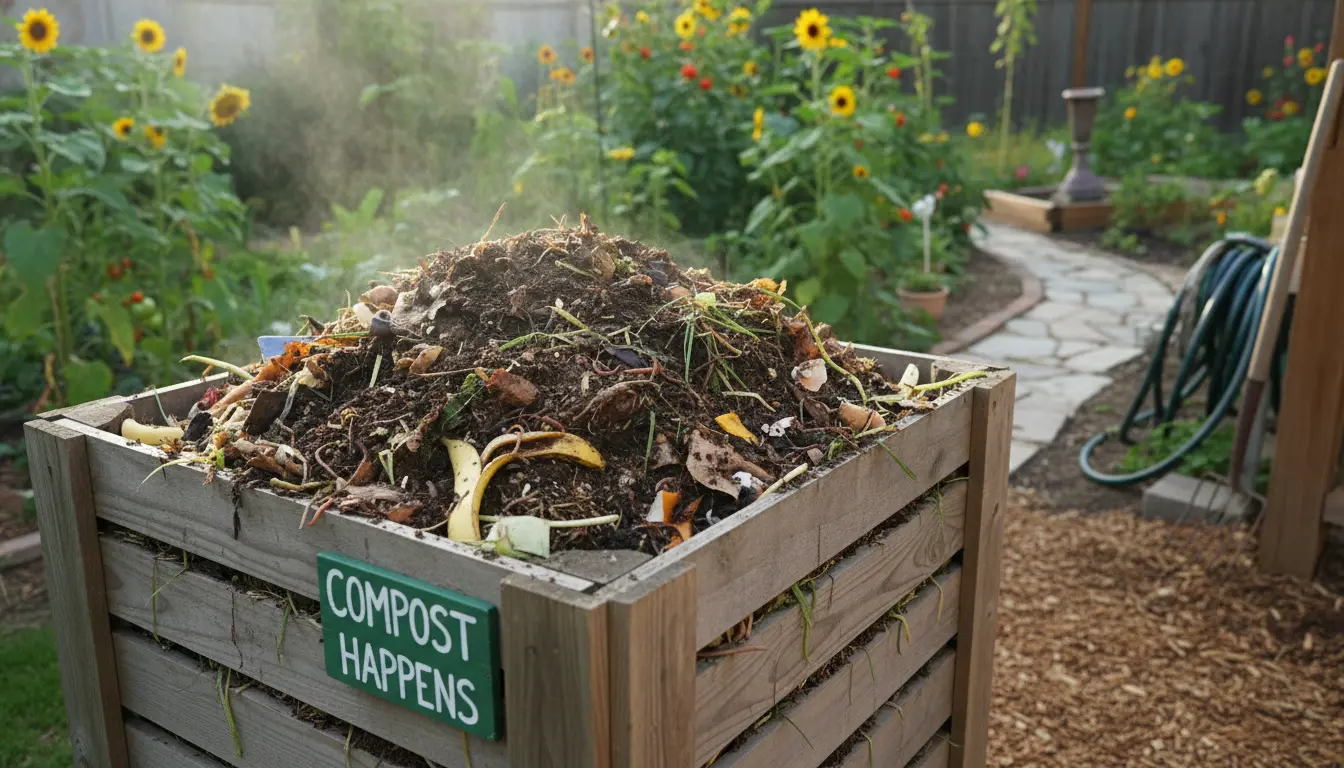
Home composting turns kitchen scraps and yard waste into nutrient-rich material you can use in the garden. This guide explains simple, practical steps to begin composting at home, maintain a healthy pile, and troubleshoot common problems.
What Is Home Composting and Why Start
Home composting is the controlled decomposition of organic material by microbes and invertebrates. It reduces waste, lowers greenhouse gas emissions from landfills, and produces compost that improves soil structure and plant health.
Benefits of Home Composting
Composting saves money by reducing the need for store-bought fertilizers and soil amendments. It also diverts a large portion of household waste from the trash, which is better for the environment.
Food scraps and yard trimmings make up about 30 percent of household waste. Composting can cut that number significantly and return nutrients to your soil.
How to Start Home Composting: Basic Choices
Choose the right composting method based on space, time, and what you will compost. Options include a simple pile, a turned bin, a tumbling composter, or vermicomposting with worms.
Location matters. Pick a well-drained, level spot with some shade and easy access to water and garden areas where you’ll use the compost.
Choose a Container or System
Open piles work for large yards but need more space and attention. Closed bins or tumblers are neater and reduce pests, making them ideal for small yards or urban settings.
Vermicomposting is excellent for apartments and produces compost quickly, but it needs temperature and moisture control and a small worm population to thrive.
Balance What You Add: Greens and Browns
Successful home composting depends on balancing ‘greens’ (nitrogen-rich) with ‘browns’ (carbon-rich). Greens include vegetable scraps, coffee grounds, and fresh grass clippings.
Browns include dry leaves, shredded paper, cardboard, and straw. Aim for roughly a 2:1 ratio of browns to greens by volume to avoid odors and speed decomposition.
Layering and Size
Start with a coarse base layer of twigs or straw to improve airflow. Alternate layers of greens and browns in 4–6 inch increments to create a balanced pile.
Smaller pieces break down faster. Chop or shred large items before adding them to the bin for faster composting.
Maintain Your Compost Pile
Routine maintenance keeps the compost active. Turn the pile every 1–2 weeks if you want finished compost in a few months; less frequent turning works for slower systems.
Keep the pile moist like a wrung-out sponge. Too dry and microbes slow down; too wet and it becomes anaerobic and smelly.
Air and Moisture Tips
- Use a pitchfork or compost aerator to mix materials and introduce oxygen.
- Add water during dry spells and cover the pile in heavy rain to prevent leaching.
- Monitor temperature: a hot pile (between 104–140°F or 40–60°C) indicates active decomposition.
What Not to Compost
Avoid adding meat, dairy, oily foods, diseased plants, or pet waste to a standard home compost. These can cause odors, attract pests, or introduce pathogens.
Compostable bags and certified compostable products can be used if your system reaches high temperatures and you manage them appropriately.
Troubleshooting Common Problems
If your compost smells rotten, add more brown materials and turn the pile to reintroduce oxygen. Excess moisture is a common cause of bad odors.
Slow decomposition is often due to lack of nitrogen, large pieces, or low moisture. Add a handful of fresh greens, chop materials smaller, and ensure adequate moisture.
When and How to Use Finished Compost
Finished compost is dark, crumbly, and smells earthy. It typically takes 2–12 months depending on system and maintenance.
Use finished compost as a top dressing, soil amendment, or in potting mixes. Mix into garden beds at a rate of 1–3 inches annually for best results.
Small Case Study: Rivera Family Backyard Compost
The Rivera family started a 3-bin system behind their house to handle kitchen scraps and lawn clippings. They balanced browns and greens, turned weekly, and monitored moisture with a simple garden hose.
After six months their bins produced dark, crumbly compost that replaced store-bought soil for their vegetable beds. They cut household trash by about 35 percent and reported healthier tomatoes the next season.
Quick Checklist to Start Home Composting
- Choose a system: pile, bin, tumbler, or worm bin.
- Select a location with good drainage and access.
- Collect a mix of greens and browns; chop large items.
- Keep the pile moist and aerated; turn regularly.
- Monitor for pests, odors, and temperature changes.
Final Tips for Success
Start small and learn by doing; composting is forgiving and scalable. Keep a small kitchen bucket for scraps to make daily collection easier.
Label your compost bins and keep a simple log of additions and turns to learn what works in your climate. Over time you’ll refine your process and speed up results.
Home composting is a practical way to reduce waste and build healthier soil. With a few simple steps and regular attention you can convert household organic matter into a valuable resource for your garden.