
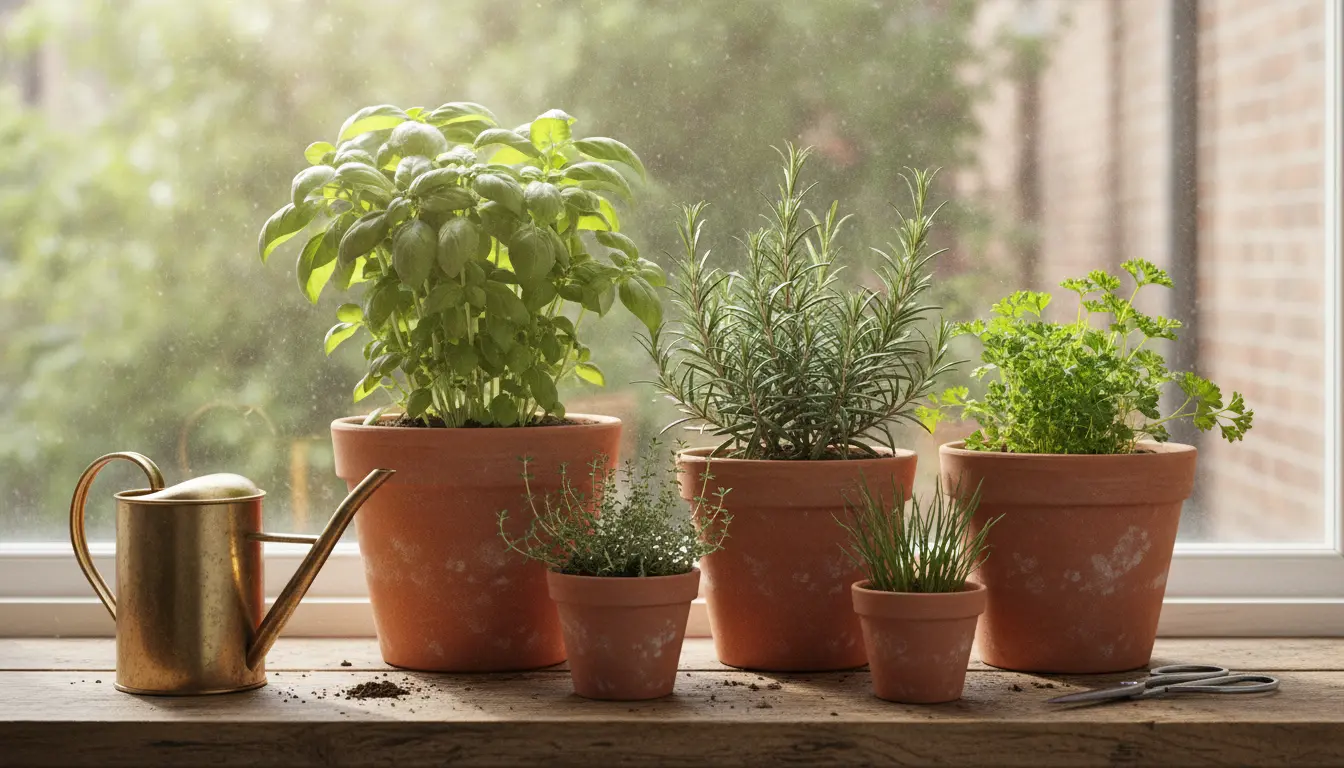
Indoor Herb Garden Basics
Starting an indoor herb garden is a practical way to have fresh flavors year-round. This guide covers the essentials: light, soil, pots, and basic care.
Why choose an indoor herb garden
Indoor herbs save trips to the store and improve cooking with fresh ingredients. They are also a low-cost, low-space way to grow food at home.
Choosing Herbs for Your Indoor Herb Garden
Pick herbs that tolerate container life and indoor light. Start with easy varieties to build confidence and consistent harvests.
- Basil — great for windowsills and frequent snipping.
- Mint — vigorous but best kept in its own pot.
- Chives — tolerates lower light and regular cutting.
- Thyme and oregano — compact and drought tolerant.
- Parsley — needs slightly more space and consistent moisture.
How many herbs to start
Begin with 3–5 pots for variety without overwhelming maintenance. Choose herbs you use most in cooking to maximize value.
Light Requirements for an Indoor Herb Garden
Light is the most important factor for success. Most herbs need 6–8 hours of bright light each day to stay healthy.
Natural light options
Place herbs on a south- or west-facing windowsill when possible. Rotate pots every few days so all sides receive light and growth remains even.
Artificial light options
If natural light is limited, use full-spectrum LED grow lights. Position lights 6–12 inches above plants and run them 12–16 hours daily for best growth.
Soil and Containers for an Indoor Herb Garden
Use a well-draining potting mix formulated for herbs or vegetables. Heavy garden soil often compacts and holds too much water indoors.
- Select pots with drainage holes to prevent root rot.
- Choose container sizes based on root depth: 4–6 inches for herbs like chives, 8–10 inches for larger herbs like parsley.
- Use lightweight pots to make moving easy for light adjustment.
Soil mix tips
Mix equal parts potting soil and perlite or coarse sand for better drainage. Add a small amount of organic compost for nutrients.
Watering and Feeding Your Indoor Herb Garden
Overwatering is the most common indoor gardening mistake. Check soil moisture by touching the top inch; water only when it feels dry.
Watering frequency
Small pots dry out faster. Expect to water every 3–7 days depending on pot size, temperature, and light levels. Water slowly until excess drains from the bottom.
Fertilizer basics
Feed herbs lightly with a balanced liquid fertilizer every 4–6 weeks during active growth. Use half the recommended strength to avoid lush but weak plants.
Pruning, Harvesting, and Pest Management in an Indoor Herb Garden
Regular pruning keeps herbs productive and prevents legginess. Harvest from the top and encourage bushy growth by snipping stems above leaf nodes.
- Pinch back basil to prevent flowering and extend leaf production.
- Remove yellow or drooping leaves to keep plants healthy.
- Inspect for pests like aphids and spider mites; treat with insecticidal soap if needed.
When to harvest
Harvest in the morning after dew has dried for best flavor. Remove no more than one-third of the plant at a time to allow recovery.
Common Problems and Quick Fixes for an Indoor Herb Garden
Address issues early to prevent major losses. Keep a simple checklist to diagnose common problems quickly.
- Yellow leaves: often from overwatering or poor drainage.
- Leggy growth: move herbs to brighter light or prune to encourage branching.
- Slow growth: check fertilizer routine and ensure adequate light.
Helpful maintenance routine
Inspect plants weekly, rotate pots, and wipe leaves to remove dust. A small routine reduces stress and improves yields.
Many herbs like basil and mint release stronger aromas when gently bruised or when leaves are harvested. This is due to essential oils that become more noticeable after light damage to leaf cells.
Small Real-World Example: Case Study
Anna, a renter with a north-facing apartment, started an indoor herb garden on a small shelf. She chose chives, mint, and parsley because they tolerate lower light better than basil.
Within four weeks of adding an LED grow light on a 12-hour timer and using a lightweight potting mix, Anna had a steady supply of fresh chives and parsley. Mint grew quickly in its own pot and required weekly trimming to prevent crowding.
Lessons learned: choose the right herbs for your light, use containers with drainage, and keep a simple feeding schedule. Anna saved money on groceries and gained confidence to expand her indoor herb garden the next season.
Final Checklist to Start Your Indoor Herb Garden
- Choose 3–5 herbs you use often and that fit your light conditions.
- Select pots with drainage and a well-draining potting mix.
- Provide 6–8 hours of bright light or use grow lights as needed.
- Water when the top inch of soil is dry and fertilize lightly.
- Prune regularly and monitor for pests.
With the right basics and a small routine, an indoor herb garden is an achievable and rewarding project. Start small, learn from each season, and enjoy fresh herbs at home.