
Starting a vegetable garden is a practical way to grow fresh food, save money, and enjoy outdoor activity. This guide breaks the process into clear steps you can follow, whether you have a small patio or a backyard plot.
How to Start a Vegetable Garden: Choose the Right Site
Most vegetables need at least six hours of direct sunlight daily. Pick a location with good sun exposure and proximity to a water source.
Avoid low spots that collect cold air or standing water. If you have limited sun, focus on leafy greens and herbs that tolerate partial shade.
How to Start a Vegetable Garden: Consider Soil and Drainage
Good soil is the foundation of a successful garden. Test soil texture by squeezing a handful: it should form a loose ball and crumble easily.
Check drainage by digging a small hole and filling it with water. If it drains within a few hours, drainage is adequate. Improve heavy clay with compost and coarse sand.
How to Start a Vegetable Garden: Prepare the Soil

Remove grass, weeds, and large roots from the planting area. Work the top 8–12 inches of soil to loosen compaction and incorporate organic matter.
Add 2–4 inches of compost and a balanced slow-release fertilizer if a soil test shows nutrient deficiency. Rake the area level before planting.
How to Start a Vegetable Garden: Choose Plants and Layout
Select vegetables suited to your climate and season. Beginners often start with tomatoes, peppers, lettuce, beans, and herbs.
Plan the layout to match plant size and light needs. Use rows, raised beds, or containers based on available space. Group plants with similar water and sun requirements.
How to Start a Vegetable Garden: Planting and Timing
Timing is crucial. Check your local last frost date and plant cool-season crops 2–4 weeks before or after, and warm-season crops after the danger of frost has passed.
Follow seed packet and plant tag instructions for depth and spacing. Start some crops indoors if needed to extend the season.
How to Start a Vegetable Garden: Watering and Mulching
Water deeply and less often to encourage strong root systems. Aim for about 1–1.5 inches of water per week, adjusting for rainfall.
Apply 2–3 inches of mulch to conserve moisture, suppress weeds, and moderate soil temperature. Keep mulch a few inches away from plant stems.
How to Start a Vegetable Garden: Pest and Disease Management
Monitor plants regularly for early signs of pests or disease. Handpick large pests, and use barriers like row covers for insect protection.
Practice crop rotation and remove affected plants to reduce disease spread. Use organic controls (neem oil, insecticidal soap) as a first line, and confirm identification before applying any treatment.
How to Start a Vegetable Garden: Fertilizing and Maintenance
Feed vegetables with a balanced fertilizer according to plant needs. Leafy greens benefit from nitrogen, while fruiting plants often need more phosphorus and potassium.
Keep beds weed-free, and support tall plants with stakes or cages. Regular maintenance reduces stress and improves yields.
Small Case Study: Backyard Raised Bed Success
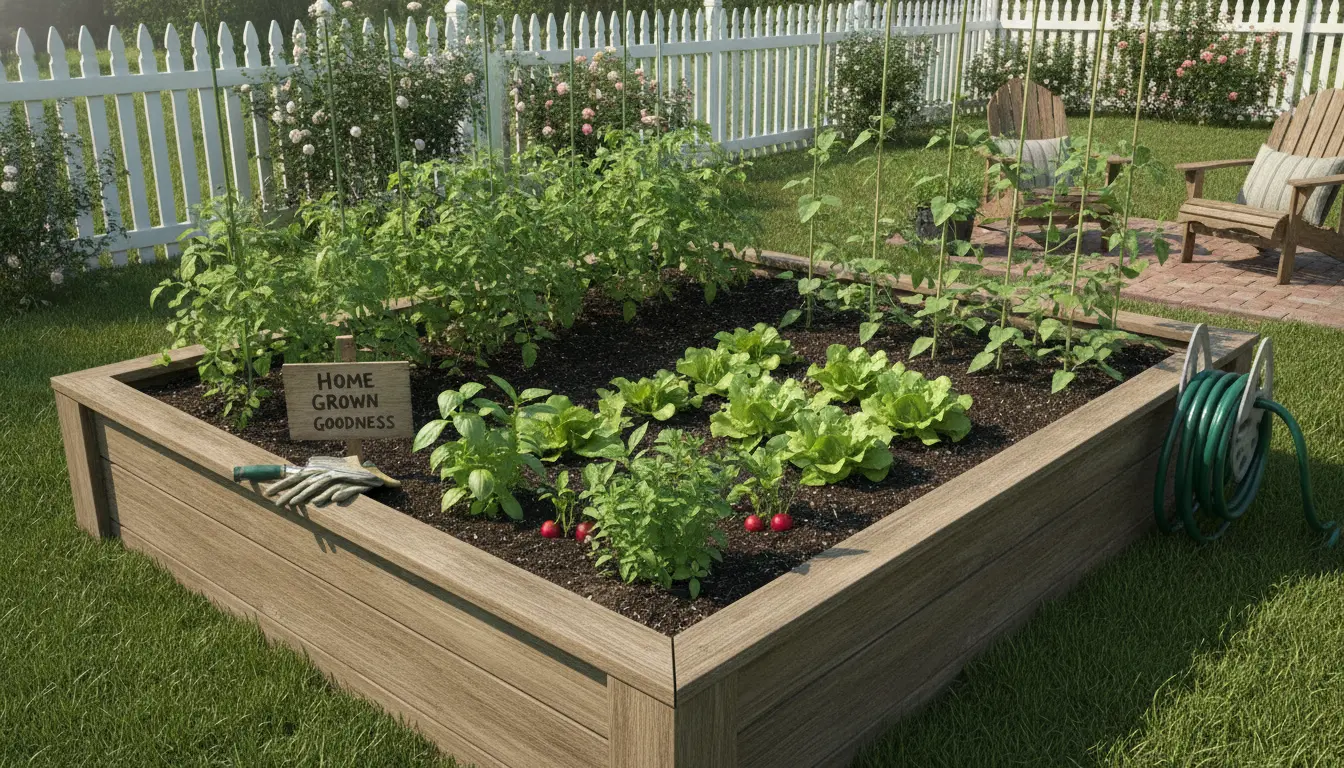
Anna, a homeowner in a temperate zone, converted a 4×8-foot lawn patch into a raised bed in spring. She filled the bed with a 60/40 mix of compost and topsoil, then planted tomatoes, basil, lettuce, and radishes.
By following a consistent watering schedule and mulching, Anna harvested weekly greens and two tomato flushes. She solved an early aphid issue with insecticidal soap and benefited from planting basil near tomatoes to deter pests.
How to Start a Vegetable Garden: Common Mistakes to Avoid
- Planting too early in cold soil — wait until soil warms for tender crops.
- Overwatering or shallow watering — aim for deep, infrequent irrigation.
- Crowding plants — follow spacing guidelines to reduce disease and competition.
- Ignoring soil health — add organic matter annually to maintain fertility.
How to Start a Vegetable Garden: Tools and Supplies
Basic tools speed work and improve results. A trowel, hoe, hand pruners, watering can or hose with a gentle nozzle, and a soil knife are useful for small gardens.
For raised beds, untreated wood or composite materials and a quality soil mix make setup easier and extend longevity.
Adding a 2 to 3 inch layer of compost annually can increase soil water retention and improve yields by up to 30 percent in the first two seasons.
How to Start a Vegetable Garden: Getting Started Checklist
- Choose a sunny site near water.
- Test and improve soil with compost.
- Pick vegetables suited to your season and space.
- Plant at the right time and follow spacing rules.
- Water deeply, mulch, and monitor for pests.
Starting a vegetable garden is manageable with planning and simple routines. Focus on good soil, proper timing, and regular care, and you’ll be rewarded with fresher produce and a more satisfying gardening experience.