
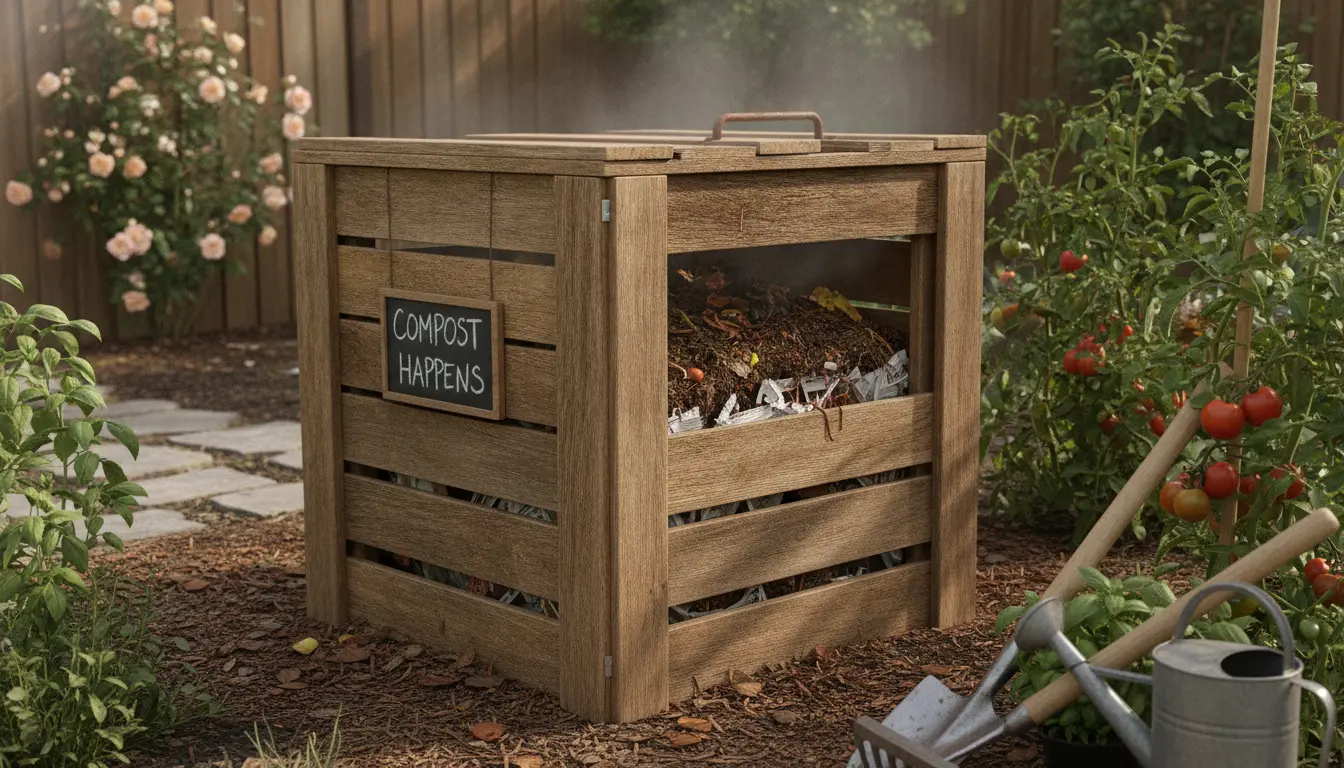
Why Home Composting Matters
Home composting turns kitchen and yard waste into nutrient-rich soil. It reduces household garbage and supports healthier plants without synthetic fertilizers.
Composting also lowers methane emissions from landfills and saves money on waste removal. For many households, it is an easy sustainability practice with measurable benefits.
How to Start Home Composting
Starting home composting requires three simple things: the right mix of materials, a container or space, and basic maintenance. Follow the steps below to get a system running quickly.
Step 1: Choose a Location
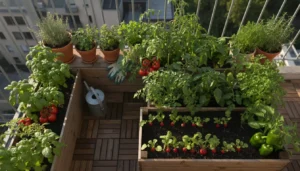
Select a well-drained spot with some shade. If you live in an apartment, use a bin on a balcony or a small indoor composter under ventilation.
Step 2: Choose a Compost Bin
Pick a bin that fits your space and waste level. Options include open piles, tumblers, stationary bins, and worm composters for indoor use.
- Open pile: good for yards and large volumes.
- Tumbler: speeds decomposition and keeps pests out.
- Stationary bin: low cost and discrete.
- Vermicompost (worms): best for apartments and kitchen scraps.
Step 3: Gather Materials
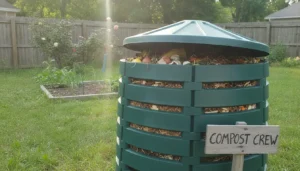
Compost needs a balance of carbon-rich and nitrogen-rich materials. Aim for a mix close to 25–30 parts carbon to 1 part nitrogen by volume for efficient breakdown.
- Brown (carbon): dry leaves, shredded paper, cardboard, straw.
- Green (nitrogen): kitchen vegetable scraps, coffee grounds, fresh grass clippings.
What to Compost: Practical Lists
Knowing what you can and cannot compost prevents problems like bad smells or pests. Use the lists below as a quick reference.
Acceptable Items
- Vegetable and fruit scraps (no large amounts of citrus)
- Eggshells, coffee grounds, tea bags (remove staples)
- Yard waste: leaves, small twigs, grass clippings
- Shredded paper, cardboard (non-glossy)
Items to Avoid
- Meat, bones, dairy, and oily foods (attract pests)
- Diseased plants or invasive weeds with seeds
- Pet feces and cat litter
- Glossy or coated paper
Maintaining Your Home Composting System
Maintenance is straightforward: monitor moisture, turn the pile, and adjust the green/brown ratio. Regular small actions keep compost active and odor-free.
Moisture and Aeration
Compost should be as moist as a wrung-out sponge. Add water if it dries out and add browns if it becomes soggy. Turning the pile every 1–2 weeks supplies oxygen to microbes.
Layering and Size
Layer greens and browns as you add material to maintain balance. For faster decomposition, keep the pile at least 3 feet wide and 3 feet tall when possible.
Troubleshooting Home Composting Problems
Common problems often have simple fixes. Use this quick guide to diagnose and correct issues in your compost.
- Bad smells: Add more brown materials and turn the pile to increase airflow.
- Pests: Bury food scraps under layers and use a closed bin or tumbler.
- Slow decomposition: Chop materials smaller and maintain moisture and temperature.
- Too wet: Add dry browns and mix to improve drainage.
Compost can reduce your household waste volume by up to 30 percent. Well-managed compost reaches temperatures that kill most weed seeds in a few weeks.
Case Study: Small Apartment Composting Success
Maria, a city renter, started vermicomposting in a 10-liter bin on her balcony. She used red wiggler worms and added only kitchen scraps and shredded cardboard.
Within three months she produced a rich, dark compost she mixed into potted herbs. The system stayed odor-free because she balanced greens and browns and kept the bin shaded.
Practical Tips and Examples
Use these tips to make home composting easier and more consistent. Small adjustments deliver big results over time.
- Save scraps in a covered container in the freezer to avoid odors until you add them to the bin.
- Chop or shred larger items so microbes can work faster.
- Keep a dedicated small bin or scoop for coffee grounds if you drink coffee daily.
- Use finished compost as a top dressing for vegetable beds or mix into potting soil.
Final Steps: Using Finished Compost
Finished compost is dark, crumbly, and smells earthy. Sift or break up large pieces before use to get an even texture.
Apply compost to vegetable gardens, lawn patches, and container plants. A layer of 1–2 inches improves soil structure and supplies nutrients slowly.
Conclusion
Home composting is a practical, low-cost way to reduce waste and improve soil. With a simple bin, the right materials, and minimal maintenance, anyone can start composting today.
Begin with small steps, monitor your system, and adjust as you learn. Composting becomes easier with routine and provides benefits both for your garden and the environment.