
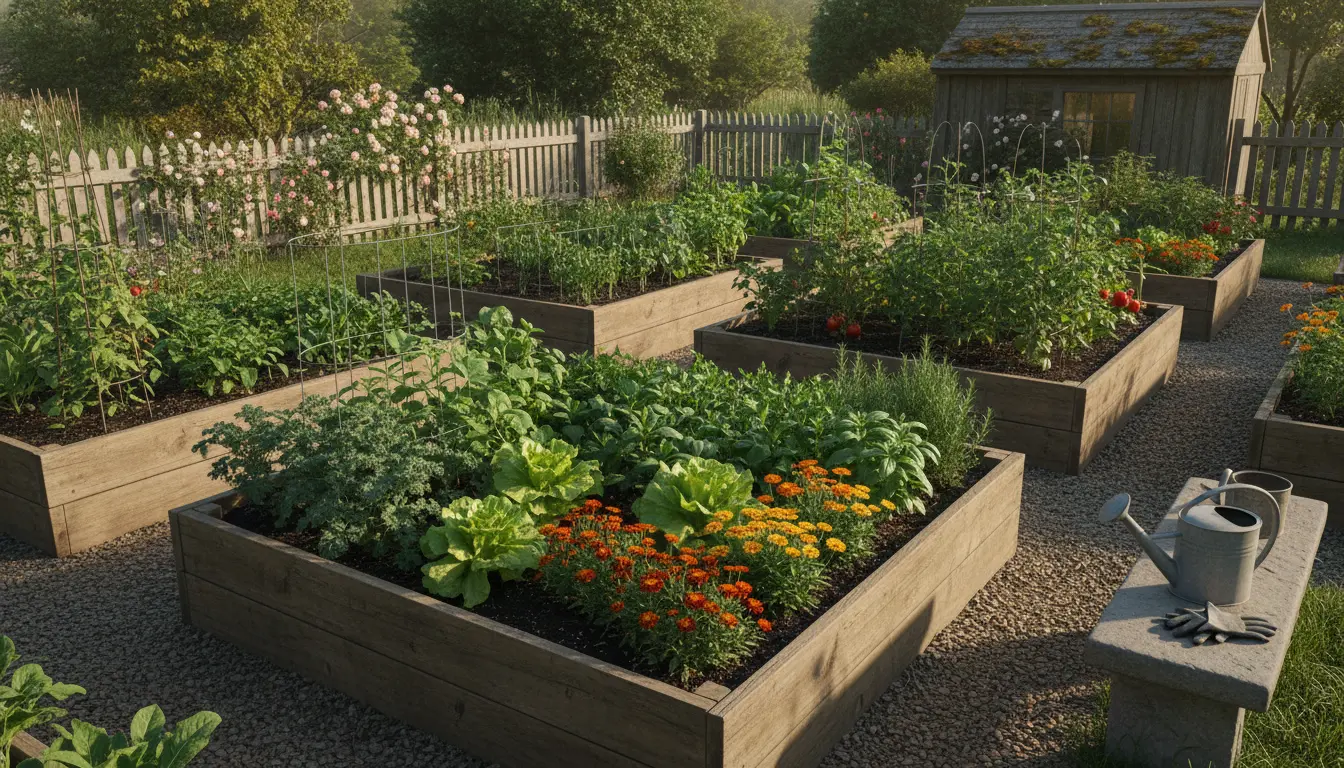
Why start a vegetable garden
Starting a vegetable garden gives you fresh food, saves money, and connects you to the seasons. It also reduces food miles and can improve your mental health.
This guide shows how to start a vegetable garden in a small yard or containers, using practical steps you can follow this season.
Choose a site to start a vegetable garden
Good site selection is the first step when you start a vegetable garden. Vegetables need at least 6 hours of direct sun daily, so pick the sunniest spot you have.
Avoid low spots that stay wet and look for level ground or a flat container area. Consider proximity to water and accessibility for daily care.
Sun, water, and access
- Sun: 6–8 hours of direct sun for most vegetables.
- Water: within 25 feet of a hose or irrigation.
- Access: easy to reach beds for planting, weeding, and harvesting.
Prepare soil before you start a vegetable garden
Soil quality determines how well plants grow. If you start a vegetable garden on poor soil, invest time in improving it before planting.

Test your soil with a basic kit to check pH and nutrient levels. Most vegetables prefer a pH between 6.0 and 7.0.
Soil improvement steps
- Add 2–4 inches of compost and work it into the top 6–8 inches of soil.
- Use well-rotted manure or leaf mold for organic matter.
- Apply a balanced organic fertilizer if your soil test shows deficiencies.
Decide what to plant when you start a vegetable garden
Choose vegetables you and your family eat and that grow well in your climate. Start with easy crops to build confidence.
Good beginner vegetables include tomatoes, lettuce, radishes, green beans, and peppers.
Planting strategies
- Succession planting: plant small batches every 2–3 weeks for a steady harvest.
- Companion planting: pair basil with tomatoes or marigolds near vegetables to deter pests.
- Use raised beds or containers if soil quality is poor or space is limited.
Planting: seeds vs. transplants
Decide whether to start from seed or buy transplants. Seeds are cheaper but need more care early on. Transplants give a head start and are easier for beginners.
Follow seed packet or plant tag directions for spacing, depth, and planting dates specific to your region.
Watering and mulching when you start a vegetable garden
Consistent moisture is essential. Water deeply and less often to encourage strong root systems rather than frequent shallow watering.
Mulch with straw, shredded leaves, or bark to conserve moisture, suppress weeds, and moderate soil temperature.
Practical watering tips
- Water early in the morning to reduce evaporation and disease risk.
- Use drip irrigation or soaker hoses for efficient watering.
- Check soil moisture by feeling 2–3 inches below the surface; water when dry.
Pest and disease basics
Most pests and diseases are manageable with regular observation and simple practices. Inspect plants weekly and remove damaged leaves promptly.
Use row covers, hand pick pests, and encourage beneficial insects like ladybugs and lacewings.
Organic control methods
- Rotate crops each year to reduce soil-borne diseases.
- Use neem oil or insecticidal soap for soft-bodied pests.
- Maintain plant health—healthy plants resist pests better.
Harvesting and maintenance
Harvest vegetables at peak ripeness for best flavor and to encourage continued production. Regular harvesting often prolongs the productive period.
Keep beds weeded and add compost each season to maintain soil fertility.
Small case study: A beginner’s first season
Maria started a 4×8 raised bed in her suburban yard in April. She chose tomatoes, lettuce, radishes, and bush beans and used store-bought compost to fill the bed.
She watered with a soaker hose twice a week, mulched with straw, and harvested lettuce every couple of weeks. By late summer she had steady salads and fresh beans, and the soil improved for next season.
Quick checklist to start a vegetable garden
- Select a sunny site near water.
- Test and improve soil with compost.
- Choose easy vegetables for your climate.
- Decide on seeds or transplants.
- Water deeply, mulch, and monitor pests.
- Harvest regularly and amend soil each season.
Final tips for success when you start a vegetable garden
Start small and expand as you gain confidence. Consistent care beats perfect technique—regular watering, weeding, and observation are the most important tasks.
Keep a simple garden journal to record planting dates, varieties, and harvests. That record will help you improve each season.