
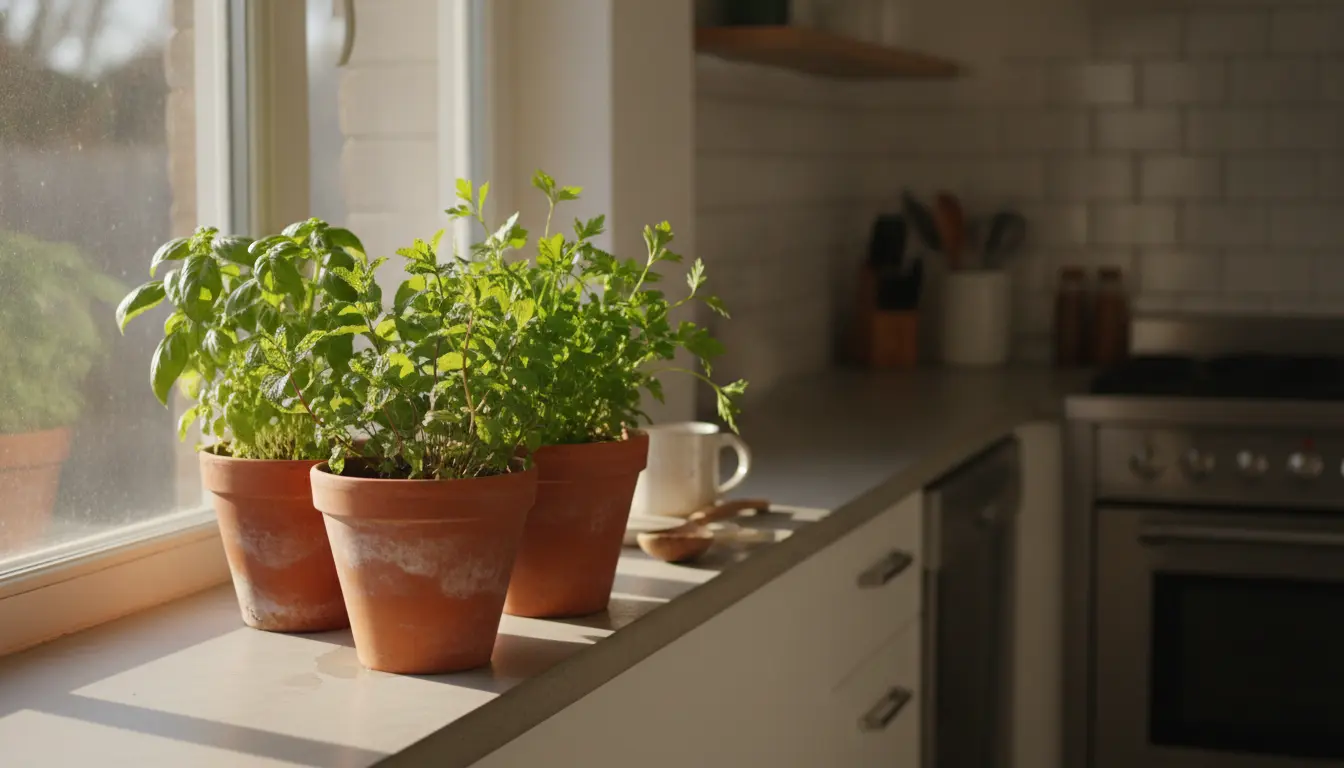
Why Start an Indoor Herb Garden
An indoor herb garden gives you fresh flavors year-round and saves trips to the store. Herbs need little space and can thrive on a sunny windowsill or under grow lights.
This guide covers the essential steps to start and maintain a successful indoor herb garden so you get steady harvests without wasted effort.
Choose Herbs for an Indoor Herb Garden
Select herbs that are well suited to containers and indoor conditions. Start with easy, forgiving varieties to build confidence.
- Basil – warm, bright light, regular watering
- Parsley – tolerates lower light, steady moisture
- Mint – vigorous, grows well in containers (keep separate)
- Chives – compact, likes bright, cool spots
- Thyme and rosemary – prefer bright light and good drainage
Light Requirements for an Indoor Herb Garden
Light is the single most important factor for herbs indoors. Most herbs need 6–8 hours of bright light a day.
If you lack a sunny window, use a full-spectrum LED grow light positioned 6–12 inches above the plants. Set a timer for 12–14 hours early on, then reduce to 8–12 hours once established.
Practical light tips
- South or west windows provide the most natural light in the Northern Hemisphere.
- Rotate pots weekly so all sides get light and even growth.
- Watch for leggy stems — a sign of insufficient light.
Soil, Containers, and Drainage
Use a lightweight potting mix formulated for containers. Avoid garden soil, which compacts and can carry pests.
Choose pots with drainage holes to prevent root rot. Standard clay, plastic, or ceramic pots work fine as long as drainage is good.
Soil and container checklist
- Potting mix with perlite or vermiculite for drainage
- Pots sized 4–8 inches for most herbs; larger for rosemary
- Tray under pots to catch excess water
Planting and Spacing in an Indoor Herb Garden
Plant seedlings or start from seeds depending on your patience and skill. Seedlings provide a faster route to harvest, while seeds are cheaper and have more variety.
Space plants so leaves don’t touch too much; airflow reduces disease risk. In small containers, grow one plant per pot or use a wider planter with 2–3 compatible herbs.
Watering and Feeding
Watering is about balance: keep soil moist but not waterlogged. Check soil with your finger — water when the top inch feels dry for most herbs.
Feed with a balanced liquid fertilizer every 3–4 weeks during the growing season. Reduce feeding in winter when growth slows.
Watering tips
- Use room-temperature water to avoid shocking roots
- Water until it drains from the pot’s holes, then empty the tray after 30 minutes
- Adjust frequency based on pot size, light, and indoor humidity
Pest Management and Common Problems
Indoor herbs can get aphids, spider mites, or fungal issues. Early detection and simple controls prevent bigger problems.
- Inspect leaves weekly for pests or discoloration
- For small infestations, wipe leaves with soapy water or use insecticidal soap
- Improve air circulation and avoid overwatering to reduce fungal risks
Pruning and Harvesting from an Indoor Herb Garden
Regular harvesting encourages bushy growth. Pinch or cut stems above a leaf node to stimulate branching.
Harvest no more than one-third of a plant at a time to keep it healthy. For herbs like basil, harvest frequently to prevent flowering and bitterness.
Harvesting schedule example
- Basil: harvest weekly once established
- Parsley: pick outer stems as needed
- Chives: snip near soil level; regrow quickly
Some herbs, like mint, are best kept in single pots because they spread aggressively and can crowd other plants.
Simple Case Study: Maya’s Kitchen Windowsill Indoor Herb Garden
Maya, a small-apartment renter, started three pots of basil, parsley, and mint on a south-facing windowsill. She used potting mix, 6-inch pots, and a small LED grow light for cloudy days.
Within four weeks, basil was ready for pesto, parsley supplied weekly salads, and mint thrived in its own pot. Maya adjusted watering after noticing yellowing leaves and now harvests most weeks.
Result: low-cost fresh herbs year-round and reduced grocery trips. The key changes were improving drainage and consistent light exposure.
Quick Start Checklist for an Indoor Herb Garden
- Pick 2–4 beginner herbs (basil, parsley, chives, mint)
- Choose a bright spot or buy a full-spectrum LED light
- Use quality potting mix and containers with drainage
- Water when top inch of soil is dry and feed every 3–4 weeks
- Prune regularly and monitor for pests
Final Tips for a Thriving Indoor Herb Garden
Start small, learn the needs of each herb, and adjust light and water based on plant response. Over time you’ll learn which herbs suit your space and cooking habits best.
Indoor herb gardening is low-cost, rewarding, and practical. With a small investment in pots and soil, you can enjoy fresh herbs every day.