
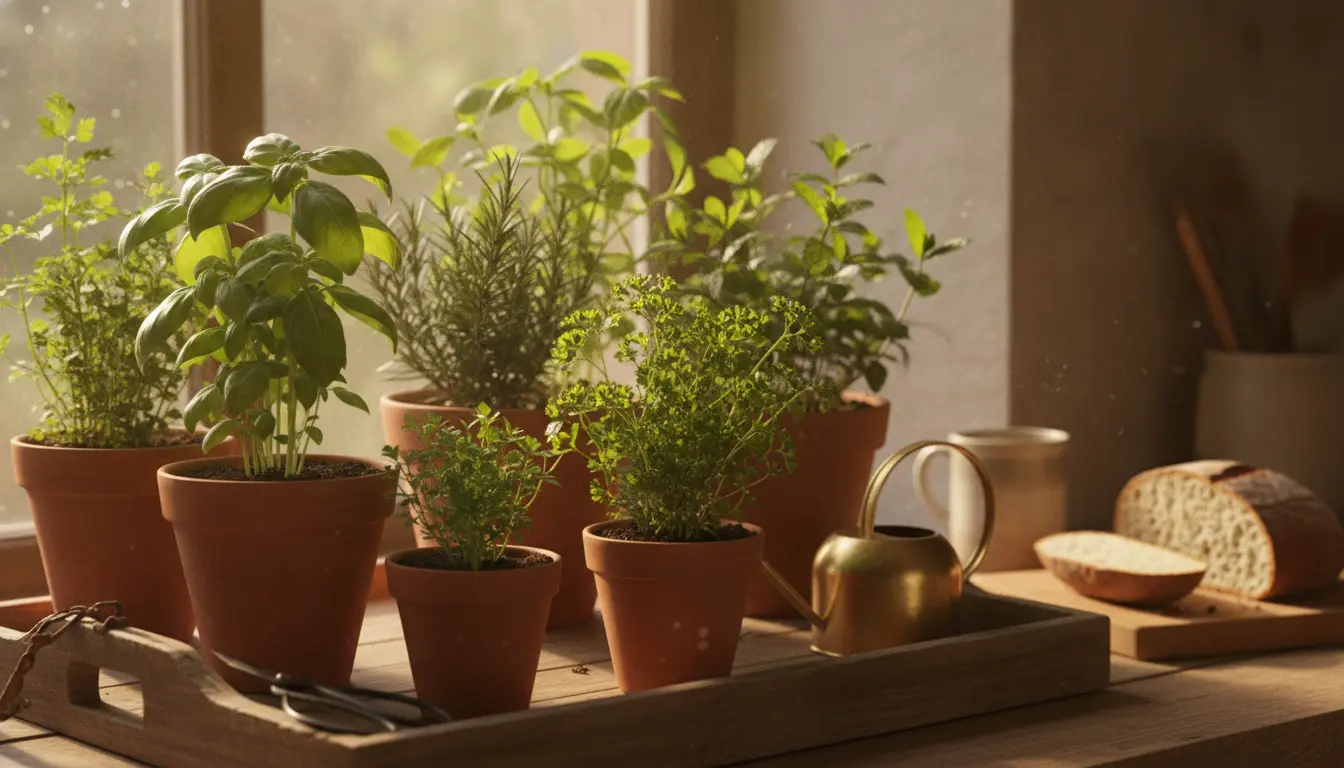
Why an Indoor Herb Garden
An indoor herb garden is a low-cost way to get fresh flavors year-round. It fits into small spaces and gives you herbs at arm’s reach for cooking and teas.
Growing herbs indoors reduces food waste and can improve kitchen air quality. This guide explains clear, practical steps to start and maintain an indoor herb garden.
How to Start an Indoor Herb Garden
Starting an indoor herb garden involves five basic choices: location, containers, soil, light, and water. Make simple, deliberate decisions for each area to set the garden up for success.
Choose the Right Location
Most culinary herbs need bright, indirect light. A south- or west-facing windowsill is ideal. If natural light is limited, use grow lights positioned 6–12 inches above the plants.
Keep herbs away from drafts and heat sources like oven vents. Consistent temperature and light create steady growth.
Pick Containers and Drainage
Use containers with drainage holes to prevent root rot. Terracotta pots are breathable, while plastic retains moisture longer. Choose 4–8 inch pots for single herbs and larger containers for mixes.
Consider saucers or a tray to catch overflow, and use potting mix rather than garden soil to ensure proper drainage and aeration.
Select the Right Soil and Mix
Use a lightweight, well-draining potting mix. A mix labeled for herbs or vegetables works well. You can add perlite or coarse sand to improve drainage.
Avoid heavy soils and avoid reusing old potting mix unless it is refreshed with compost or new mix.
Manage Light for an Indoor Herb Garden
Herbs generally need 6–8 hours of bright light daily. If using grow lights, aim for full-spectrum LED lights and run them 10–14 hours depending on the herb.
Rotate pots weekly to ensure even growth and prevent plants from leaning toward the light.
Watering and Humidity
Water when the top 1 inch of soil is dry. Overwatering is the most common cause of failure. Lift the pot to feel weight; light pots typically need water.
Many herbs prefer moderate humidity. If indoor air is very dry, place a shallow tray of water nearby or mist occasionally.
Fertilizing and Feeding
Feed herbs lightly during the growing season with a balanced liquid fertilizer every 4–6 weeks. Too much fertilizer makes foliage lush but reduces essential oil concentration and flavor.
Organic options like fish emulsion or compost tea work well when diluted to half strength.
Pruning and Harvesting
Regular pruning encourages bushy growth and prevents legginess. Harvest leaves from the top and avoid removing more than one-third of a plant at once.
Pinch flowers on herbs like basil to focus energy on leaf production unless you want seeds or flowers.
Maintenance Tips for an Indoor Herb Garden
Consistent monitoring is key. Check soil moisture, leaf color, and new growth at least twice a week. Small adjustments prevent bigger problems.
- Inspect leaves for pests like aphids or spider mites and treat early with insecticidal soap.
- Clean dust off leaves so they can photosynthesize efficiently.
- Repot when roots circle the pot or growth slows—typically every 12–18 months.
Pest and Disease Management
Common indoor pests include aphids, whiteflies, and spider mites. Wiping leaves, increasing humidity, and using mild insecticidal soap usually solve early infestations.
Avoid overwatering to prevent fungal issues. If roots smell sour, trim rotten roots and repot in fresh soil.
Some herbs like mint and oregano spread aggressively in the ground but stay well-behaved in pots, making them ideal for indoor cultivation.
Small Real-World Example: Apartment Basil Case Study
Maria is a college student with a south-facing windowsill. She started with three 6-inch pots: basil, parsley, and chives. Each pot used a well-draining potting mix and had a drainage saucer.
She watered when the top inch dried, rotated pots weekly, and used a small LED grow light during winter for 12 hours daily. Within six weeks, basil grew lush enough for weekly pesto batches.
Key takeaways from Maria’s case: choose compact varieties, monitor water by weight, and supplement light when daylight is short.
Common Herb Choices for an Indoor Herb Garden
Start with easy, reliable herbs that perform well indoors. These are forgiving and useful in many recipes.
- Basil — prefers bright light and regular pruning.
- Parsley — tolerates moderate light and steady moisture.
- Chives — compact and tolerant of lower light.
- Mint — aggressive root growth; use its own pot.
- Thyme and rosemary — enjoy drier soil and bright light.
Harvesting and Using Herbs
Harvest herbs in the morning after dew dries for best flavor. Use fresh leaves within a few days or dry them for long-term storage.
To dry, tie stems together and hang in a warm, dry place. Store dried herbs in airtight containers away from light.
Final Checklist for a Successful Indoor Herb Garden
- Pick a bright location or use a grow light.
- Choose pots with drainage and a light potting mix.
- Water based on soil dryness—avoid overwatering.
- Prune regularly to encourage bushy growth.
- Monitor for pests and repot when roots are crowded.
With consistent, small efforts, an indoor herb garden becomes a reliable source of fresh flavor and a pleasant kitchen feature. Start with a few hardy herbs, learn their needs, and expand as you gain confidence.