
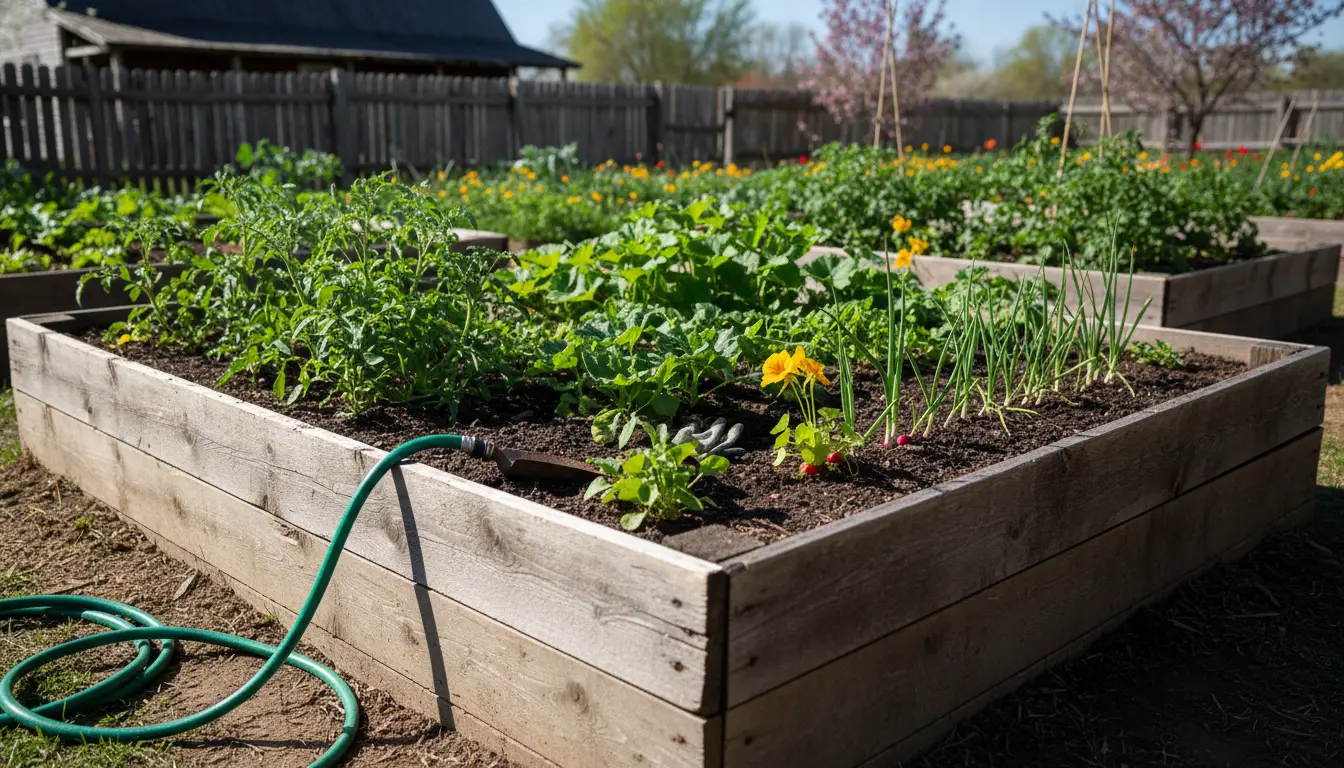
How to Start a Vegetable Garden: A Practical Overview
Starting a vegetable garden is a hands-on project that rewards planning and consistent care. This guide shows clear steps to help beginners set up a productive, low-stress garden.
Step 1: Choose the Right Spot to Start a Vegetable Garden
Pick a location with at least 6 hours of sunlight per day for most vegetables. Sunlight is the single most important factor for steady growth and higher yields.
Consider access to water and proximity to your house. A nearby water source makes regular watering easier and increases the chance you’ll maintain the garden.
Key site factors for starting a vegetable garden
- Sun exposure: 6–8 hours of direct sun for tomatoes, peppers, and cucumbers.
- Soil drainage: Avoid spots that stay waterlogged after rain.
- Wind protection: Use a fence or trellis if the area is very windy.
Step 2: Decide on Garden Type and Layout
Choose between in-ground beds, raised beds, or containers. Each type fits different spaces and budgets.
Raised beds are easy for beginners because they warm faster and drain well. Containers suit balconies and patios.
Common layouts when you start a vegetable garden
- Rows: Good for long beds and mechanical tools.
- Raised beds: Compact, efficient, and easier to weed.
- Containers: Ideal for limited space or mobile setups.
Step 3: Prepare Soil When You Start a Vegetable Garden
Soil is the foundation of any vegetable garden. Test basic soil texture and pH with a home kit or send a sample to a local extension service.
Amend the soil with compost and organic matter to improve fertility and structure. Aim for a loose, crumbly texture that holds moisture but drains.
Soil improvement checklist
- Add 2–4 inches of well-aged compost to the topsoil.
- For clay soils, mix in coarse sand and organic matter to improve drainage.
- Adjust pH if needed: most vegetables prefer pH 6.0–7.0.
Step 4: Plan What to Plant
Start with vegetables that are forgiving and provide quick rewards. Good beginner crops include lettuce, radishes, bush beans, and cherry tomatoes.
Group plants by water and sun needs to simplify care. Use companion planting to maximize space and deter pests naturally.
Planting tips for beginners
- Stagger plantings of lettuce and radishes to harvest over several weeks.
- Use trellises for vining crops like peas and cucumbers to save space.
- Follow seed packet dates for your local frost dates and growing season.
Step 5: Watering and Maintenance
Water deeply and less frequently to encourage strong roots. Aim for about 1 inch of water per week, adjusting for heat and soil type.
Mulch around plants to retain moisture and reduce weeds. Mulch also moderates soil temperature, helping roots in heat or cold.
Weekly maintenance checklist
- Water deeply once or twice a week depending on weather.
- Remove weeds and check for pests early in the morning.
- Harvest ripe vegetables promptly to encourage continuous production.
Some vegetables like radishes and lettuce can be ready to harvest in as little as 30 days, giving new gardeners quick success and motivation.
Common Problems and Simple Solutions
Pests and diseases are normal. Use physical barriers, hand-picking, and crop rotation before turning to chemical controls.
For poor growth, re-check soil nutrients and watering habits. Often small changes in feeding or water timing fix growth issues.
Quick fixes
- Yellowing leaves: check watering and soil nutrients.
- Slugs: use beer traps or diatomaceous earth around plants.
- Blossom end rot on tomatoes: maintain consistent calcium and moisture.
Small Real-World Case Study
Case study: A beginner in Portland converted a 4×8 ft raised bed and focused on four crops: cherry tomatoes, basil, beans, and lettuce. They added 3 inches of compost to the bed, planted in late spring, and used a simple drip line for watering.
Results: By late summer they harvested daily lettuce and weekly beans, with tomatoes producing from mid-summer into fall. Minimal pest issues occurred because of regular checks and quick removal of diseased leaves.
Getting Started Checklist
- Choose sunny spot and measure available space.
- Select garden type: in-ground, raised bed, or containers.
- Test and amend soil with compost; check pH.
- Pick easy beginner vegetables and follow planting dates.
- Set up a simple watering plan and mulch to retain moisture.
Final Tips When You Start a Vegetable Garden
Start small and expand after one successful season. Small gardens are easier to manage and teach good habits.
Keep a simple journal: note planting dates, varieties, and harvest times. This record makes each season more productive and reduces repeated mistakes.
With steady care and basic planning, anyone can start a vegetable garden that produces fresh vegetables and builds gardening confidence year after year.