
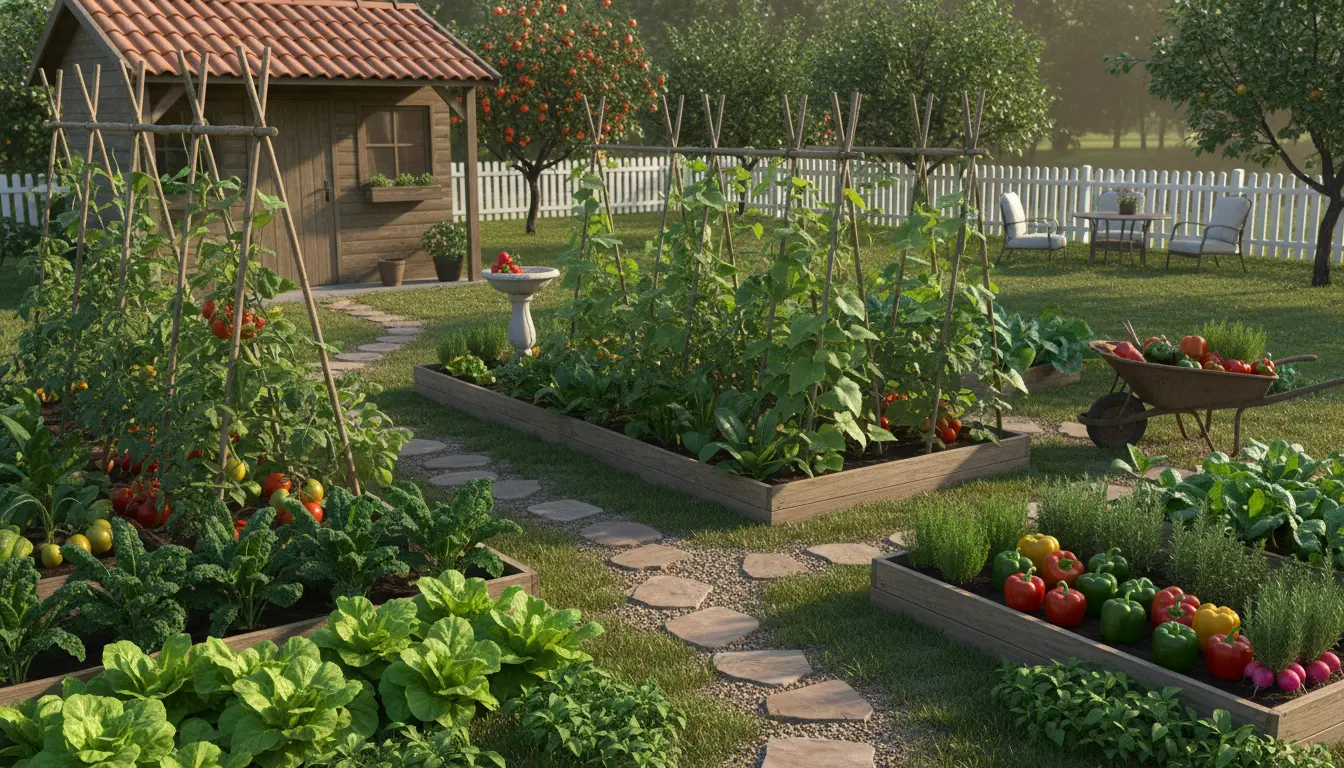
Why Start a Small Vegetable Garden
A small vegetable garden is an efficient way to grow fresh food at home, save money, and reduce grocery trips. It works in yards, balconies, and even small back patios.
This guide explains practical steps to plan, plant, and maintain a small vegetable garden with minimal tools and space.
Planning Your Small Vegetable Garden
Start by assessing space, sun exposure, and water access. Most vegetables need 6–8 hours of direct sunlight each day.
Decide on containers, raised beds, or a ground plot. Containers suit balconies and patios, while raised beds work well in small yards.
Choosing Location for a Small Vegetable Garden
Choose the sunniest spot you have and consider convenience. Being near a water source makes daily care easier.
Also plan for wind protection and easy access for harvesting and maintenance.
Selecting Plants for a Small Vegetable Garden
Pick compact, high-yield vegetables and varieties labeled “compact,” “bush,” or “patio.” These perform well in limited space.
- Leafy greens: lettuce, spinach, arugula
- Compact fruiting: patio tomatoes, dwarf peppers
- Root crops: radishes, baby carrots
- Herbs: basil, parsley, chives
Soil and Containers for a Small Vegetable Garden
Good soil is the foundation of a productive small vegetable garden. Use a quality potting mix for containers and rich, well-draining soil for beds.
Mix compost into soil to add nutrients and improve structure. Aim for a loose, crumbly texture that holds moisture but drains well.
Container Size and Soil Depth
Match container depth to the crop. Leafy greens need 6–8 inches, while tomatoes and peppers need 12–18 inches.
Use containers with drainage holes and avoid shallow trays for deep-rooted vegetables.
Planting and Spacing in a Small Vegetable Garden
Follow recommended spacing to avoid overcrowding, which leads to diseases and low yields. Use succession planting to maximize output.
Succession planting means sowing quick crops every 2–3 weeks so you harvest continuously from the same space.
Simple Planting Plan Example
In a 4×4 foot raised bed you can plant:
- 4 tomato plants (staked)
- 8–12 lettuce heads between tomato rows
- 6–8 bush beans along the border
Watering and Maintenance for a Small Vegetable Garden
Water deeply and less frequently to encourage strong roots. Early morning watering reduces evaporation and disease risk.
Mulch around plants to retain moisture and reduce weeds. Use organic mulch like straw or shredded leaves.
Pest and Disease Management
Inspect plants weekly and remove affected leaves promptly. Use row covers, handpicking, and encouraging beneficial insects as first steps.
Avoid broad-spectrum pesticides that harm pollinators. Choose targeted, least-toxic options when necessary.
Season Extension and Success Tips for a Small Vegetable Garden
Use cloches, cold frames, or fabric row covers to extend the growing season by a few weeks in spring or fall.
Rotate crops when possible and replenish soil with compost each season to maintain fertility in a small vegetable garden.
Tools and Supplies for a Small Vegetable Garden
You only need a few basic tools to start. Quality tools save time and effort in a small space.
- Hand trowel and cultivator
- Watering can or hose with a gentle nozzle
- Pruning shears and stakes or cages
- Compost or organic fertilizer
Quick Case Study: Sara’s Balcony Small Vegetable Garden
Sara converted a 6-foot balcony into a productive small vegetable garden last spring. She used three 5-gallon containers and two window boxes.
Her choices: a compact tomato, basil, lettuce, and radishes. By rotating lettuce and radishes every three weeks, she harvested fresh salad greens all summer.
Sara saved about $300 in grocery costs and reduced food waste by harvesting only what she needed. Minimal tools and weekly 20-minute care sessions kept the space productive.
Seasonal Checklist for Your Small Vegetable Garden
- Spring: Test soil, add compost, sow cool-season crops.
- Summer: Mulch, water deeply, stake plants, harvest regularly.
- Fall: Plant fall greens, clear spent plants, add compost.
- Winter: Plan next season and service tools.
Final Notes on Starting a Small Vegetable Garden
A small vegetable garden is manageable, cost-effective, and rewarding. Start with a short list of easy crops and expand as you gain confidence.
Keep records of what worked and what didn’t. Small adjustments each season will improve yields and make your garden more productive over time.